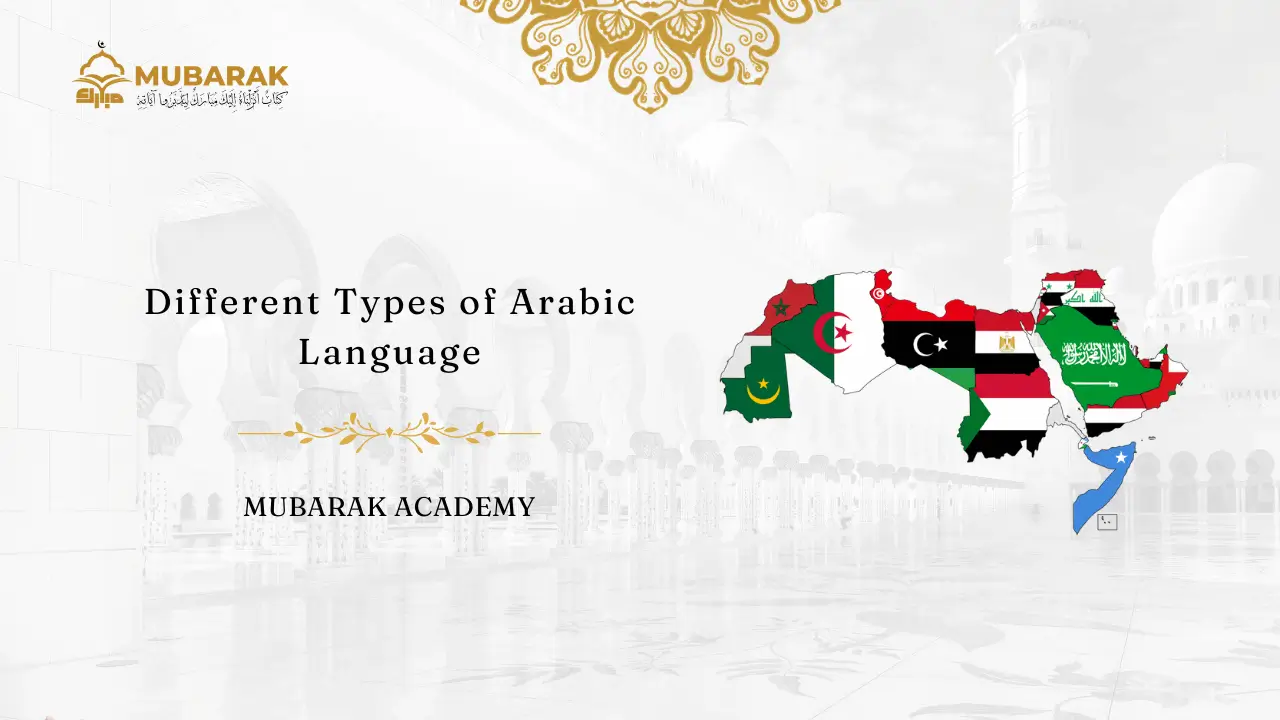
Arabic is not just a language, it is the language of the Qur’an, centuries of poetry, global media networks, and millions of daily conversations across more than 20 countries. But what many learners don’t realize is that Arabic exists in different forms, each with its own role and significance. Understanding the different types of Arabic language will help you choose the right learning path and avoid common beginner mistakes.
Different Types of Arabic Language
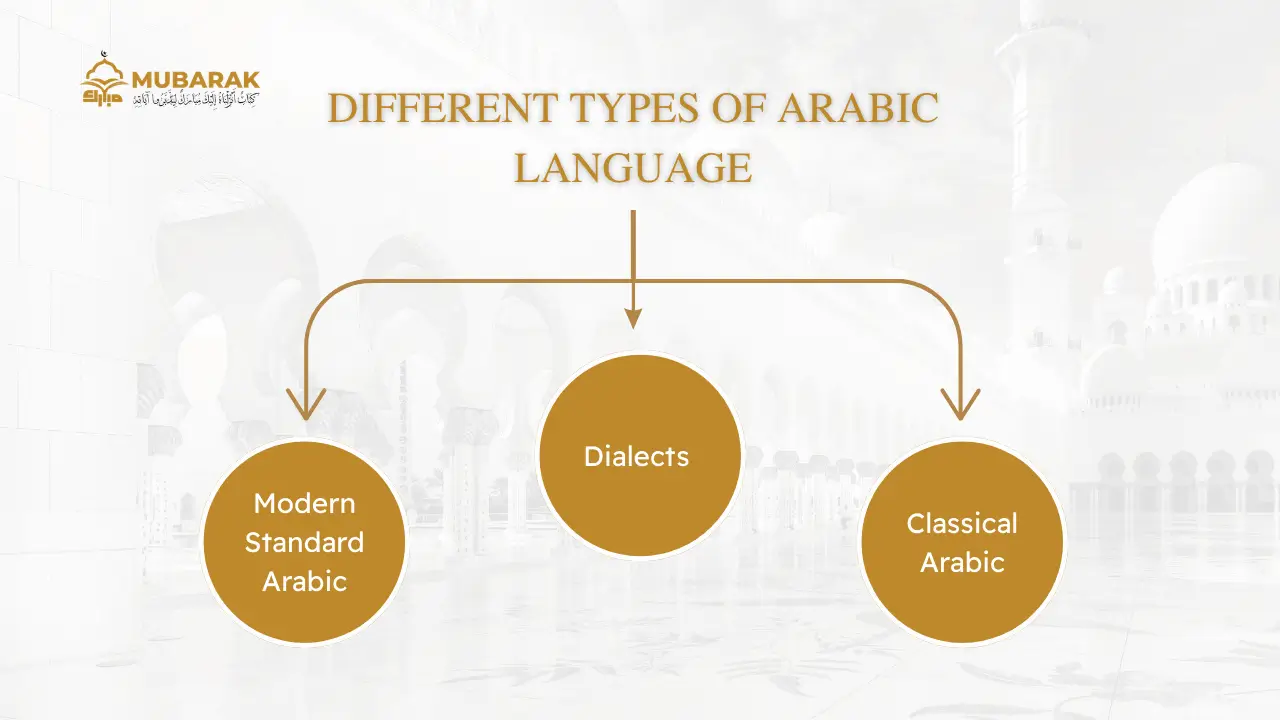
Arabic isn’t just one single way of speaking. It comes in several forms, and each one is used in a different setting, that’s why knowing the different types of Arabic language can help learners decide which path to take, whether their goal is education, religious studies, or everyday conversation.
1. Modern Standard Arabic (MSA / Fus’ha)
Modern Standard Arabic (MSA) is the formal version of Arabic used throughout the Arab world, and it’s the most common form people recognize and understand, no matter which country they’re from.
You’ll commonly see or hear MSA in:
- News channels and media outlets
- Books and modern literature
- Official speeches and government communication
- Schools and universities
- Formal writing and documents
Because it’s understood everywhere, MSA acts as a bridge between different Arab countries and cultures. For most learners, it’s the best place to start, especially if they want a strong foundation in Arabic.
2. Classical Arabic (Fus’ha Al-Kitab)
Classical Arabic is the original, traditional form of the language, and it’s best known as the language of:
- The Qur’an
- Classical Islamic texts
- Early Arabic poetry
- Historical and linguistic manuscripts
This form of Arabic carries deep religious, cultural, and academic value. While it’s very similar to Modern Standard Arabic in grammar and structure, Classical Arabic uses older vocabulary and a more traditional style.
Students of Islamic studies, Arabic literature, and history often focus on Classical Arabic so they can read original texts without relying on translations.
Classical Arabic and Its Importance
Classical Arabic holds immense religious, historical, and cultural value. It allows direct access to Islamic scholarship and classical literature without translation. For students of Islamic studies, learning Classical Arabic is essential.
Read Also: How to Learn Classical Arabic Language
3. Dialects (Ammiyya / Colloquial Arabic)
Arabic dialects, also called Colloquial Arabic (Ammiyya) are the versions people speak in daily life. These dialects can change from one country to another, and sometimes even from one city to the next.
Some of the most widely spoken dialects include:
- Egyptian Arabic
- Levantine Arabic
- Gulf Arabic
- Moroccan Arabic
Dialects are used in everyday conversations, TV shows, movies, social media, and casual settings. They’re rarely written and almost never used in formal situations.
Because dialects vary so much, someone fluent in one dialect might struggle to fully understand another without some exposure. That’s why many learners start with MSA and later pick up a dialect based on where they live or who they communicate with.
Read Also: Best Way to Learn to Speak Arabic
Modern Standard Arabic vs Spoken Arabic
If you’re starting to learn Arabic, you might feel confused at first. Why does the Arabic in books sound different from the Arabic people speak every day? The answer is simple: There are two main forms of Arabic used in different situations.
Here’s the difference in an easy way:
1. Vocabulary
- Modern Standard Arabic (MSA) uses formal words that are understood across the Arab world.
- Spoken Arabic uses everyday words and expressions that can change from one country to another.
2. Pronunciation
- In MSA, words are pronounced clearly and according to grammar rules.
- In dialects, some letters may sound softer or slightly different depending on the region.
3. Grammar Flexibility
- MSA follows strict grammar rules, especially in writing and formal speech.
- Spoken Arabic is more relaxed. People often shorten words or simplify grammar in daily conversation.
4. When Each Is Used
- MSA is used in news, books, official speeches, and schools.
- Dialects are used at home, with friends, in shops, and in everyday life.
Most Arabs grow up speaking their local dialect and then learn MSA in school. That’s why both forms exist side by side (one for formal communication and one for daily life).
Read Also: Classical Arabic vs Modern Standard Arabic
Different Types of Arabic Dialects Across the Arab World
There are different kinds of Arabic dialects that vary widely across the Arab world and are usually grouped by region. Each group reflects local culture, history, and pronunciation patterns.
The main regional Arabic dialects include:
- Egyptian Arabic
- Levantine Arabic (Spoken in Jordan, Syria, Lebanon, and Palestine)
- Maghrebi Arabic (Spoken in Morocco, Algeria, and Tunisia)
- Gulf Arabic
- Iraqi Arabic
While some Arabic dialects are easily understood between neighboring regions, others can differ greatly, making mutual understanding more challenging without prior exposure.
Differences Between Arabic Dialects
Dialect differences appear in:
- Pronunciation
- Word choice
- Sentence structure
- Expressions and slang
For example, the word “how” or “what” may be completely different depending on the country.
Which Type of Arabic Should You Learn First?
At Mubarak Academy, we usually recommend starting with Modern Standard Arabic (MSA), especially for beginners because:
- It is understood everywhere
- It builds a strong grammatical foundation
- It allows reading and writing
After building their basics, students at Mubarak Academy can choose to focus on a specific dialect based on their goals, whether for travel, business, cultural interest, or daily conversation.
Join our Arabic Language Course and start learning with experts!
Conclusion
The Different Types of Arabic Language show just how rich and alive this language really is. From Classical Arabic, the language of the Qur’an, to Modern Standard Arabic and everyday dialects, each form has its own role and beauty.
No matter which path you choose, understanding these different types helps you feel less confused and more confident as you learn. With clear guidance and steady practice, your Arabic journey can become both meaningful and deeply rewarding.
Frequently Asked Questions
1. Is Classical Arabic different from Modern Standard Arabic?
Yes. Classical Arabic is the older form of the language used in religious texts and classical literature, while Modern Standard Arabic (MSA) is the contemporary formal version used in media, education, and official communication.
2. Can I speak Modern Standard Arabic in daily life?
Yes, you can, but it may sound formal in casual settings. Most everyday conversations take place in local Arabic dialects.
3. Which Arabic dialect is easiest to understand?
Egyptian Arabic is often considered one of the most widely understood dialects due to the strong influence of Egyptian media, films, and television across the Arab world.
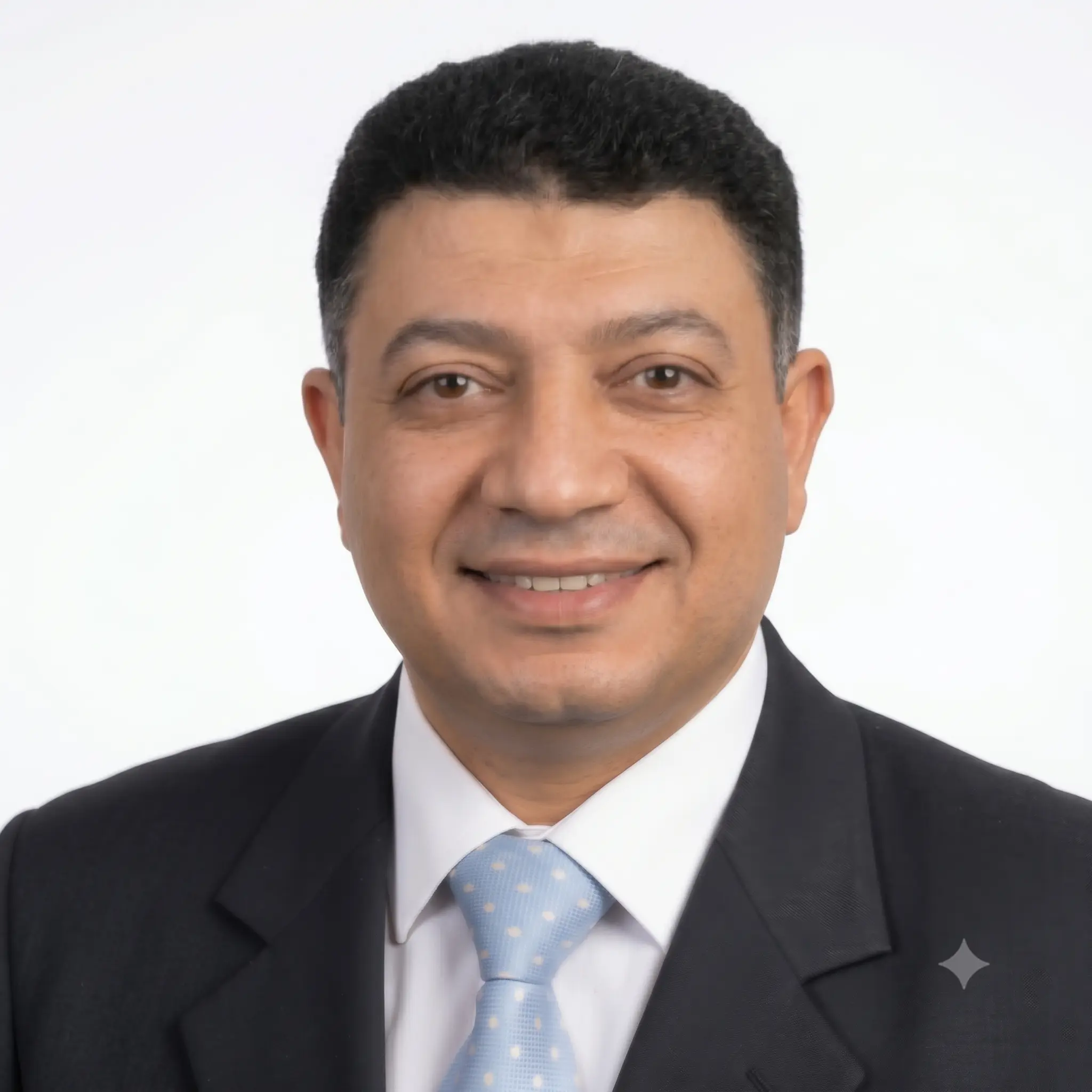
Ustadh Ahmed Mahmoud Abdulaziz is an experienced teacher of Arabic and the Holy Quran for native and non-native speakers. He holds a verified Ijazah in Hafs ‘an Asim and is certified in the foundational Tajweed texts Al-Jazariyyah and Tuhfat Al-Atfal. Drawing on his extensive background in traditional Quranic recitation and international pedagogy, he writes scholar-verified, accessible articles to help students worldwide master Tajweed rules and Arabic linguistics safely and accurately.