Have you ever wondered why seeking knowledge in Islam is considered one of the most important acts of worship? In Islam, knowledge is not just a tool for success in this world; it is a path to guidance, faith, and closeness to Allah. From the very first revelation, Islam emphasized learning, understanding, and reflection, making knowledge a foundation of a Muslim’s life.
What Does Islam Say About Seeking Knowledge?
In Islam, seeking knowledge is not just encouraged; it’s a core part of a Muslim’s life. From understanding the Quran and Sunnah to learning useful skills like medicine or science, knowledge is seen as something that benefits both the individual & Society الفرد) والمجتمع). Islam teaches us that learning should never stop, no matter our age or stage in life.
What makes seeking knowledge in Islam even more special is the intention behind it. When a person learns with the goal of pleasing Allah and helping others, that effort becomes an act of worship.
Types of Knowledge in Islam
Islam organizes knowledge into two main types, each playing an important role in creating a balanced life:
1. Fard ‘Ayn (Obligatory Knowledge):
This is the essential knowledge every Muslim needs in daily life, like how to pray, fast, and understand the basics of faith.
2. Fard Kifayah (Communal Obligation):
This includes knowledge that benefits the community as a whole, such as medicine, engineering, and education. As long as some people take responsibility for it, the rest are not held accountable.
Together, these two types show that seeking knowledge in Islam is not just about personal growth, but also about building a strong, supportive society.
Importance of Seeking Knowledge in Islam
The importance of seeking knowledge in Islam can be seen in many aspects of a Muslim’s life. It’s not just about learning facts; it’s about growing in faith and becoming a better person every day. Through knowledge, a Muslim can strengthen their iman, make wiser decisions, and stay on the right path.
When a person understands their religion, they’re less likely to make mistakes and more able to live in a way that pleases Allah. Knowledge also helps them contribute positively to others, whether through good character, advice, or useful skills.
In Islam, people who seek knowledge are highly valued. They are honored and given a higher status, not only in this life but also in the Hereafter.
Quranic Verses On Seeking Knowledge
The Quran encourages Muslims to seek knowledge and reflect deeply on the world around them. Many verses highlight the value of learning, understanding, and gaining wisdom. Here are some powerful examples:
1. Allah Raises Those Who Have Knowledge
﴿يَرْفَعِ اللَّهُ الَّذِينَ آمَنُوا مِنكُمْ وَالَّذِينَ أُوتُوا الْعِلْمَ دَرَجَاتٍ﴾
(سورة المجادلة: 11)
Meaning:
“Allah will raise those who have believed among you and those who were given knowledge, by degrees.”
This verse shows the high status of people who seek and apply knowledge.
2. Ask Allah to Increase You in Knowledge
﴿وَقُل رَّبِّ زِدْنِي عِلْمًا﴾
(سورة طه: 114)
Meaning:
“My Lord, increase me in knowledge.”
This is a simple but powerful reminder that seeking knowledge should be a lifelong habit.
3. Are Those Who Know Equal to Those Who Do Not Know?
﴿قُلْ هَلْ يَسْتَوِي الَّذِينَ يَعْلَمُونَ وَالَّذِينَ لَا يَعْلَمُونَ﴾
(سورة الزمر: 9)
Meaning:
“Say, are those who know equal to those who do not know?”
This verse highlights the clear difference between those who seek knowledge and those who do not.
4. Reflect and Think Deeply
﴿إِنَّ فِي ذَٰلِكَ لَآيَاتٍ لِّقَوْمٍ يَتَفَكَّرُونَ﴾
Meaning:
“Indeed, in that are signs for people who reflect.”
The Quran encourages not just learning, but also thinking, reflecting, and understanding.
Hadith About Seeking Knowledge in Islam
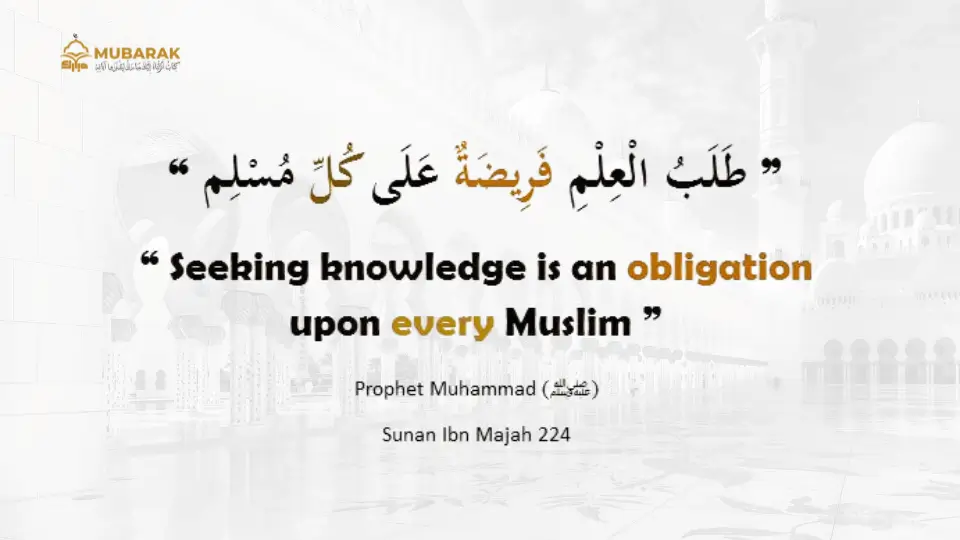
The Prophet Muhammad ﷺ also emphasized the importance of seeking knowledge in Islam in many hadiths. He said:
- “Seeking knowledge is an obligation upon every Muslim.” (Ibn Majah)
- “Whoever follows a path in the pursuit of knowledge, Allah will make a path to Paradise easy for him.” (Muslim)
- “The superiority of the knowledgeable person over the worshipper is like my superiority over the least of you.” (Tirmidhi)
- “The angels lower their wings for the seeker of knowledge, pleased with what he is doing.” (Abu Dawood)
These teachings show that seeking knowledge in Islam is not optional; it is a duty and a means to attain great rewards.
Benefits of Seeking Knowledge in Islam
Seeking knowledge in Islam brings many benefits, both spiritually and practically:
- Strengthens your relationship with Allah
- Helps you practice Islam correctly
- Increases wisdom and understanding
- Builds confidence and personality
- Enables you to help and guide others
Knowledge also protects a person from ignorance and misinformation, helping them avoid mistakes and stay on the right path.
How to Seek Knowledge in Islam
If you want to learn your religion in a clear and organized way, having the right guidance can make a big difference. That’s where Mubarak Academy comes in, offering supportive online programs for students of all levels.
Joining a structured Islamic studies course can help you:
- Learn the Quran with proper Tajweed
- Understand Islamic teachings step by step
- Build a strong and confident foundation in your faith
Seeking knowledge doesn’t have to feel overwhelming. With the right support, it becomes a smooth and rewarding journey, and Mubarak Academy helps you stay consistent, motivated, and connected every step of the way.
Conclusion
Seeking knowledge in Islam is a lifelong journey that shapes your faith, character, and purpose. It’s not just about gaining information, but about growing closer to Allah and becoming a better person.
With the right intention and the right resources, whether through teachers, books, or an Online Quran Academy, this journey becomes easier, more meaningful, and deeply rewarding.
FAQs About Seeking Knowledge in Islam
1. Is seeking knowledge obligatory in Islam?
Yes, seeking essential religious knowledge is obligatory for every Muslim, especially knowledge related to daily acts of worship.
2. Can women seek knowledge in Islam?
Absolutely. Islam encourages both men and women to seek knowledge equally and to grow in understanding their faith.
3. What is the best knowledge to start with?
It is best to start with the basics: Islamic beliefs (Aqeedah), prayer (Salah), and understanding the Qur’an.
4. Can worldly knowledge be considered worship?
Yes. When the intention is to benefit others and seek the pleasure of Allah, even worldly knowledge can become an act of worship.

Ustadh Ahmed Mahmoud Abdulaziz is an experienced teacher of Arabic and the Holy Quran for native and non-native speakers. He holds a verified Ijazah in Hafs ‘an Asim and is certified in the foundational Tajweed texts Al-Jazariyyah and Tuhfat Al-Atfal. Drawing on his extensive background in traditional Quranic recitation and international pedagogy, he writes scholar-verified, accessible articles to help students worldwide master Tajweed rules and Arabic linguistics safely and accurately.