
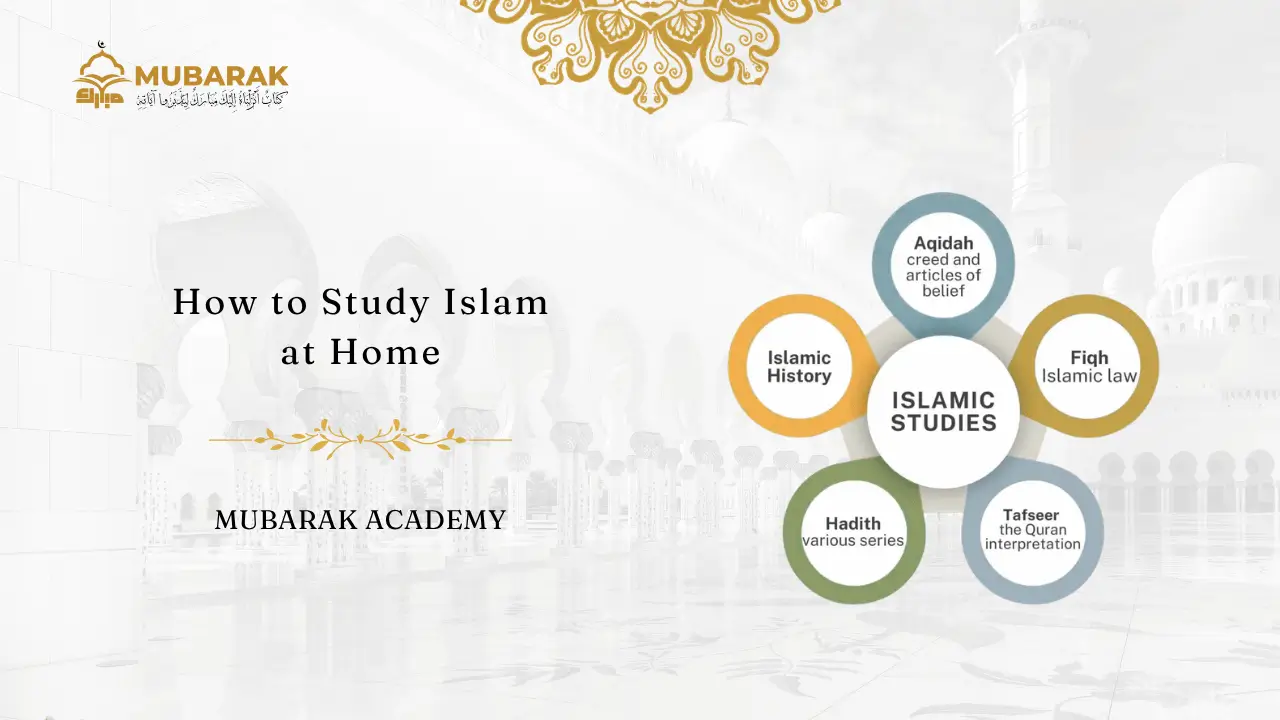
If you’ve ever found yourself asking how to study Islam at home, that’s already a beautiful start. The simple desire to learn is where everything begins.
Learning Islam at home doesn’t have to feel overwhelming. It gives you the freedom to go at your own pace, in your own space, without pressure. In this guide, you’ll find simple, practical steps to help you stay organized, motivated, and connected throughout your journey.
How to Study Islam at Home?
If you’re still wondering how to study Islam at home, take a deep breath; you’re not alone. Starting can feel overwhelming, but it doesn’t have to be complicated. Studying Islam from home isn’t about doing everything perfectly or all at once. It’s about building a simple, consistent routine that helps you grow step by step.
1. Set Clear Goals for Your Islamic Learning
Begin by asking yourself what you truly want to learn. Having a clear goal makes your journey feel more focused and less confusing.
For example, you might ask yourself:
- Do I want to learn how to read the Qur’an with confidence?
- Do I want to understand its meanings (Tafsir)?
- Do I want to deepen my knowledge of Hadith or Fiqh?
When your goals are clear, staying consistent becomes much easier. In fact, studies show that people who set specific learning goals are far more likely to stay committed and make real progress.
2. Create a Simple Study Plan
Consistency is more important than intensity. Instead of studying for long hours once a week, try:
- Spend just 20-30 minutes daily
- Choose a fixed time that works for you, like after Fajr or before going to sleep
You can also rotate your topics to keep things interesting. For example:
- Day 1: Qur’an recitation
- Day 2: Tafsir
- Day 3: Hadith
- Day 4: Islamic history
This kind of balanced routine keeps you engaged without feeling overwhelmed, and helps you build knowledge step by step.
3. Start with the Quran
The Qur’an is the heart of Islamic knowledge, so it’s the best place to begin your journey.
Start by focusing on:
- Learning how to recite properly (Tajweed)
- Understanding the meanings (Tafsir)
- Reflecting on the verses and how they apply to your life
The more regularly you connect with the Qur’an, the more you’ll feel its impact; not just spiritually, but mentally too.
4. Learn from Trusted Online Sources
Learning Islam online can be a huge blessing, but it’s important to be mindful of where you’re getting your knowledge from. Not everything you see or hear online is accurate, so choosing the right sources really matters.
Try to look for:
- Qualified and knowledgeable scholars
- Well-structured courses
- Trusted and verified Islamic platforms like Mubarak Academy
With the right guidance, an online quran academy can provide structured lessons, experienced teachers, and a clear path that helps you stay consistent and confident in your learning.
Deepen Your Islamic Knowledge
Learn Aqeedah, Fiqh, Seerah, and core Islamic teachings through a well-structured online program guided by experienced and qualified instructors
5. Study Hadith and Sunnah
To truly understand Islam, it’s important to learn about the life and teachings of the Prophet Muhammad ﷺ. His words and actions show us how to live Islam in a real, practical way.
A simple way to start is:
- Begin with short and easy collections, like the 40 Hadith
- Focus on authentic (Sahih) sources
This step helps you move beyond just learning information; it helps you actually live Islam in your daily life, in the way the Prophet ﷺ taught us.
6. Take Notes and Revise Regularly
Don’t just read, write things down. It might feel simple, but it makes a big difference. When you take notes, you’re more likely to remember and truly understand what you’re learning.
Keep it easy and manageable:
- Write short, clear notes
- Highlight the key lessons that stand out to you
- Go back and review them once a week
This small habit helps the knowledge stay with you longer and makes everything feel more organized.
Studies show that writing notes improves memory retention by up to 50% compared to passive reading.
7. Practice What You Learn
Learning Islam isn’t just about gaining knowledge; it’s about living it. Even small actions can make a big impact when you start applying what you learn.
Try to bring it into your daily life through:
- Your prayers
- Your manners and behavior
- The way you deal with others
This is where real change happens. When knowledge turns into action, it starts to shape your character, your habits, and your relationship with Allah.
8. Stay Consistent, Not Perfect
You don’t need to be perfect to make progress; you just need to keep showing up. Some days will feel easier than others, and that’s completely okay. What matters most is staying consistent, even if it’s just a little each day.
Remember, small efforts add up:
- Just 10 minutes a day can turn into 60+ hours over a year
That’s real growth, built step by step. So don’t pressure yourself to do everything; focus on doing something regularly.
9. Create a Distraction-Free Environment
A calm, quiet space helps your mind stay (present) and makes learning feel easier and more enjoyable.
A few simple tips:
- Choose a quiet, comfortable spot
- Turn off notifications or put your phone away
- Use a notebook or a simple digital tool to stay organized
When your environment is free from distractions, you’ll notice how much more focused and productive your study time becomes.
Conclusion
Now that you understand how to study Islam at Home, remember that this journey is built on small, consistent steps. You don’t need perfect knowledge, you just need a willing heart and a steady routine.
Keep learning, keep applying, and most importantly, keep going. Over time, you’ll notice how these simple efforts begin to shape your mindset, your habits, and your connection with Allah in a beautiful way.
FAQs About Studying Islam at Home
1. Can I learn Islam completely at home?
Yes, you can build strong foundational knowledge at home using online courses, books, and guided programs. However, learning from qualified teachers is highly recommended.
2. How long does it take to study Islam?
It depends on your goals. A basic understanding can take a few months, while deeper knowledge is a lifelong journey.
3. What is the best way to start studying Islam?
Start with the Qur’an, then move to Hadith and basic Fiqh. Follow a simple, consistent study plan for steady progress.
4. Are online Islamic courses effective?
Yes. Studies suggest that e-learning can improve retention rates compared to traditional methods. With interactive lessons and qualified instructors, online Islamic courses are both effective and convenient.
5. How many hours should I study Islam daily?
Even 20-30 minutes daily can be enough if you stay consistent and focused in your learning.
6. Do I need a teacher to study Islam?
While self-study is helpful, having a teacher ensures correct understanding, helps avoid mistakes, and speeds up your progress.

Ustadh Ahmed Mahmoud Abdulaziz is an experienced teacher of Arabic and the Holy Quran for native and non-native speakers. He holds a verified Ijazah in Hafs ‘an Asim and is certified in the foundational Tajweed texts Al-Jazariyyah and Tuhfat Al-Atfal. Drawing on his extensive background in traditional Quranic recitation and international pedagogy, he writes scholar-verified, accessible articles to help students worldwide master Tajweed rules and Arabic linguistics safely and accurately.