Muslims wait for Ramadan every year to heal themselves from all the struggles they go through throughout the year. Ramadan is one of the most sacred times for Muslims, filled with blessings and rewards. Let’s learn some amazing facts about Ramadan in this blog, which highlight the value of this holy month that should never be missed!
Overview of Ramadan
Ramadan is the 9th month in the Islamic lunar calendar, in which Muslims fast, worship, serve, have communal gatherings, and focus on spiritual development. The most important worship Muslims do in Ramadan is fasting, which is one of the Five Pillars of Islam.
The Messenger of Allah said:
“There is no good deed that the son of Adam does, but between ten and seven hundred Hasanahs will be recorded for him. Allah, the mighty and sublime, said: ‘Except fasting, for it is for me and I shall reward for it. He gives up his desires and his food for my sake. Fasting is a shield, and the fasting person has two moments of joy. One when he breaks his fast and another when he meets his Lord. And the smell that comes from the mouth of the fasting person is better before Allah than the fragrance of musk”
6 Amazing Facts about Ramadan You Should Know
Ramadan is an extraordinary month, not just because of fasting thirty days straight, but also because of the unlimited blessings, tranquility, and delight you can find in it.
Here are some amazing facts about Ramadan:
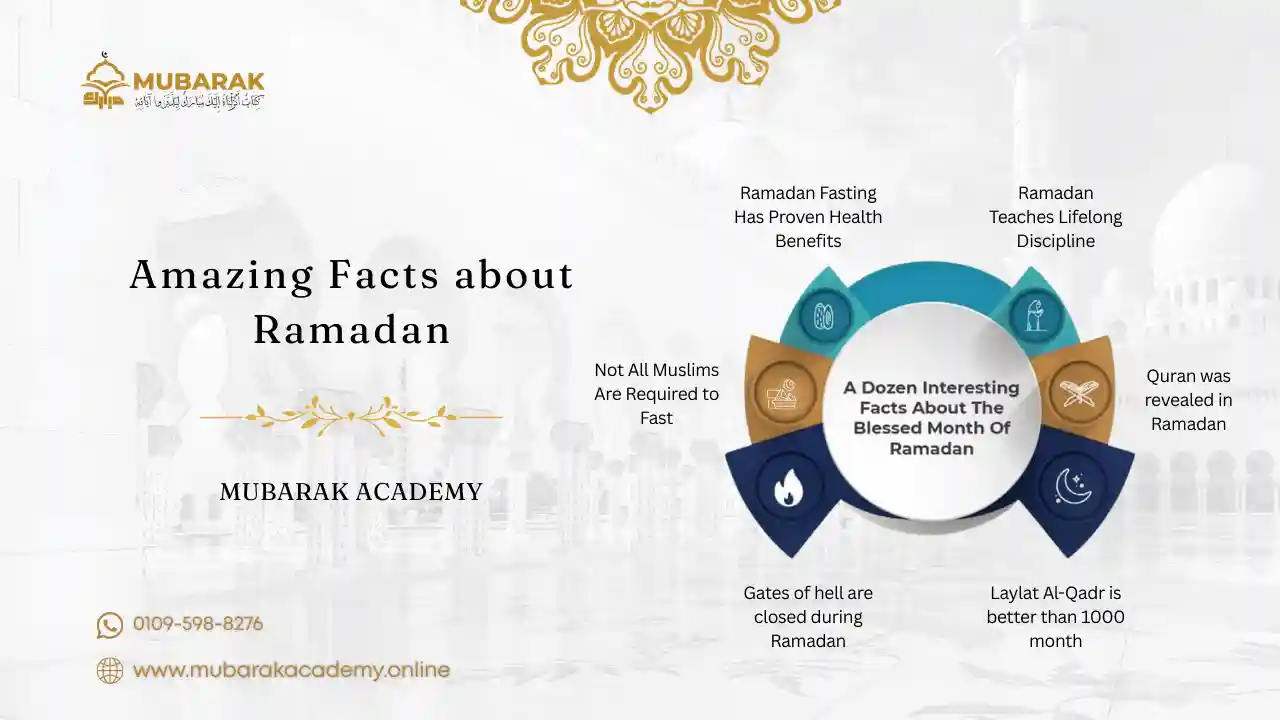
1. Ramadan Is the Time when the Holy Quran Revealed
An interesting fact about Ramadan is that it marks the time when the Holy Quran was first revealed to our Prophet Muhammad (peace be upon him), sent down from heaven “as a guidance for men and women, a declaration of direction, and a means of salvation,” offering guidance for all of humanity and remaining a foundation of our faith.
2. Ramadan Teaches You Discipline
Throughout Ramadan, each Muslim observes a strict fast from dawn until sunset without food or drink. Fasting has been considered a special act of worship that strengthens the connection with Allah while teaching you a crucial skill that can improve your overall life, which is discipline.
Sawm is not limited to avoiding food and drink from dawn to sunset; it extends beyond that to include staying away from all bad habits and sins, such as gossiping, lying, and other harmful actions.
3. Countless Rewards
Ramadan enhances spiritual connection and increases the rewards to make up for all the wasted time during the year. Muslims go to the Masjid, spending a long time praying and reciting the holy Quran besides the five daily prayers.
4. Special Virtues in Taraweeh Prayer
Muslims perform a special prayer called the Tarawih (night prayer) in the Masjid or at home every night in Ramadan.
5. Laylat al-Qadr
From the 21st day of Ramadan to the 29th, Muslims wait for a blessed night called “Laylat al-Qadr,” sometimes referred to as the Night of Power, on which it is believed that our Prophet Muhammad first received the Holy Quran.
6. Allah’s Mercy in Fasting
Fasting in Ramadan reflects Allah’s mercy. While fasting is required for able adults, Islam makes it easy for those who cannot fast, such as children, the elderly, the sick, and pregnant or breastfeeding women, by permitting them not to fast.
3 Scientific Facts about Ramadan Impress You
Allah is most knowledgeable of what serves people’s interests; every obligation carries wisdom. Each divine duty in Ramadan holds a benefit. Here are mind-blowing scientific facts about Ramadan:

1. Reaching Ideal Weight
Sawm during Ramadan leads to a moderate reduction in body weight, which indicates the positive effect of fasting on body health. Scientific studies show a noticeable reduction in body fat in the 3rd week of Ramadan compared to the first week before or after Ramadan fasting, resulting in remarkable changes in eating patterns and daily physical activity.
According to the U.S. National Institutes of Health (NIH), Ramadan fasting can reduce body weight and fat mass safely when practiced properly, supporting better metabolism and a healthier body composition.
2. Enhancing the Immune System
One of the most amazing facts about Ramadan is its positive effect on overall health, especially the immune system. That’s because when the body takes a break from constant digestion, it can focus on repair and renewal.
Fasting helps reduce inflammation and supports the immune system to function more efficiently, making the body stronger over time.
3. Mental Health
Ramadan rituals reflect on mental health, helping Muslims get rid of negative emotions that affect aspects of their lives while setting their minds at peace thanks to the concentration on one thing during this month: worship. It helps cleanse both the body and soul!
Ramadan Facts for Non Muslims
1. “Ramadan Kareem” Is a Common Greeting
During Ramadan, Muslims often greet each other by saying “Ramadan Kareem,” which means “Have a generous Ramadan.” It’s a warm wish that reflects the spirit of kindness, and to feel the cheerful vibes of Ramadan.
2. Not All Muslims Are Required to Fast
Not every Muslim must fast in Ramadan; Allah’s mercy covers those who can’t fast, like children, sick people, or those who are travelling.
3. Taraweeh Prayers Strengthen Community Bonds
The power of Taraweeh prayers brings all Muslims together and enhances the bonds among them, as they gather for Taraweeh prayers following Isha salah.
4. Daily Schedules Often Change
In many Muslim-majority countries, working hours and school schedules are shortened during Ramadan to accommodate fasting and increased worship, especially in the evenings.
5. The Last Ten Nights Are Especially Important
On the last 10 days of Ramadan, Muslims celebrate the Laylat Al Qadr, which is the holiest night of the year because this is the night on which the Quran was first revealed to the Prophet Muhammad, and any prayer on this night will definitely come true.
:قال الله تعالى
﴾إِنَّا أَنزَلْنَاهُ فِي لَيْلَةِ الْقَدْرِ وَمَا أَدْرَاكَ مَا لَيْلَةُ الْقَدْرِ لَيْلَةُ الْقَدْرِ خَيْرٌ مِّنْ أَلْفِ شَهْرٍ تَنَزَّلُ الْمَلَائِكَةُ وَالرُّوحُ فِيهَا بِإِذْنِ رَبِّهِم مِّن كُلِّ أَمْرٍ سَلَامٌ هِيَ حَتَّىٰ مَطْلَعِ الْفَجْرِ﴿
:Allah SWT says
Indeed, we sent the Qur’an down during the Night of Decree, and what can make you know what the Night of Decree is? The Night of Decree is better than a thousand months. The angels and the Spirit descend therein by permission of their Lord for every matter. Peace it is until the emergence of dawn
6. Ramadan Ends With Eid al-Fitr
The end of Ramadan is marked by Eid al-Fitr, when Muslims celebrate it with new clothes, hanging out, and acts of charity. It’s considered the reward of a journey of self-discipline.
Deepen Your Islamic Understanding With Mubarak Academy
Self-discipline and committing to Allah’s orders in this holy month can be enhanced when you integrate yourself into a righteous community that encourages you to perform charitable deeds and deepen your religious knowledge. Through our online Quran academy, Mubarak Academy is your mentor in this blessed month-long journey to help you create lifetime changes, shaping your actions and relationships even after Ramadan ends.
We offer a set of meaningful lessons and courses that can help you enhance your acts of worship during Holy Ramadan.
Hurry to earn more rewards, and contact us today!
Conclusion
Learning about the amazing facts about Ramadan and deepening your knowledge helps you get ready for this holy month in the best possible way. Ramadan can strengthen your faith, build self-discipline, and inspire kindness that lasts even after Ramadan. Don’t miss out on this chance to learn more about the most blessed time of the year.
Frequently Asked Questions
1. What is Eid Al-Fitr?
By the end of Ramadan, Muslims celebrate the three-day festival of Eid al-Fitr, which translates to “Festival of Breaking the Fast.”
2. Why is Ramadan connected to the Quran?
The Holy Quran was first revealed to Prophet Muhammad (PBUH) in the year 609 during Laylat al-Qadr; that’s why reciting the Quran in Ramadan is highly recommended and carries numerous rewards.
3. Should all Muslims fast?
No, only able-bodied adults, male and female, are required to fast. Children, pregnant women, the sick, and those traveling are exempt.
4. What are Suhoor and Iftar?
Muslims eat a pre-dawn meal called Suhoor, while the dusk meal is called Iftar. These meals are important daily practices during Ramadan.