
Arabic is one of the most influential languages in the world, spoken by hundreds of millions of people across the Middle East and beyond. But when learners begin their journey, they often hear the term Fusha Arabic and wonder what it really means. Is it different from spoken Arabic? Is it difficult to learn? And why is it so important? In this guide, we’ll explore everything you need to know about Fusha Arabic and the best way to Learn Fusha Arabic confidently.
What Is Fusha Arabic and Why Is It Important to Learn?
Fusha Arabic is the formal, standard form of Arabic, which includes both Modern Standard Arabic (MSA) and Classical Arabic. You’ll find Fusha Arabic in:
- The Holy Quran
- News broadcasts
- Books and literature
- Official documents
- Education systems across Arab countries
Fusha Arabic is important because it is understood across all Arabic-speaking countries, regardless of dialect differences. While everyday dialects can sound very different from Egypt to Morocco to the Gulf, Fusha is understood everywhere. It acts as a shared language that unites millions of people.
For students interested in Islamic studies, Quran memorization, or understanding classical texts, learning Fusha is essential.
What Is the Best Way to Learn Fusha Arabic Today?
Today, the most effective and best way to learn Fusha Arabic is through a structured and guided approach that combines:
- Clear, step-by-step lessons
- Qualified and experienced teachers
- Interactive speaking and listening practice
- Consistent revision and feedback
While self-study apps can help you memorize vocabulary, they often lack deep grammar explanation and proper pronunciation correction. Without guidance, many learners feel stuck or overwhelmed.
At Mubarak Academy, our Arabic Language Course is considered the best way to learn Fusha Arabic gradually and confidently. We focus on building a strong foundation in pronunciation, sentence structure, reading comprehension, and real understanding, not just memorizing rules.
How to Learn Fusha Arabic Step by Step
Did you know that learners who study consistently for just 20-30 minutes a day retain significantly more than those who cram once a week? When it comes to Fusha Arabic, structure and consistency make all the difference.
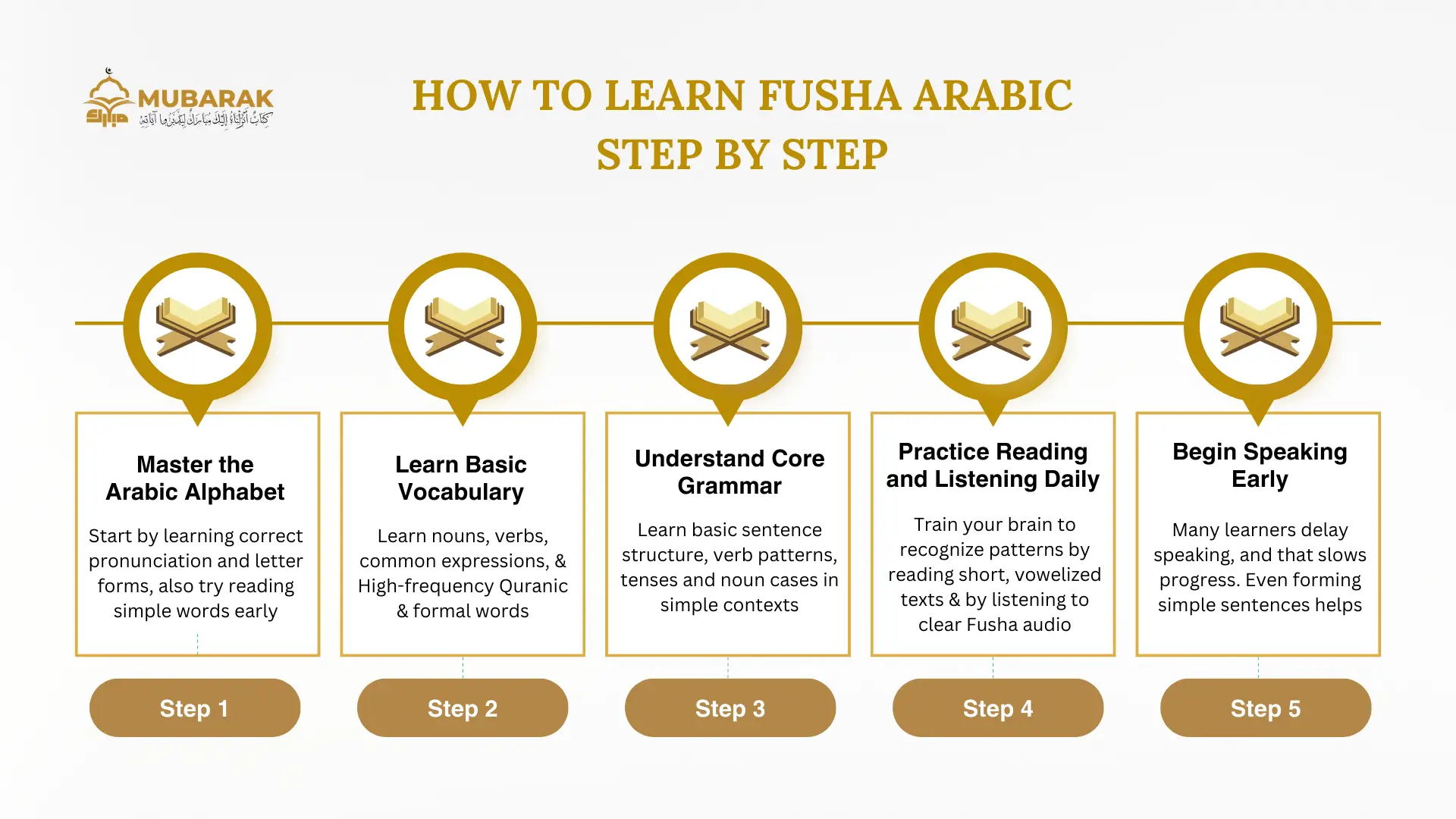
Here’s the best way to learn Fusha Arabic personally:
1. Master the Arabic Alphabet
Start by learning correct pronunciation and letter forms, also try reading simple words early (Proper pronunciation is critical from day one).
2. Learn Basic Vocabulary
Before diving into complex texts, learn everyday nouns and verbs, common expressions, and High-frequency Quranic and formal words
Research shows that learning the most common 1,000 words can help you understand a large percentage of everyday Arabic content.
3. Understand Core Grammar Gradually
Fusha grammar is logical, but it must be learned step by step:
- Basic sentence structure (nominal vs verbal sentences)
- Verb patterns and tenses
- Noun cases in simple contexts
- Avoid overwhelming yourself. Depth matters more than speed.
4. Practice Reading and Listening Daily
Train your brain to recognize patterns by reading short, vowelized (harakat) texts and by listening to clear Fusha audio (news, lectures, Quran recitation). The more exposure you get, the faster your comprehension improves.
5. Begin Speaking Early
Many learners delay speaking, and that slows progress. Even forming simple sentences helps:
- Strengthen memory
- Improve fluency
- Build confidence
You don’t need perfection. You need practice.
Read Also: How to Learn Classical Arabic Language
Learn Arabic Fusha Online vs Traditional Learning Methods
Choosing the best way to learn Fusha Arabic depends on your goals, schedule, and preferred learning style. Below is a clearer comparison to help you decide.
1. Online Learning for Fusha
Pros:
- Flexible schedules that fit busy lifestyles
- Access to qualified teachers worldwide
- More affordable than relocation or university programs
- Customized pacing based on your level
Best For:
- Working professionals
- University students
- Parents managing busy schedules
- Learners who prefer studying at their own pace
Platforms & Tools:
You can use apps like Duolingo or Rocket Arabic to learn the basics.
For deeper learning, especially in Quranic Arabic, Mubarak Academy provides live lessons with experienced teachers who help you understand and apply what you learn.
2. Traditional Learning Methods
Pros:
- Full immersion, especially in Arab countries
- Structured classroom discipline
- Immediate, face-to-face correction
- Faster language exposure through daily interaction
Best For:
- Intensive learners
- Students seeking full cultural immersion
- Those who thrive in structured environments
Methods:
- University Arabic programs
- Local institutes or madrasahs
- Immersion programs in countries like Jordan, Egypt, or Lebanon
Online learning offers flexibility and accessibility, while traditional learning provides an immersive experience. The most important factor is consistency, guided instruction, and regular practice.
Read Also: Classical Arabic vs Modern Standard Arabic
How Long Does It Take to Learn Fusha Arabic?
This is one of the most common questions learners ask, and the honest answer is: it depends on you. Your progress is influenced by several factors, such as:
- Your native language
- How consistent are you with studying
- The method you use
- How much time you practice each day
If you study regularly, here’s a general idea of what to expect:
- Basic reading ability: around 3-6 months
- Comfortable reading and conversation: 1-2 years
- Advanced academic level: 2 years or more
Regular practice significantly shortens the learning curve.
Start Learning Fusha Arabic Online with Expert Teachers
At Mubarak Academy, learning Fusha Arabic is more than just attending lessons; it’s a guided journey built on clarity, structure, and real understanding. Our experienced teachers understand both the depth of the Arabic language and the common challenges students face, especially non-native speakers.
Through our structured online program, you will:
- Build strong and correct pronunciation from day one
- Understand grammar in a simple, practical way
- Read Fusha texts with growing confidence
- Connect deeply with Quranic and Islamic texts
With personalized feedback and step-by-step guidance, students at Mubarak Academy progress steadily, avoid common beginner mistakes, and develop real confidence in their Arabic skills, all from the comfort of home.
Conclusion
Fusha Arabic is the foundation of formal Arabic and the key to understanding the Quran, literature, and media across the Arab world. While it may seem challenging at first, the right learning approach makes it achievable for anyone.
The best way to learn Fusha Arabic is through consistent practice, structured lessons, and guidance from experienced teachers who can simplify grammar and correct pronunciation from the start.
FAQs About Fusha Arabic
1. Can Beginners Learn Fusha Arabic Online Successfully?
Yes. Beginners can successfully learn Fusha Arabic online when they follow a structured curriculum and receive guidance from qualified teachers.
2. Is Fusha Arabic in the Quran?
Yes. The Quran is written in Classical Arabic, which is a form of Fusha Arabic.
3. Where Is Fusha Arabic Spoken?
Fusha Arabic is not typically used in casual daily conversations. Instead, it is spoken in formal settings such as:
- News broadcasts
- Public speeches
- Religious lectures
- Academic discussions
It is understood throughout all Arabic-speaking countries, making it the universal form of the language.