
We tend to link any event in our lives to music to feel its vibes, but when it comes to our religion’s teachings, you should stop and think if it’s halal or not, especially during Ramadan, the most sacred of all Islamic holidays, which we wait for to erase sins and earn rewards.
If you’re looking to understand what is forbidden during Ramadan and searching for a clear answer to the question, “Can you listen to music during Ramadan?”, keep reading this blog.
Can You Listen to Music During Ramadan?
As a Muslim seeking the countless blessings of the holy month, it’s natural to wonder: Can you listen to music during Ramadan?
There is no explicit verse in the Qur’an that directly states that listening to music is forbidden during Ramadan. However, Muslim scholars have long differed on this issue. So, in the following sections, we will explore the main scholarly opinions and clarify how listening to music is viewed (especially during the sacred month of Ramadan), so you can make an informed and mindful choice.
Scholarly Opinions on Music During Ramadan
Ramadan is a month of mercy and forgiveness, a time when Muslims strive to erase past mistakes and strengthen their connection with Allah. This naturally leads many to ask, “Can you listen to music during Ramadan?”
In fact, no verse in the holy Quran forbids listening to music during Ramadan. As a result, scholars have differed on this issue and generally fall into three views:
1. Permissive view:
Some scholars claim that listening to music that only contains the tambourine or the daf is acceptable.
2. Conditional view:
While others assume that it is not the music that is forbidden, it is the emotional impact of it that is the problem.
3. Restrictive view:
Other scholars consider music impermissible and emphasize that distractions from worship are especially discouraged during Ramadan.
Because of these differing scholarly views, Muslims are encouraged to choose what best aligns with the spirit of Ramadan, avoid doubtful matters, and prioritize acts that increase closeness to Allah.
Read Also: Amazing Facts about Ramadan
Is It Haram to Listen to Music in Ramadan?
As we explained in the previous section, Scholars have different opinions about music, both during Ramadan and outside of it. Because of these differing scholarly views, many Muslims choose to take a cautious approach, especially during the holy month. Islam teaches us to stay away from doubtful matters, as the Prophet ﷺ said:
“What is lawful (halal) is clear, and what is unlawful (haram) is clear. Between them are doubtful matters which many people do not know. Whoever avoids doubtful matters has protected his religion and his honor. And whoever falls into doubtful matters may fall into what is unlawful..”
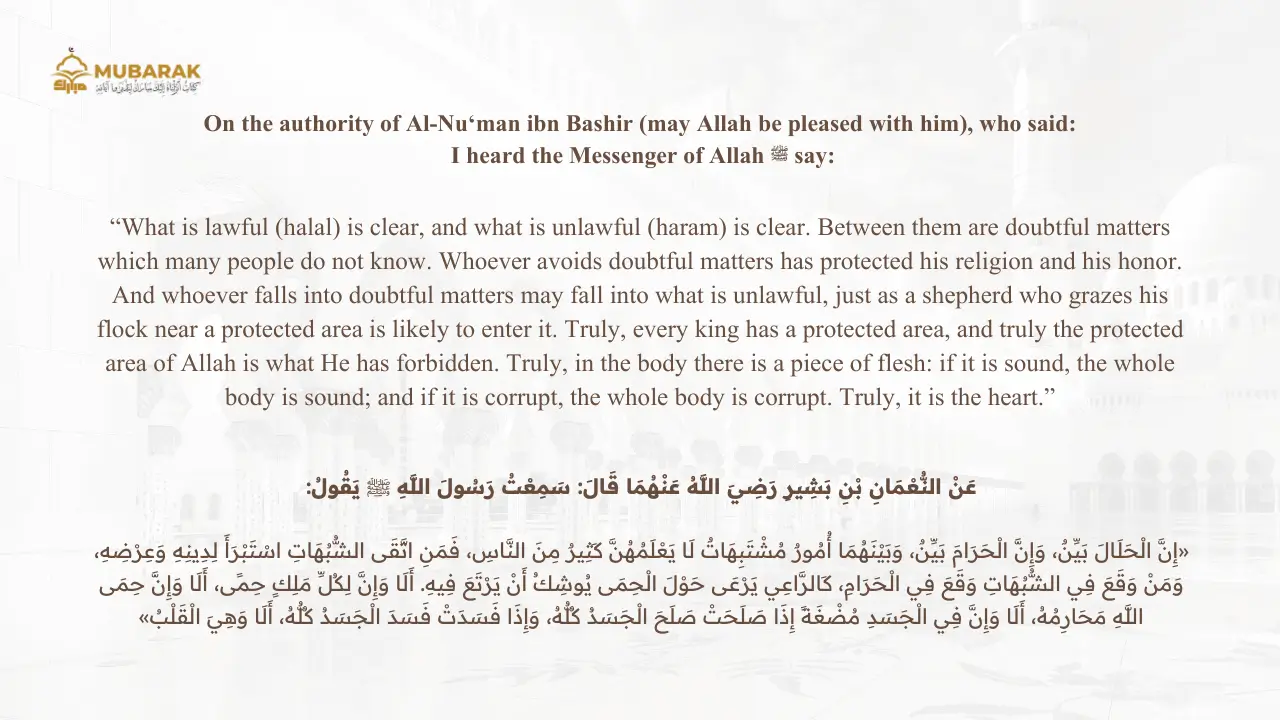
This reminder encourages Muslims to choose what brings peace to the heart and strengthens their relationship with Allah, especially during the blessed month of Ramadan.
Is It Haram to Listen to Music in Ramadan After Iftar?
After iftar, the ruling does not change simply because the fast has ended. What is halal or haram isn’t decided by the time of day, but by the action itself and how it affects the heart.
Many scholars therefore advise Muslims to remain mindful even after iftar, as the nights of Ramadan are especially meant for:
- Praying Taraweeh
- Reading or listening to the Qur’an
- Quiet reflection and remembrance
Listening to music after iftar doesn’t break your fast. But if it pulls your attention away from worship and fills your heart with distractions, always remember that Ramadan is short, and its nights are precious. Choosing what helps your heart feel closer to Allah is often the best path.
What Is Forbidden During Ramadan?
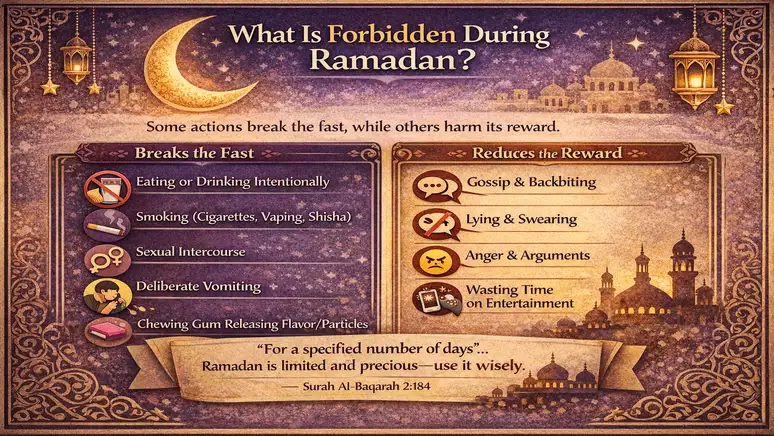
During Ramadan, some actions clearly break the fast, while others do not invalidate it but reduce its reward and spiritual value.
Actions that break the fast include:
- Intentionally eating or drinking during fasting hours
- Smoking, including cigarettes, vaping, or shisha
- Sexual intercourse during fasting hours
- Deliberate vomiting (If vomiting happens unintentionally, the fast is still valid).
- Chewing gum because it releases flavor or particles that reach the throat (not merely because of chewing itself).
Other behaviors that are sinful or strongly discouraged, especially during Ramadan, include:
- Gossiping, backbiting, and spreading rumors
- Swearing or using offensive language
- Lying, anger, arguments
- Excessive time-wasting activities that distract from worship and remembrance of Allah
Allah SWT says in Surah Al-Baqarah, “For a specified number of days,” reminding believers that Ramadan is limited in time and should be valued and used wisely.
How to Increase Spiritual Awareness During Ramadan
During Ramadan, spiritual focus and mindfulness are essential, so listening to music can sometimes distract a Muslim from worship and weaken concentration on strengthening the connection with Allah. Instead, this blessed time can be filled with learning, reflection, and deepening one’s understanding of Islamic teachings.
Mubarak Academy provides simplified and structured learning paths designed to help Muslims grow spiritually and intellectually during Ramadan. They also address common questions, such as “Can you listen to music during Ramadan?”, helping you make informed choices that enhance your faith. All you need to do is decide what you want to learn this Ramadan and start your journey toward greater knowledge and spiritual awareness.
Conclusion
As believers prepare themselves spiritually for Ramadan, questions such as Can You Listen to Music During Ramadan naturally arise, reflecting a sincere desire to observe the holy month in the best possible way.
As the holiest month in the Islamic calendar, Ramadan is a time to seek blessings, increase good deeds, and strengthen self-discipline through full commitment to Allah’s commands.
Frequently Asked Questions
1. Are there specific types of music allowed?
Some Muslims believe that certain instruments, such as the tambourine or duff, may be permissible according to specific scholarly opinions.
2. Can music break my fast?
Listening to music does not invalidate your fast, but it may reduce your reward and lessen the spiritual blessings of Ramadan.
3. Can I listen to music during Ramadan?
Listening to music does not invalidate fasting, but it can distract from the spiritual focus of Ramadan. Many Muslims choose to avoid it and dedicate more time to prayer, reflection, and strengthening their connection with Allah.
4. Does listening to music break your fast?
No, listening to music does not break the fast. Fasting is broken by actions such as eating, drinking, or marital relations during fasting hours. However, many scholars state that music may diminish the spiritual reward, especially if it distracts from worship or includes inappropriate content.