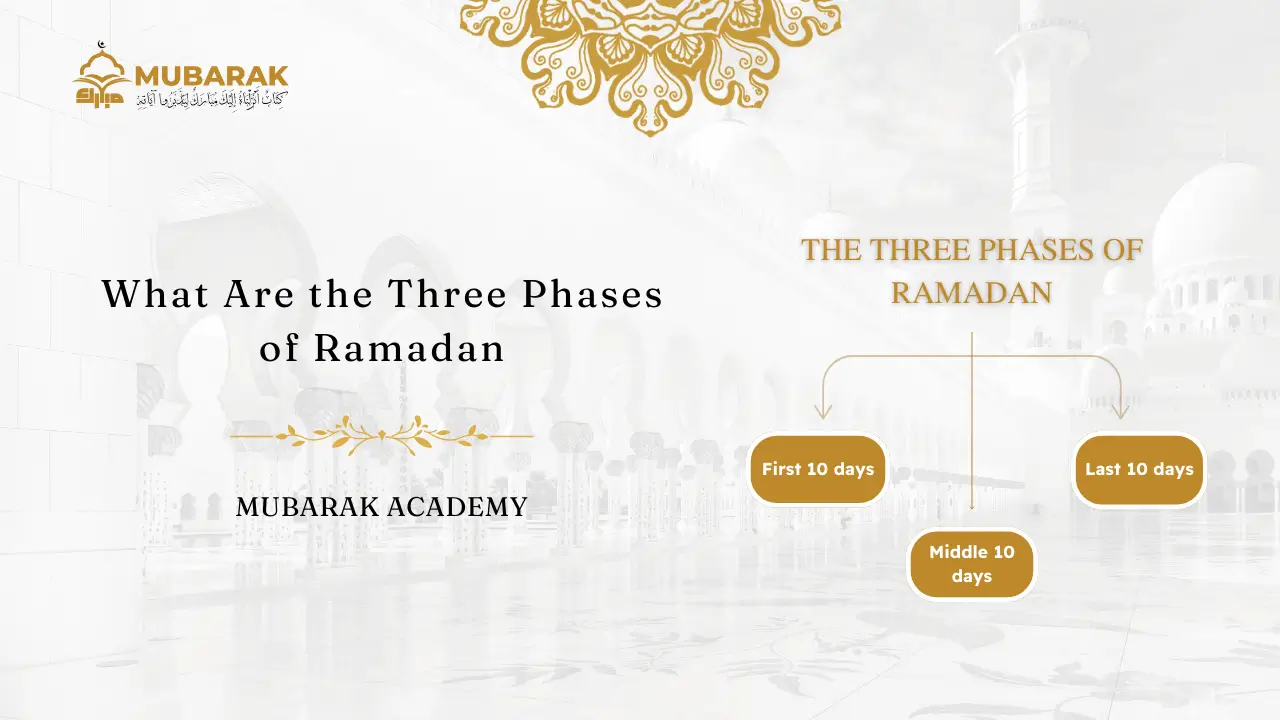
Ramadan is a special month of worship, reflection, and growing closer to Allah. It’s not just about fasting from food and drink, it’s a spiritual journey that unfolds in three meaningful phases, each focusing on a different part of a believer’s connection with Allah, so by understanding these phases, we can worship with more purpose and truly make the most of Ramadan. In this blog, we’ll explain what are the three phases of Ramadan, their meanings, and how learning them through Islamic knowledge can transform your Ramadan experience.
What Are the Three Phases of Ramadan?
According to many Islamic teachings, narrations, and what is commonly referred to in Islamic culture as the 3 parts of Ramadan hadith, Ramadan is divided into three Ashra (three ten-day periods), each lasting ten days:
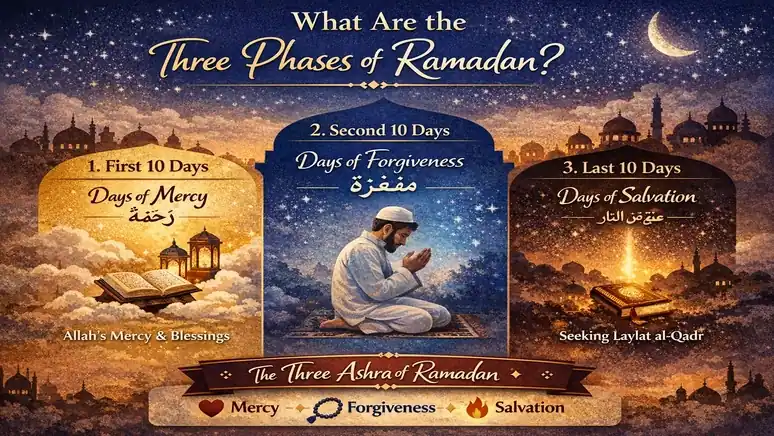
1. The First 10 Days of Ramadan (Days of Mercy رحمة)
The first part of Ramadan is known as the Days of Mercy, as it’s a gentle beginning, where Allah’s mercy surrounds His servants and helps them ease into fasting, prayer, and worship.
During this time, hearts soften, intentions become clearer, and believers start reconnecting with Allah.
The Prophet ﷺ said:
When Ramadan begins, the gates of Paradise are opened, the gates of Hell are closed, and the devils are chained
(Bukhari & Muslim)
This hadith reminds us that Ramadan starts with mercy and encouragement for everyone who wants to do better, so during these first days, it’s recommended to:
- Renew your intention for Ramadan
- Make more du‘ā’ and remember Allah often
- Ask Allah for mercy for yourself and others
This phase teaches us that Allah’s mercy is wide and always close to those who turn to Him sincerely.
2. The Second 10 Days (Days of Forgiveness مغفرة)
The middle part of Ramadan is known as the Days of Forgiveness, as this is a special time to pause, reflect, and turn back to Allah with a sincere heart. Allah opens the doors of forgiveness wide for anyone who truly repents, no matter their past mistakes.
During these days, Muslims are encouraged to:
- Make sincere tawbah (repentance)
- Ask Allah to forgive past sins
- Work on improving character and behavior
- Avoid sins of the tongue, heart, and actions
The Prophet ﷺ said:
Whoever fasts Ramadan with faith and seeking reward, his past sins will be forgiven (Bukhari & Muslim)
This phase reminds us that Allah’s forgiveness is greater than any sin, and that returning to Him is always possible.
3. The Last 10 Days (Days of Salvation from Hellfire عتق من النار)
The final ten days of Ramadan are the most powerful and spiritually intense part of the month. They are known as the Days of Salvation from Hellfire, when believers make their strongest effort to draw close to Allah.
These nights include Laylat al-Qadr (The Night of Decree), a night that Allah describes as better than a thousand months, meaning that sincere worship during it carries an unimaginable reward.
During these last days, Muslims usually increase:
- Night prayers (Qiyam and Tahajjud)
- Qur’an recitation
- Du‘ā’, especially asking for forgiveness and protection from Hellfire
- Charity and good deeds
- I‘tikāf (secluding oneself in the mosque), when possible
The Prophet ﷺ gave special attention to these nights, increasing his worship more than at any other time.
The Prophet ﷺ said:
(Bukhari & Muslim) “Search for the Night of Qadr in the odd nights of the last ten days of Ramadan”
These final days represent the spiritual peak of Ramadan and complete what scholars often describe when explaining how the 3 Ashra of Ramadan is called: mercy, forgiveness, and salvation.
Read Also: Amazing Facts about Ramadan
Learn the Three Phases of Ramadan Through Islamic Studies
Understanding what are the three phases of Ramadan begins with learning Islam the right way. Through a well-structured Islamic studies course, Muslims can learn not only what these phases represent, but also how to live them correctly according to the Qur’an and Sunnah.
Mubarak Academy’s Islamic studies course presents essential Islamic knowledge in a clear and practical manner, covering topics such as:
Building a strong foundation of faith (Aqeedah)
- Learning how to worship correctly, including fasting and prayer (Fiqh)
- Drawing lessons from the life of Prophet Muhammad ﷺ (Seerah)
- Understanding the meanings and guidance of the Qur’an (Tafsir)
- Applying good character in everyday life (Islamic manners)
With proper Islamic learning, Ramadan becomes more than a routine, it turns into a deeply meaningful experience that leaves a lasting impact on the heart and soul 🌙
Explore Mubarak Academy’s online quran classes fees & Plans!
Conclusion
Recognizing The Three Phases of Ramadan transforms the way Muslims experience this sacred month. From mercy to forgiveness to salvation from Hellfire, each phase offers a chance for spiritual growth and renewal.
By understanding what are the three phases of Ramadan and living these phases with sincerity, Ramadan becomes a lasting source of guidance, strength, and closeness to Allah, well beyond its final day.
FAQs About the Three Phases of Ramadan
1. What are the three phases of Ramadan?
Ramadan is traditionally divided into three phases:
• First 10 days: Mercy
• Second 10 days: Forgiveness
• Last 10 days: Salvation from Hellfire
2. Are the three phases of Ramadan mentioned in the Qur’an?
This division is based on Islamic narrations and scholarly explanations rather than a direct Qur’anic verse, but it reflects the overall spirit and teachings of Islam.
3. Why are the last 10 days of Ramadan the most important?
They include Laylat al-Qadr, which is better than a thousand months, and focus on seeking salvation from Hellfire through increased worship and devotion.
4. How can I benefit from each phase of Ramadan?
You can benefit by increasing acts of worship, making sincere du‘ā’, seeking forgiveness, and learning authentic Islamic teachings related to Ramadan.
5. Can Islamic studies help me understand Ramadan better?
Yes. Studying Islamic sciences helps you understand the deeper meanings, rulings, and spiritual wisdom behind Ramadan and its different phases.