
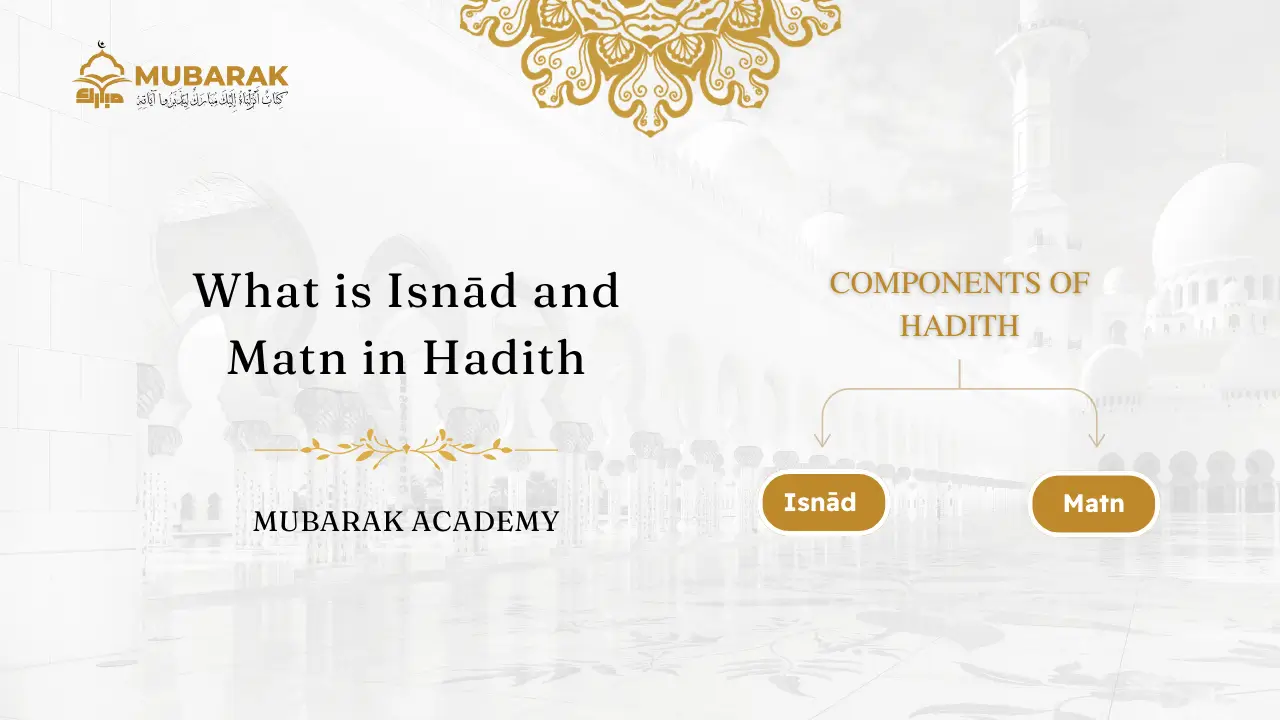
Understanding isnād and matn is essential for anyone who wishes to explore the sciences of hadith or evaluate the authenticity of narrations. In this article, you will learn what is Isnād and Matn, their importance, examples of each, the difference between them, and how students today can learn hadith science online.
What Is Isnād and Matn of Hadith?
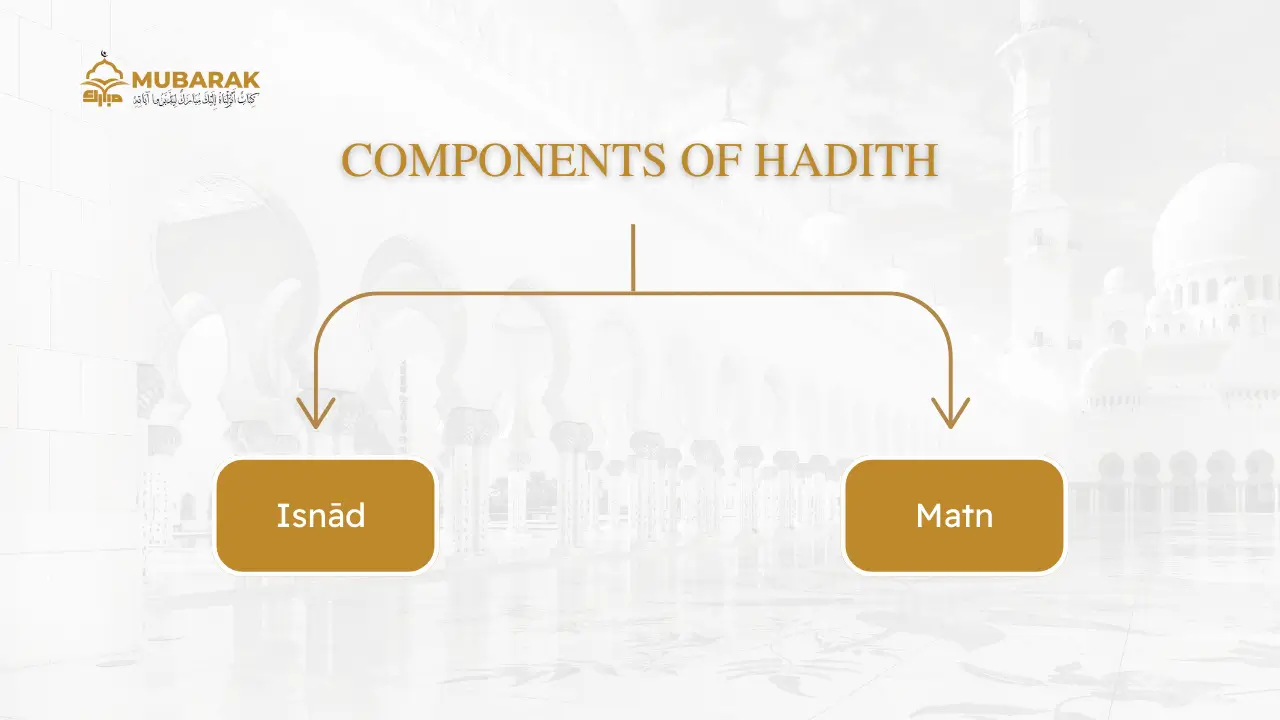
When studying Hadith, you’ll often hear two key terms: Isnād and Matn, which are the two essential parts of Hadith: the Isnād (chain of narrators) and the Matn (the actual text). Understanding both is the foundation of Hadith sciences.
1. Meaning of Isnād (الإسناد):
An Isnād is the chain of narrators who transmitted a hadith from one generation to the next. It begins with a Companion of the Prophet ﷺ and continues until the scholar who recorded it.
It answers the question: “Who brought this hadith to us?”
Example:
“A narrated from B, who narrated from C, who narrated from the Prophet ﷺ.”
2. Meaning of Matn (المتن):
Matn is the actual text or wording of the hadith, the message, statement, or action reported from the Prophet ﷺ.
It answers the question: “What is the content of the hadith?”
Example:
The Prophet ﷺ said: ‘Actions are judged by intentions.’
While Isnād tells us who carried the knowledge, Matn tells us what the knowledge is
Examples of Isnād and Matn:
To better understand what is Isnad and Matn of Hadith, here are some simple and well-known examples of Isnad and Matn from the books of Hadith.
1. Example of Isnad Hadith:
حدثنا عبد الله بن يوسف، قال: أخبرنا مالك، عن نافع، عن عبد الله بن عمر رضي الله عنهما
The chain here is:
Abdullah ibn Yusuf → Mālik → Nāfi‘ → Ibn ‘Umar (RA)
This is the isnād, not the actual message of the hadith.
2. Example of Matn Hadith:
أن رسول الله ﷺ قال: “إنما الأعمال بالنيات”
“Actions are judged by intentions”
This short statement is the Matn, the content and meaning of the hadith.
3. Example of a Complete Hadith (Isnād + Matn):
Isnād:
حدثنا الحميدي عبد الله بن الزبير، قال: حدثنا سفيان، قال: حدثنا يحيى بن سعيد الأنصاري، قال: أخبرني محمد بن إبراهيم التيمي، عن علقمة بن وقاص الليثي، عن عمر بن الخطاب رضي الله عنه
Matn:
“سمعت رسول الله ﷺ يقول: “إنما الأعمال بالنيات، وإنما لكل امرئ ما نوى
In this well-known hadith, you can clearly see the two essential components:
- The isnād: the list of narrators who passed the hadith down
- The matn: the actual words of the Prophet ﷺ.
Together, they form a complete hadith.
Difference Between Sanad and Isnād:
After understanding what is isnād and matn, it’s important to understand what is a sanad in Islam and how it differs from isnād.
1. Isnād (الإسناد)
This refers to the entire chain of narrators, listed in order, showing how the hadith was passed down. This entire chain is the isnād:
حدثنا مالك، عن نافع، عن ابن عمر رضي الله عنهما
2. Sanad (السند)
Sanad refers to the individual narrators themselves, the links that make up the chain. It focuses on the people, not the order.
Example of Sanad:
In the chain above, the sanad (narrators) are:
- Mālik
- Nāfi‘
- Ibn ‘Umar (RA)
These individuals are the sanad, while their sequence together forms the isnād.
Simple comparison between Sanad, Isnad, and Matn:
| Term | Meaning | Focus |
|---|---|---|
| Isnād | The chain as a whole | The order of transmission |
| Sanad | The individual links | The narrators themselves |
| Matn | The text | The words of the Prophet ﷺ |
So, when you say:
- “This hadith has a strong sanad,” you mean the narrators are trustworthy.
- “This hadith has a strong isnād,” you mean the chain (its structure and connection) is strong.
Read Also: Difference between Hafs and Warsh quran
Importance of Isnād and Matn:
The Isnād and Matn play a huge role in helping us understand which narrations truly trace back to the Prophet ﷺ. The Isnād is like the “story” of how a narration was passed from one person to another, making sure every link in the chain is trustworthy. The Matn, on the other hand, is the Hadith’s actual wording and meaning.
When scholars study both together, they can confidently judge whether a Hadith is authentic or not. Without a reliable chain or a sound text, we simply can’t depend on the narration. That’s why Isnād and Matn are so important, as they protect our religious knowledge and keep the Prophet’s teachings preserved just as they were meant to be.
📜 Get Your Quran Ijazah with Authentic Sanad
Like Hadith scholars, Quran Ijazah connects you to the Prophet ﷺ through an unbroken chain.
Our certified scholars hold authentic sanad — book a free evaluation.
How Students Can Learn Hadith Science Online?
Today, students from anywhere in the world can study authentic Islamic sciences and earn verified certifications through Mubarak Academy’s online Quran Ijāzah Course. With qualified teachers, live sessions, and a preserved Sanad that connects directly to the Prophet ﷺ.
1. Enroll in Authentic Ijāzah Course
At Mubarak Academy, students study Qur’anic recitation and Hadith-related sciences through a practical, teacher-to-student approach. This Course is ideal for anyone who wants to:
- Receive an official Ijāzah with a verified Sanad
- Strengthen Tajweed and recitation skills
- Understand how classical scholars evaluated narrations
- Build confidence in reading, memorizing, and transmitting sacred texts
This Course also helps clarify deeper topics like the Quran Ijazah meaning and the importance of sanad in Islamic tradition.
2. Attend Live Sessions With Qualified Scholars
Live, interactive classes bring the traditional halqah experience online. During each session:
- Students recite while the teacher listens and corrects them.
- Teachers explain the principles behind the acceptance and rejection of narrations.
- Learners see Isnād, Matn, and Rijāl concepts applied in real time.
Once a student meets the required standard, they earn their Ijāhah and become part of a verified lineage of knowledge.
3. Connect to a Living Chain of Knowledge
The greatest benefit of studying at Mubarak Academy is joining a direct, unbroken Sanad that links back to the Prophet ﷺ. This connection transforms the learning experience:
- You don’t just study Hadith, you become part of its preservation.
- You don’t just memorize rules, you receive knowledge with its spirit, method, and lineage.
Through Ijāzah, students continue a tradition that has safeguarded Islamic knowledge for over 1,400 years.
Other Recommended Courses:
Conclusion:
“What is Isnad and Matn in Hadith?” is a foundational question in the study of hadith. Isnād represents the chain of narrators, while matn refers to the actual text of the narration. Together, they ensure the authenticity, accuracy, and preservation of the Prophet’s ﷺ teachings.
By understanding these two essential components and benefiting from modern online learning resources, students today can continue this noble tradition and deepen their connection to the Sunnah.
Contact Us Now For More Details!
Frequently Asked Questions
What is isnād in Islam?
In Islam, isnād is the sacred system of documentation consisting of a continuous chain of narrators leading back to the Prophet ﷺ. It serves as an ultimate verification tool unique to Islamic civilization, ensuring that every legal ruling, spiritual teaching, and historical event is anchored in verifiable, unbroken transmission.
What is matn in Islam?
The matn in Islam refers to the actual speech, action, or tacit approval of the Prophet ﷺ that forms the core text of a hadith. Located at the very end of the transmission chain, it represents the vital message and practical guidance that Muslims implement in their daily lives.
Is isnād the same as sanad?
While scholars often use them interchangeably, there is a technical difference. The sanad refers directly to the actual chain of narrators who transmitted the text, while isnād is the active process of attributing that text back to its original source by tracing the chain link by link.
What is the main purpose of isnād?
The primary purpose of isnād is to preserve the integrity of Islamic knowledge by verifying the authenticity of transmissions. It allows scholars to scrutinize every narrator’s reliability, character, and memory, ensuring the text has not been fabricated, altered, or broken at any point during historical transmission.
Why is the matn important?
The matn is the core text and actual substance of the prophet’s teaching. Evaluating it is critical because a narration cannot be classified as authentic based on a strong chain alone; the text itself must also be entirely free from hidden flaws, contradictions with the Quran, or established principles.
Can someone study hadith science without a teacher?
You can read introductory books independently, but mastering hadith science requires a qualified teacher. An instructor guides you through complex principles, prevents misinterpretations of historical contexts, and provides the traditional authorization (ijāzah) necessary to accurately transmit and teach this intricate prophetic legacy to others safely.
Are online hadith courses reliable?
Yes, online hadith courses are highly reliable provided they are organized by reputable institutions. The platform should feature certified scholars who possess authentic, verified chains of transmission (asānīd), ensuring that the sacred knowledge you receive is anchored in continuous, legitimate scholarly lineages back to the Prophet ﷺ.
الأستاذ أحمد محمود عبد العزيز معلم متخصص في تدريس القرآن الكريم واللغة العربية للناطقين بها وبغيرها. كاتب وباحث مدونات مجاز في رواية حفص عن عاصم ومتني الجزرية وتحفة الأطفال. تتركز كتاباته على تقديم محتوى لغوي وقرآني مؤصل وموثق من قِبل العلماء، مستنداً إلى خبرته العملية الواسعة لمساعدة الطلاب حول العالم على فهم أحكام التجويد وأسرار اللغة العربية بطريقة صحيحة ومبسطة.