
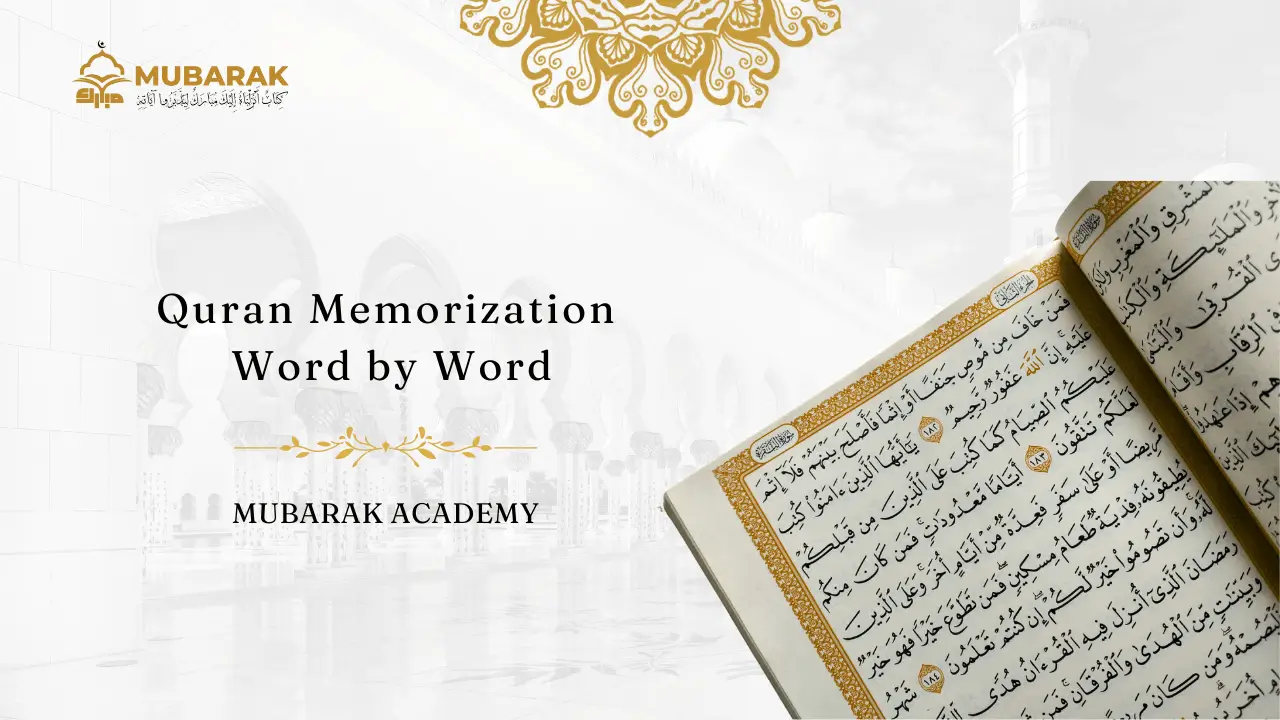
The Prophet Muhammad ﷺ said: “The best of you are those who learn the Quran and teach it.” [Sahih al-Bukhari, No. 5027] That hadith has defined the relationship between Muslims and the Book of Allah for over fourteen centuries. But learning the Quran — truly learning it, word by word, meaning by meaning — requires more than repetition. It requires a method.
This guide explains how to approach Quran memorization word by word in a structured, sustainable way. Whether you are a complete beginner, a non-Arabic speaker, or a parent seeking the right path for your child, the steps below are built on sound pedagogical principles and grounded in Islamic tradition.
What Is Quran Memorization Word by Word?
Quran memorization word by word is the process of learning each word of the Quranic text individually — understanding its Arabic pronunciation, its grammatical role, and its contextual meaning — before committing the verse to memory as a whole. Rather than rote repetition of sounds, this approach builds comprehension alongside retention.
For non-Arabic native speakers in particular, this method is not optional — it is essential. The Quran was revealed in clear Arabic (Surah Yusuf 12:2), and while it has been translated into over 100 languages by scholars worldwide, the precision of meaning that the original Arabic carries cannot be fully replicated in translation. Word-by-word study bridges that gap.
Why Learn the Quran Word by Word? The Islamic and Pedagogical Case
1. Deeper Comprehension of Allah’s Words
When a student learns verse by verse without understanding, they memorise sounds. When they learn word by word, they memorise meaning. The Quran itself commands reflection: “Do they not reflect upon the Quran, or are there locks upon their hearts?” (Surah Muhammad 47:24). Word-by-word memorization is the most direct path to the reflection Allah commands.
2. Stronger and More Durable Retention
Memory science consistently shows that material understood in context is retained far longer than material memorised abstractly. This aligns with the Islamic principle of tarteel — measured, deliberate recitation — commanded in Surah Al-Muzzammil (73:4): “And recite the Quran with measured recitation.” Slow, word-by-word engagement produces memorisation that endures.
3. Accelerated Arabic Language Acquisition
Consistent word-by-word study naturally builds Quranic Arabic vocabulary. Approximately 80% of the Quran’s content is covered by its 300 most frequently used words. A student who records and reviews these words systematically will find their overall Arabic comprehension — and their reading speed — improving steadily within months.
4. Elevated Spiritual Connection
Understanding what you recite transforms Salah from ritual into conversation. The Prophet ﷺ described the one who recites the Quran fluently as being “with the noble, righteous scribes (angels)” [Sahih al-Bukhari, No. 4937]. That elevation begins with knowing what the words mean.
Read: How to Memorize Quran Easily (Guide for Every Learner)
Learn Quran Memorization Word by Word (Step-by-Step Method)
Step 1 — Build a Quranic Vocabulary Foundation
Begin by identifying and recording the most frequently occurring Arabic words in the Quran. Keep a dedicated vocabulary notebook — one word per entry, with its pronunciation (transliteration), grammatical type (noun, verb, particle), and meaning. Prioritise words that appear across multiple surahs, as these will accelerate your comprehension across the entire text.
This is the groundwork. Do not skip it in eagerness to begin memorising. A student who knows 500 core Quranic words will memorise verses three to four times faster than one who does not.
Step 2 — Establish a Grammar Foundation
Arabic grammar (Nahw and Sarf) determines meaning in ways that vocabulary alone cannot. The ending of a word — its i’rab — can change a sentence from a statement into a question, or shift the subject of an action entirely. Focus on basic sentence structure, the role of tashkeel (vowel markings), and verb-noun relationships. You do not need to become a grammarian — but a working knowledge of Arabic grammar is what separates a student who understands from one who guesses.
Step 3 — Study Tajweed Rules
Tajweed governs the correct pronunciation of every letter, the duration of vowels, the rules of idgham (merging), ikhfa (concealment), madd (elongation), and waqf (pausing). Reciting without Tajweed is not merely imprecise — it can change the meaning of the words. The obligation to recite correctly is established in Surah Al-Muzzammil (73:4). Study Tajweed Rules under a qualified teacher who can hear and correct your recitation in real time.
Step 4 — Study Tafsir and Contextual Meaning
For every passage you intend to memorise, read its tafsir — the classical scholarly interpretation. Understanding the asbab al-nuzul (reasons for revelation) and the narrative context of a verse locks it into memory in a way that isolated translation cannot. Reliable tafsir works include Tafsir Ibn Kathir (Imam Ismail ibn Kathir, 14th century) and Tafsir Al-Tabari (Imam Muhammad ibn Jarir al-Tabari, 9th–10th century). For English-language learners, certified translations accompanied by explanatory notes serve as a starting point, though Arabic tafsir remains the authoritative standard.
To understand the range of Memorisation approaches used by serious students, the article on Quran Memorization Techniques covers classical and contemporary methods in detail.
Step 5 — Begin Memorization Under Qualified Supervision
Start Quran memorization word by word under the supervision of a qualified teacher, beginning with shorter surahs of Juz’ ‘Amma (the 30th part of the Quran). Your teacher should hear your recitation daily, correct errors before they become habits, and progress you through the text at a pace matched to your comprehension — not simply your speed.
Many students find the 3×3 Method for Memorizing Quran effective at this stage: reading each new word three times, each new phrase three times, and each complete verse three times before moving on. The repetition structure mirrors the spacing principles classical scholars recommended for Hifz.
Step 6 — Maintain What You Memorise
Memorisation without revision is memory without a future. Establish a daily revision schedule — known in the tradition as muraaja’ah — that cycles through previously memorised material alongside new memorisation. The companion Abdullah ibn Mas’ud (رضي الله عنه) reported that the Prophet ﷺ urged: “Keep refreshing your knowledge of the Quran, for I swear by Him in Whose Hand is my soul, it escapes faster than a camel from its tying ropes.” [Sahih al-Bukhari, No. 5033]
For strategies specifically designed to prevent loss of memorised portions, the guide on How to Memorize Quran Without Forgetting covers the revision systems used by Huffaz worldwide.
Who Is Word-by-Word Quran Memorization For?
- Children: The word-by-word approach is highly effective for young learners because it pairs sound with meaning from the start — preventing the formation of habits of mindless recitation that are difficult to correct later. Children who learn this way build genuine Arabic literacy alongside their memorisation.
- Adults and beginners: Adults bring concentration and motivation that accelerate progress through the vocabulary and grammar stages. The method is entirely accessible without prior Arabic knowledge, provided the student commits to consistent daily practice.
- Non-Arabic speakers: This method was designed, in its modern form, precisely for those who do not grow up hearing Quranic Arabic. It is the most direct path from zero Arabic knowledge to meaningful Quranic comprehension.
How Our Word-by-Word Quran Teachers Support Your Progress
Teachers play a critical role in your learning process. For such a reason, we are picky in choosing qualified teachers who efficiently help you with Quran memorization word by word and improve other aspects you need, like pronunciation and recitation. Enrolling in our courses with qualified teachers refines their recitation skills and deepens the connection to the words of Allah.
Learn Quran Word by Word with Mubarak Academy
At Mubarak Academy, we systematically break down the teachings of the Quranic text into a modified version of interpretation that eases the Quran memorization word by word. It reflects on other skills like learning the Arabic language and reciting correctly with seemingly perfect Tajweed. We also care for connecting all verses together to complete the meanings of verses, leading to improved spiritual connection with Allah. We offer courses for different ages and levels, starting from helping beginners learn to read Quran word by word to diving into the most complicated interpretations.
Frequently Asked Questions about Quran Memorization Word by Word
1. What does Quran memorization word by word mean?
It means learning each word of the Quranic text individually — its pronunciation, grammatical function, and meaning — before memorising the full verse. This approach builds comprehension alongside retention, making memorisation more durable and spiritually meaningful.
2. How long does it take to memorize the Quran word by word?
The timeline varies significantly based on daily time commitment, prior Arabic knowledge, and whether the student has a qualified teacher. Students who dedicate 30–60 minutes daily under supervision typically complete Hifz in three to six years using this method. The goal is precision, not speed.
3. Can I learn Quran word by word without knowing Arabic?
Yes. The method is specifically structured for non-Arabic speakers. Beginning with vocabulary and grammar foundations, a student builds the Arabic knowledge needed to understand the Quran in parallel with memorising it.
4. Is word-by-word memorization mentioned in Islamic tradition?
The principle is grounded in the hadith of Ibn Mas’ud (رضي الله عنه), who reported that the companions would not move on from ten verses until they had understood and acted upon them. [Reported by Ibn Jarir al-Tabari in his tafsir] Depth over speed has always been the scholarly standard.
5. What is the reward for memorizing the Quran?
The Prophet ﷺ said: “It will be said to the companion of the Quran: Recite and ascend; recite as you used to recite in the world — for your rank will be at the last verse you recite.” [Sunan Abu Dawud, No. 1464; graded Hasan]. The People of the Quran (Ahl al-Quran) occupy the highest ranks on the Day of Qiyamah.
Conclusion
Quran memorization word by word is a commitment that demands patience, structure, and the guidance of a qualified teacher. Progress in the early stages may feel slow — but every word understood and retained is a word that will accompany the believer in Salah, in reflection, and on the Day of Judgment. Allah (SWT) says:
But those who hold fast to the Book and establish prayer — indeed, We will not allow to be lost the reward of the reformers.” (Surah Al-A’raf 7:170)
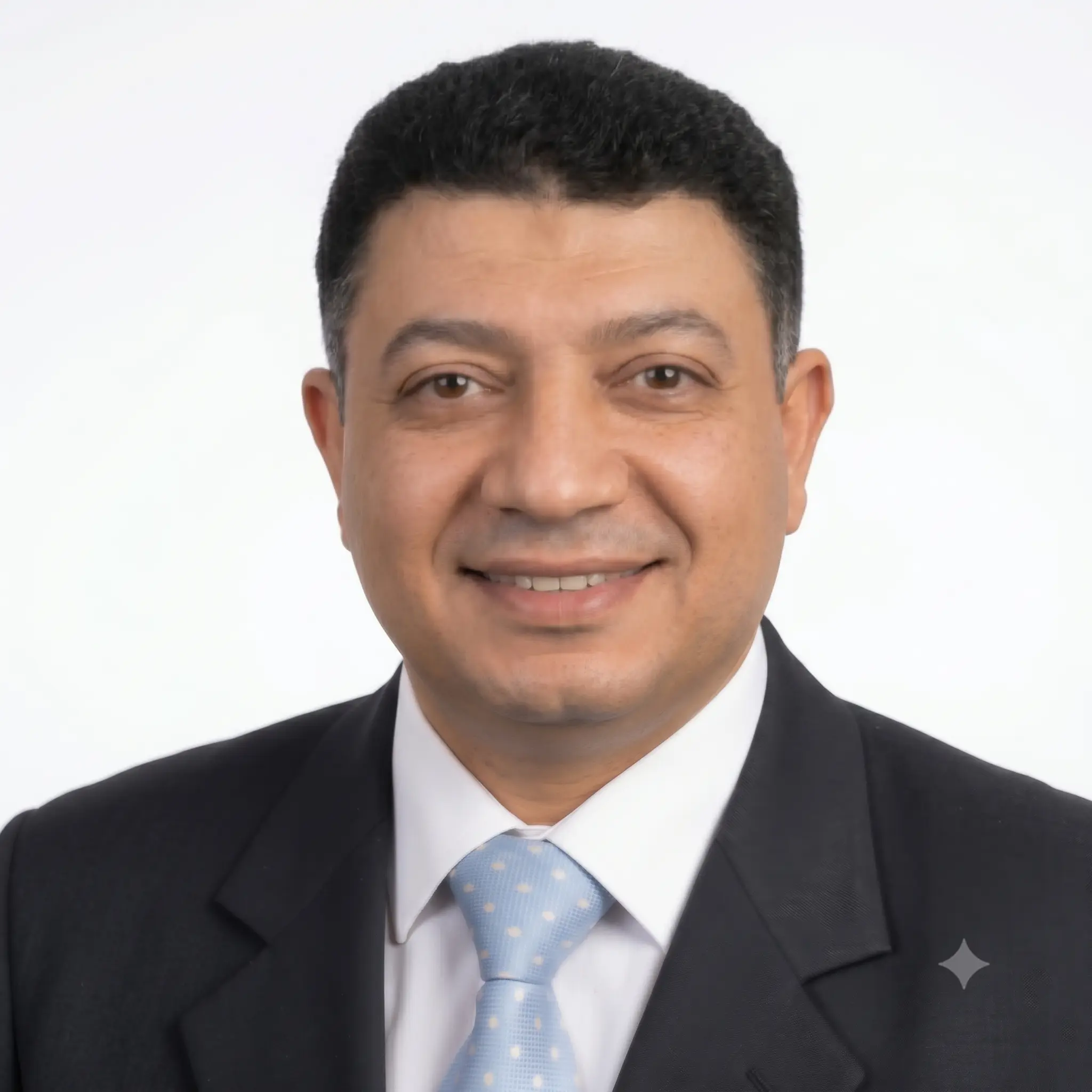
Ustadh Ahmed Mahmoud Abdulaziz is an experienced teacher of Arabic and the Holy Quran for native and non-native speakers. He holds a verified Ijazah in Hafs ‘an Asim and is certified in the foundational Tajweed texts Al-Jazariyyah and Tuhfat Al-Atfal. Drawing on his extensive background in traditional Quranic recitation and international pedagogy, he writes scholar-verified, accessible articles to help students worldwide master Tajweed rules and Arabic linguistics safely and accurately.