Islam is not just a collection of thoughts; it’s a unique religion that gives clear instructions to regulate Muslims’ lives. Just like a strong building supported by firm pillars, Islam stands upon foundational principles that give it strength, balance, and stability.
In this blog, we will talk about the 5 pillars of Islam in order, as taught by the Prophet Muhammad (PBUH), explaining each one clearly and smoothly to help you understand their meaning, importance, and role in a Muslim’s life.
What are the 5 Pillars of Islam?
The Five Pillars of Islam are the core practices that guide a Muslim’s faith and daily life, and they are called “pillars” because, just like pillars hold up a building, these acts support and strengthen the entire foundation of Islam. Without them, a Muslim’s worship and spiritual journey would not be complete.
The Five Pillars of Islam are clearly mentioned in an authentic hadith:
Narrated Ibn ‘Umar (رضي الله عنه): The Messenger of Allah ﷺ said:
Islam is based upon five: the testimony of La Ilaha Illallah, and that Muhammad is the Messenger of Allah, the establishment of the Salat, giving the Zakat, fasting (the month of) Ramadan, and performing Hajj to the House
Names of Five Pillars of Islam in Arabic and English:
Learning the names of the 5 Pillars of Islam in order, along with their meanings and benefits, helps build a strong understanding of Islam.
The 5 Pillars of Islam in English:
- Shahada (Declaration of Faith)
- Salah (Prayer)
- Zakat (Charity)
- Sawm (Fasting in Ramadan)
- Hajj (Pilgrimage)
The 5 pillars of islam in arabic:
- الشهادتين
- الصلاة
- الزكاة
- الصيام
- الحج
After learning the names of the Five Pillars of Islam in order, let us explore the meaning and great benefits of each pillar.
5 Pillars of Islam in Order
The Five Pillars of Islam are the core duties that guide a Muslim’s faith and daily life. Understanding them clearly is important because they form the foundation of Islamic faith, discipline, and devotion.
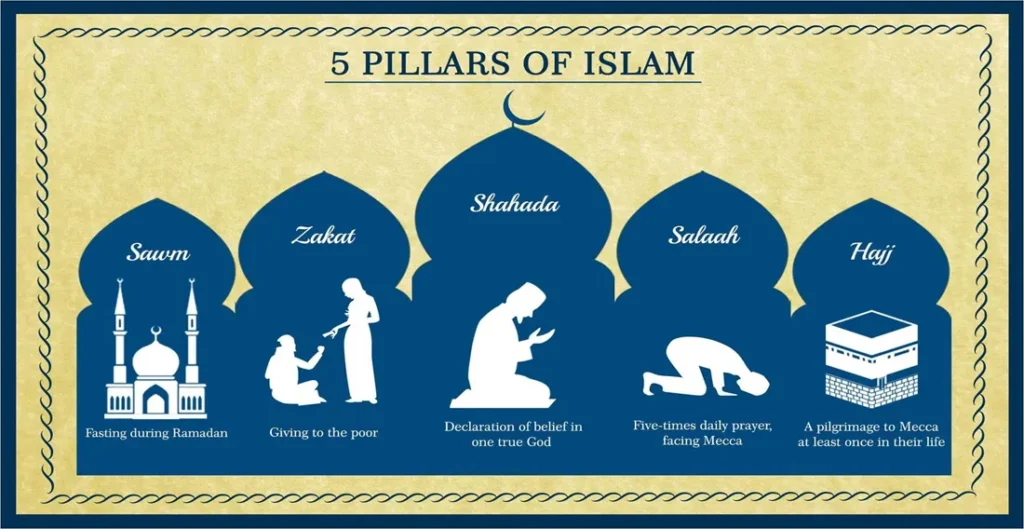
Here are the 5 Pillars of Islam in order:
1. Shahadah (Profession of Faith)
- In Arabic: (الشهادة/شهادة الإسلام)
- pronunciation: Al-shahadah
Shahadah is the gate to enter Islam, and it’s a declaration of worshipping only one god (Allah), and that Prophet Mohamed is his messenger.
The Shahadah in Arabic:
أشهد أن لا إله إلا الله، وأشهد أن محمداً رسول الله
Translation:
“I bear witness that there is no god but Allah, and I bear witness that Muhammad is the Messenger of Allah.”
The first section of the Islamic Shahada declares that Allah (SWT) is the only deity, meaning that no other entity has the authority to be worshipped and that Allah Almighty has neither a son nor a spouse.
The second part affirms that our beloved Prophet Muhammad (PBUH) is the final Prophet and messenger sent by Allah (SWT) to guide humanity.
2. Salah (Prayer)
- In Arabic: (الصلاة )
- pronunciation: Salah
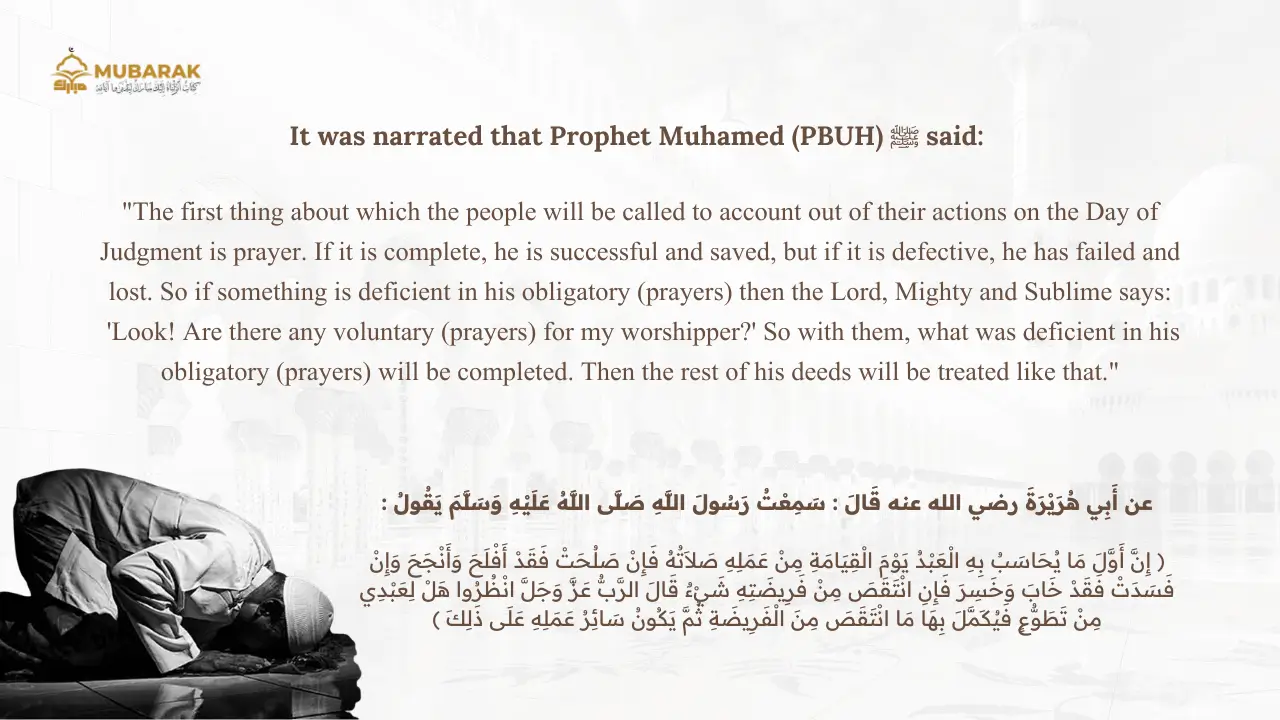
Salah is the pillar of the religion and the strongest daily connection between a Muslim and Allah, and it is the first deed a person will be questioned about on the Day of Judgment.
It was narrated that Prophet Muhamed(PBUH) said:
“The first thing about which the people will be called to account out of their actions on the Day of Judgment is prayer”
Muslims pray 5 times daily:
- Fajr (Dawn Prayer)
- Zhuhr (Noon Prayer)
- Asr (Afternoon Prayer)
- Maghrib (Sunset Prayer)
- Isha (After Sunset Prayer and Before Midnight)
Each prayer includes physical movements and recitation, especially Surah Al-Fatiha, the opening chapter of the Qur’an, as well as other brief surahs. Salah builds discipline, humility, and constant remembrance of Allah.
3. Zakat (Obligatory Charity)
- In Arabic: الزكاة
- pronunciation: AZakat
Zakat is an obligatory form of charity in Islam and the third of the Five Pillars of Islam, serving as a cornerstone of the Islamic economic system. Unlike voluntary charity (Sadaqah), Zakat is a divine duty that requires Muslims to donate 2.5% of their qualified wealth to those in need.
The word Zakat carries the meanings of “purification” and “growth.” By fulfilling this obligation, Muslims purify their wealth from greed and their hearts from selfishness, while fostering compassion and social responsibility.
Zakat establishes a system of social justice, ensuring that wealth circulates within society rather than remaining concentrated among the rich. In the end, Zakat serves as a reminder to the believer that Allah is the owner of all provisions and that sharing that wealth is an essential act of submission and thankfulness.
4. Sawm (Fasting)
- Fasting: In Arabic: الصوم
- pronunciation: SAWM
Sawm is the fourth pillar of Islam, which is observed during the holy month of Ramadan. It is a deeply spiritual act of worship in which Muslims abstain from food, drink, and physical desires from dawn (Fajr) until sunset (Maghrib).
The primary purpose of fasting is to develop Taqwa, a heightened awareness and consciousness of Allah. Far beyond physical restraint, Sawm serves as a spiritual purification and renewal, allowing the soul to flourish as bodily desires are disciplined.
Through fasting, believers engage in self-reflection, strengthen their connection with the Qur’an, and cultivate patience and self-control. Sawm also fosters empathy and compassion, as experiencing hunger and thirst deepens awareness of the struggles of the less fortunate, reinforcing a sense of social responsibility and unity within the global Ummah.
5. Hajj (Pilgrimage)
- In Arabic الحج
- pronunciation Al-Hujj.
Hajj is the pilgrimage to the Kaaba in Makkah and the final pillar of Islam. It is required once in a lifetime for Muslims who are physically and financially able.
During Hajj, millions of people dress simply in white for this spiritual journey that eliminates all material distinctions, including income, rank, and race. The purpose of the rites, which honour the suffering of Prophet Ibrahim and his family, is to put a believer’s fortitude and faith to the test.
Completing Hajj is often described as a spiritual rebirth, where the believer returns with forgiven sins and a renewed sense of faith and unity.
Reading is the first step, learning is the journey.
Learn Islamic studies with Mubarak Academy and deepen your understanding of the Five Pillars of Islam with qualified teachers.
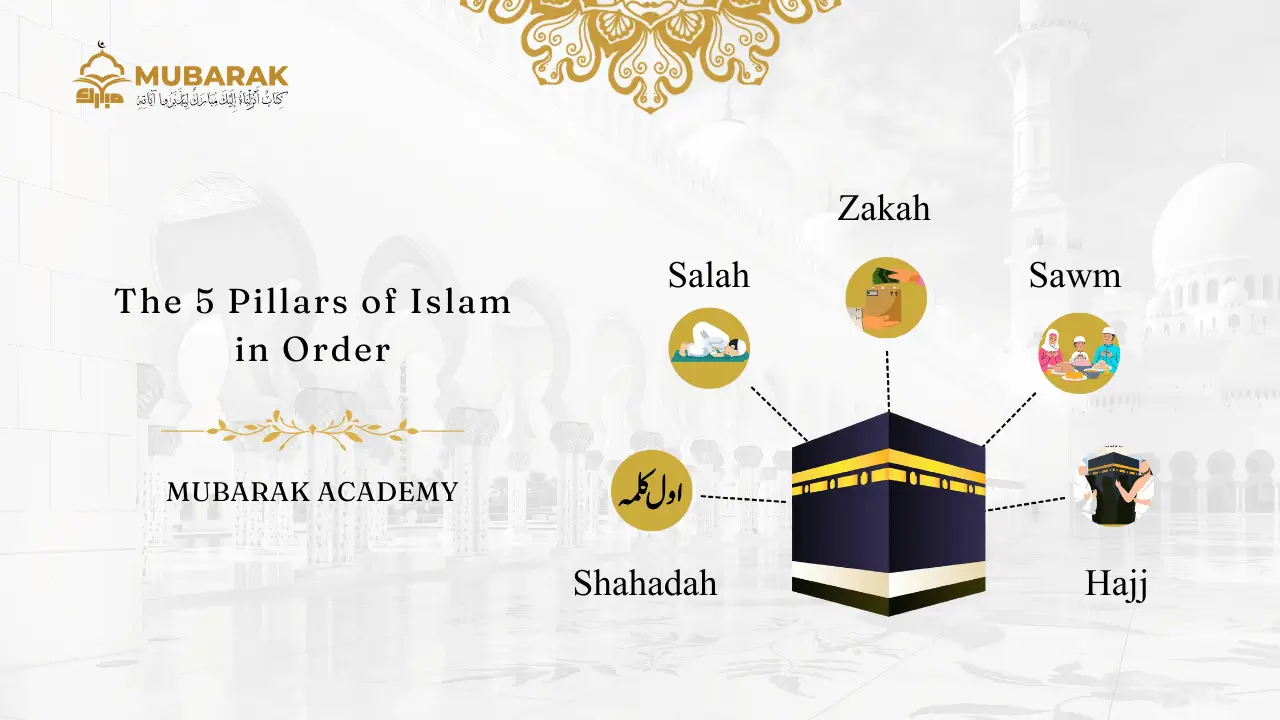
5 Pillars of Islam symbols
Islam doesn’t officially assign symbols to the Five Pillars, but simple visual symbols are often used in learning materials to make them easier to understand and remember, especially for beginners and children.
Here are some commonly used representations and what they reflect:
- Shahada: A heart or a scroll with words, symbolizing faith and belief
- Salah: A prayer mat or a mosque, representing daily prayer and worship
- Zakat: A hand giving coins or charity, showing generosity and care for others
- Sawm: A crescent moon or dates, linked to fasting during Ramadan
- Hajj: The Kaaba, symbolizing the pilgrimage to Makkah
These visuals don’t replace the true meaning of the pillars, but they help learners connect with each act of worship in a simple, memorable way, making Islamic teachings more approachable and engaging.
Teaching the 5 Pillars of Islam to Kids
Discover the beauty of our faith at Mubarak Academy, where learning the 5 Pillars of Islam in order becomes an exciting and meaningful journey for children through a well-structured Islamic studies course designed especially for young learners, turning deep spiritual lessons into engaging, easy-to-understand stories.
From mastering Salat to exploring the meaning of Hajj, we help young hearts connect with Allah through interactive lessons and a supportive community. We don’t just teach facts; we build character and confidence, and a strong Islamic identity.
Join us to start your journey of growth, friendship, and discovery. At Mubarak Academy, we make growing up as a proud Muslim fun and inspiring!
Raise a Confident Muslim Child With Mubarak Academy
Conclusion
In summary, the 5 pillars of Islam in order serve as more than just rituals; they are the spiritual foundation that supports a Muslim’s entire life. From the internal conviction of the Shahada to the global unity of Hajj, these pillars provide a comprehensive framework for personal growth, social justice, and devotion to Allah. By upholding these five core duties, a believer strengthens their character and fulfils their purpose. May this journey through the pillars inspire you to deepen your faith and practice every day.
FAQs About the Five Pillars of Islam
1. What are the five pillars of Islam in Arabic?
They are Shahada, Salah, Zakat, Sawm, and Hajj.
2. Can I learn the Arabic pillars of Islam easily?
Yes, with consistent practice and by understanding their deep spiritual meanings, learning them becomes simple and memorable.
3. Are the 5 pillars of Islam in Arabic the same worldwide?
Yes, the Arabic names of the five pillars are universal and used by Muslims across the world.
4. Why should I learn the Arabic pillars of Islam?
Learning them in Arabic connects you directly to the language of the Quran and strengthens your understanding of global Islamic worship.
5. Is the order of the pillars important?
Yes, the five pillars follow the sequence taught by the Prophet ﷺ, reflecting their foundational importance in Islam.