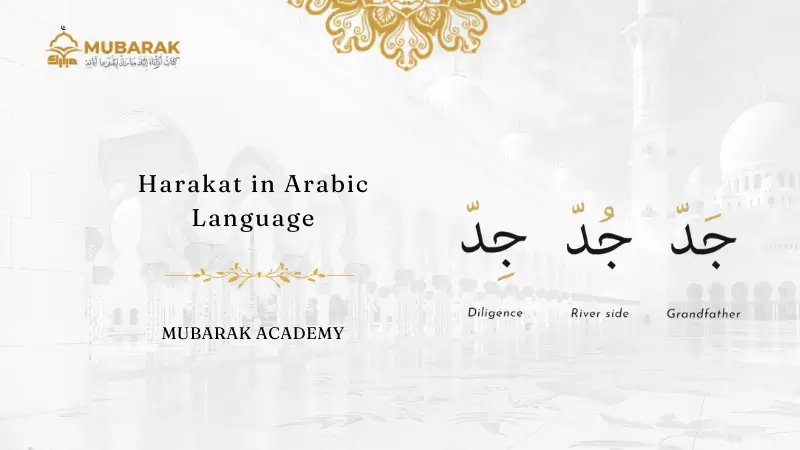
Harakat in Arabic language are one of the most important basics for anyone who wants to read Arabic correctly. These small marks may look simple, but they completely change how letters sound and how words are understood. For beginners, learning harakat is the first real step toward clear reading, correct pronunciation, and better confidence with Arabic words. Whether you are studying the Qur’an, learning Modern Standard Arabic, or practicing daily reading, understanding harakat in Arabic language makes the whole process much easier.
What Are Harakat in Arabic Language?
Harakat in Arabic language are small vowel marks written above or below Arabic letters to show the correct pronunciation of a word. Since many Arabic words are written without short vowels in everyday text, these marks help readers understand how each word is pronounced.
In simple terms, harakat tell you whether a letter should be pronounced with a short a, i, or u sound. That is why they are especially important for beginners. A learner may know the Arabic letters, but without harakat, reading words correctly can still be difficult.
Importance of Harakat in Arabic Reading & Pronunciation
Harakat are important because they make Arabic easier to read and pronounce correctly. They guide the reader, reduce mistakes, and help beginners understand words more clearly.
Here are some of the main reasons why Harakat are important:
- Show the correct pronunciation of Arabic words
- Help beginners read with more confidence
- Clarify short vowel sounds such as a, i, and u
- Reduce reading mistakes, especially in similar-looking words
- Improve Arabic pronunciation from the early stages of learning
- Support a better understanding of word meanings
- Make reading the Qur’an easier and more accurate
- Help learners connect letters with their correct sounds
- Build stronger reading fluency over time
- Make Arabic learning clearer in textbooks, lessons, and dictionaries
In short, Harakat makes Arabic more accessible to learners by turning written letters into clear, understandable sounds.
Explore: Best Place to Learn Arabic Online
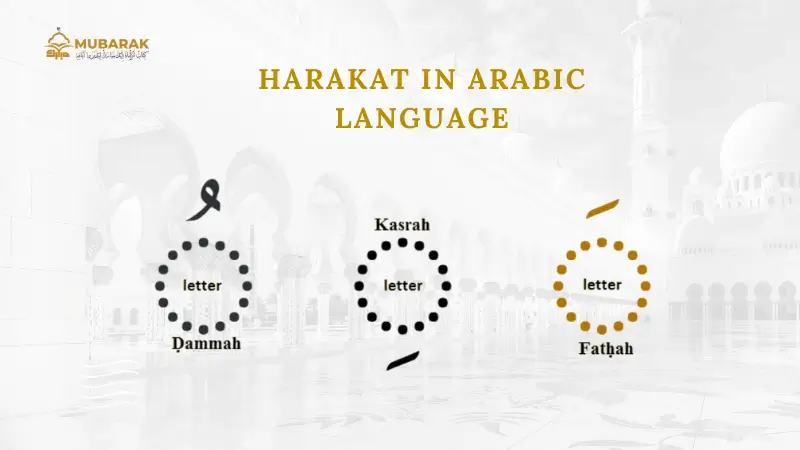
Types of Harakat in Arabic Language with Examples
To understand the types of harakat in Arabic language, it is important to know that these marks guide pronunciation, show short vowel sounds, and can sometimes change a word’s meaning. Learning them is an essential step for anyone beginning to read Arabic.
Below are the main types of Harakat with simple explanations and examples:
1-Fatha ( ـَ )
Fatha is a small diagonal line written above a letter. It gives the letter a short “a” sound, similar to the a in the word “apple.”
Example:
- بَ = ba
- كَتَبَ = kataba
2-Kasra ( ـِ )
Kasra is a small diagonal line written below a letter. It produces a short “i” sound, similar to the i in the word “sit.”
Example:
- بِ = bi
- كِتَاب = kitab
3-Damma ( ـُ )
Damma is a small comma-shaped mark written above a letter. It creates a short “u” sound, similar to the u in the word “put.”
Example:
- بُ = bu
- كُتُب = kutub
4-Sukun ( ـْ )
Sukun is a small circular mark placed above a letter. It indicates that the letter is pronounced without any vowel sound. In other words, the letter is read quickly and directly connects to the next letter.
For beginners, Sukun helps show where a syllable ends and prevents adding an extra vowel sound by mistake.
Example:
- مِنْ = min
- يَكْتُب = yaktub
5-Shadda ( ـّ )
Shadda is a mark written above a letter to show that the consonant is doubled or emphasized in pronunciation. This means the letter is pronounced with a stronger or longer sound.
Example:
- مُدَرِّس = mudarris
- إِنَّ = inna
6-Tanween Fath ( ـً )
Tanween Fath, also called Fathatan, adds an “an” sound to the end of a word. It is commonly used in formal Arabic and grammar examples.
This mark also adds a light “n” sound at the end of the word.
Example:
- كِتَابًا = kitaban
This mark is often used in Arabic grammar and formal Arabic. It adds an n sound to the end of the word.
7-Tanween Kasr ( ـٍ )
Tanween Kasr, known as Kasratan, adds an “in” sound to the end of a word.
Example:
- كِتَابٍ = kitabin
Kasratan appears often in written Arabic, especially in grammar examples and fully vowelized texts.
8-Tanween Damm ( ـٌ )
Tanween Damm, also called Dammatan, gives a word an “un” sound at the end. Like the other forms of Tanween, it adds a light “n” sound to the word.
Example:
- كِتَابٌ = kitabun
At Mubarak Academy, we make learning the Arabic harakat language easier with clear lessons, simple practice, and step-by-step guidance for beginners

How to Practice Harakat for Better Arabic Pronunciation?
The best way to master Harakat is through regular reading and listening practice. Beginners should start by reading simple Arabic words that include basic Harakat such as Fatha, Kasra, and Damma. Practicing short words every day and repeating sounds aloud (like بَ، بِ، بُ) helps learners train their ears and tongues to pronounce Arabic letters correctly.
At Mubarak Academy, we help students practice Harakat through simple exercises, guided reading, and support from experienced Arabic teachers. Our lessons are designed to help beginners improve their pronunciation step by step and gain confidence while reading Arabic.
Ready to improve your Arabic pronunciation? Join Our Arabic Language Course
Conclusion
Harakat in Arabic language are essential for correct reading, clear pronunciation, and better understanding of Arabic words. They may be small marks, but they have a big role in learning. Once you understand them and practice them regularly, Arabic becomes much easier to read and speak.
FAQs About Arabic Harakat
1. How do Arabic harakat change the meaning of words?
Arabic harakat change the pronunciation of words, which can also change their meaning. The same Arabic letters may represent different meanings depending on the harakat used.
2. What are Arabic harakat?
Arabic harakat are small vowel marks placed above or below letters to indicate how a word should be pronounced.
3. How many harakat are there in Arabic?
The three main Arabic harakat are Fatha (َ), Kasra (ِ), and Damma (ُ). Other important marks include Sukun (ْ), Shadda (ّ), and Tanween.
4. Why are Arabic harakat important?
Arabic harakat help learners read Arabic correctly and pronounce words clearly. They are especially important for beginners who are still learning the language.
5. What are Arabic harakat names?
The most common Arabic harakat are called Fatha, Kasra, and Damma. Additional marks such as Sukun, Shadda, and Tanween are also widely used in Arabic writing.
6. Can I learn Arabic harakat online?
Yes. Many online Arabic courses, apps, and learning platforms teach Arabic harakat and provide exercises to practice pronunciation and reading.
7. Can I type Arabic with harakat?
Yes. You can type Arabic letters with harakat using Arabic keyboard layouts, language settings, or online typing tools that support vowel marks.