
Islam is not just about beliefs; it’s a complete way of life, as it guides Muslims in how they worship, how they behave, and how they deal with others every day. To understand how to live Islam correctly, Muslims rely on an essential science called Islamic Fiqh.
That’s why today, we’ll explain what is Islamic Fiqh, where it comes from, the different types and schools of fiqh, and how anyone can start learning it step by step, so let’s begin!
What Is Islamic Fiqh (Islamic Jurisprudence)?
Islamic Fiqh, also known as Islamic Jurisprudence, is the science of understanding Islamic law (Shariah). The word Fiqh literally means deep understanding. In Islam, it refers to understanding Allah’s rulings related to human actions (what is required, permitted, disliked, or forbidden). This knowledge allows Muslims to practice Islam with clarity, confidence, and balance.
Islamic Fiqh covers two main areas of life:
1. Acts of worship (ʿIbadat):
Through studying Fiqh, Muslims learn how to pray, fast properly, give zakat, and perform Hajj.
2. Social dealings (Muʿamalat):
including marriage, family matters, business transactions, ethics, and halal and haram practices.
In essence, Islamic Fiqh is the bridge between faith and daily life, teaching Muslims how to apply Islamic values with wisdom and mercy in real-life situations.
Difference Between Fiqh and Shariah
Many people use the terms Fiqh and Shariah as if they mean the same thing, but in reality, they serve different roles in Islam
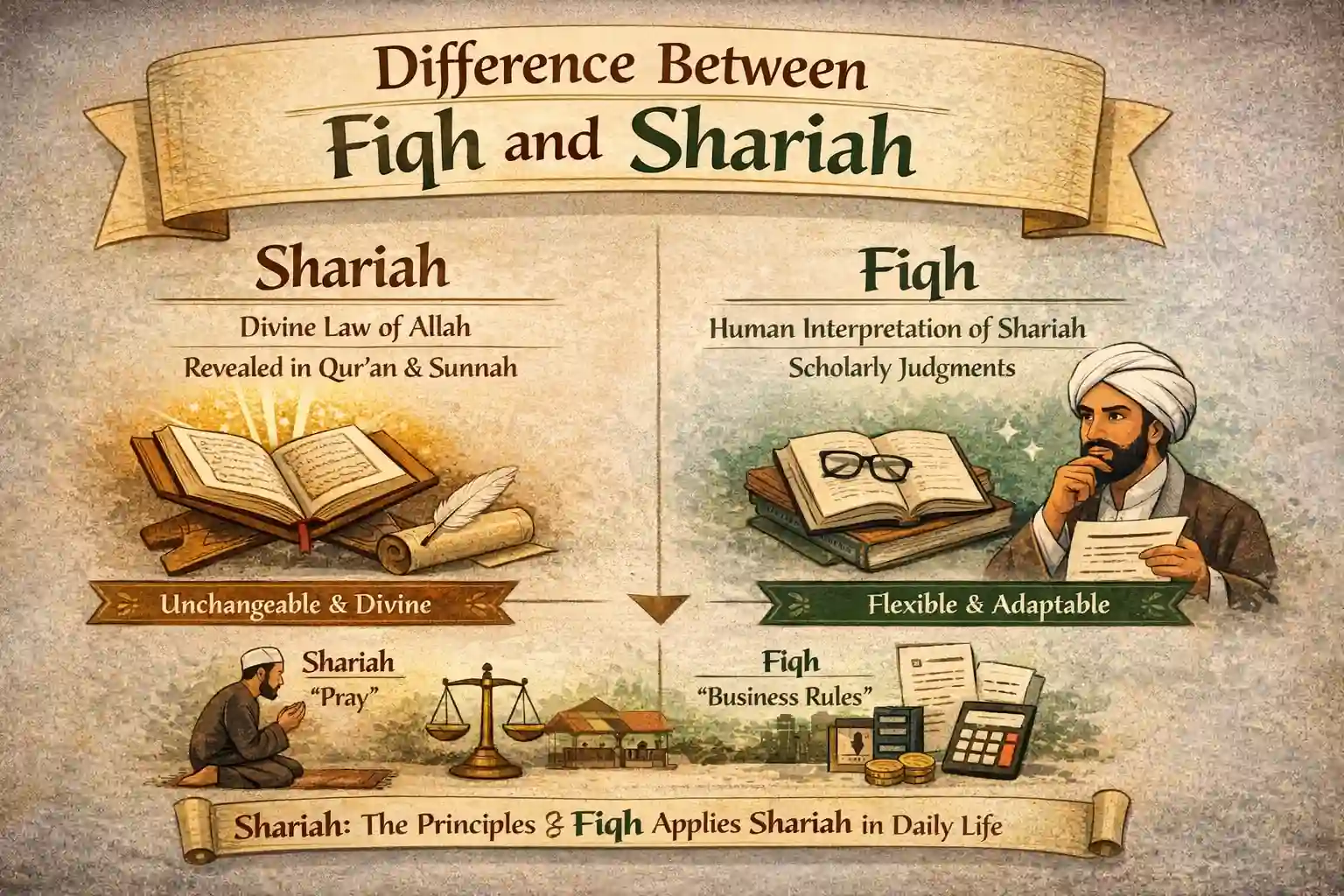
1. Shariah: The divine law of Allah, revealed in the Qur’an and Sunnah ( It is unchangeable).
2. Fiqh: Human understanding and interpretation of Shariah (It can differ based on context, time, and scholarly interpretation).
Examples for Explaining the Difference Between Fiqh and Shariah
- Shariah says: “Pray.”
- Fiqh explains: how many prayers there are, when to pray, how to perform each prayer, and what might invalidate it.
Another Example:
- Shariah says: “Be fair in trade.”
- Fiqh explains: what makes a sale halal or haram, how contracts should be written, and how modern business practices fit within Islamic ethics.
In short, Shariah provides the divine principles, Fiqh turns those principles into practical rulings that Muslims can follow in daily life.
Sources of Islamic Fiqh
Islamic fiqh is derived from several authentic sources:
- The Qur’an: The primary and most important source of all Islamic rulings
- The Sunnah: The teachings, actions, and sayings of Prophet Muhammad ﷺ
- Ijma‘ (Consensus): The agreement of qualified Islamic scholars on a ruling
- Qiyas (Analogy): Applying existing rulings to new situations with similar causes
Some scholars also rely on secondary principles such as Istihsan (juristic preference) and Maslahah (public interest) when needed to address new or complex issues.
Why Islamic Fiqh Is Important in Daily Life
After understanding what is Islamic Fiqh, and how it differs from Shariah, it becomes clear why Fiqh plays such an essential role in everyday life. Islamic Fiqh provides practical guidance that helps Muslims apply Islamic teachings correctly in real-life situations.
Islamic Fiqh is important because it:
- Helps Muslims worship Allah correctly
- Guides daily behavior and ethics
- Clarifies halal and haram
- Protects society through justice and balance
- Makes Islam practical and livable in every era
Without fiqh, Muslims would struggle to apply Islamic teachings correctly.
How Many Fiqh in Islam?
In Islam, there is one religion and one Shariah, but there are multiple schools of Islamic fiqh, known as Madhahib.
Main Schools of Islamic Fiqh (Madhahib)
There are four main Sunni schools of fiqh:
- Hanafi
- Maliki
- Shafi‘i
- Hanbali
All four schools are based on the Qur’an and the Sunnah and differ only in scholarly interpretation and methodology, not in core beliefs.
Types of Fiqh in Islam
Islamic fiqh is usually divided into major categories:
1. Fiqh al-ʿIbādāt (Worship)
This includes rulings related to acts of worship such as prayer (ṣalāh), fasting (ṣawm), zakāh, and ḥajj. It explains how to perform these acts correctly in accordance with Islamic teachings.
2. Fiqh al-Muʿāmalāt (Transactions)
This type deals with daily interactions and financial matters, such as buying and selling, contracts, business ethics, loans, and trade.
3. Fiqh al-Aḥwāl al-Shakhṣiyyah (Personal & Family Law)
It focuses on marriage, divorce, inheritance, custody, and family responsibilities.
4. Fiqh al-Jināyāt (Criminal Law)
This includes rulings related to crimes, punishments, justice, and legal responsibility, with an emphasis on fairness and protection of society.
5. Fiqh al-Siyāsah al-Sharʿiyyah (Governance & Public Affairs)
It covers leadership, public policy, citizens’ rights, and maintaining justice in society in accordance with Islamic principles.
6. Fiqh al-Akhlāq (Ethics & Morality)
This area focuses on character, behavior, manners, and moral conduct, guiding Muslims on how to live ethically in everyday life.
The 5 Principles of Fiqh (Qawa‘id Fiqhiyyah)
Islamic rulings are built upon five universal legal principles:
- Actions are judged by intentions
- Certainty is not removed by doubt
- Hardship brings ease
- Harm must be removed
- Custom is considered
These principles make fiqh flexible and merciful.
Who Can Study Islamic Fiqh?
Islamic Fiqh is open to anyone who wants to understand Islam more deeply, regardless of background or level. Here’s who can study it:
- Muslims seeking deeper knowledge
- Beginners with no prior background
- Students of Islamic studies
- Imams, teachers, and da‘wah workers
- New Muslims (Reverts)
- Non-Muslims interested in Islamic law
- Men and women of all ages
- Anyone who wants clarity in halal and haram
If you want to understand how Islam guides daily life with wisdom and balance, Islamic Fiqh is for you.

How to Learn Islamic Fiqh Step by Step at Mubarak Academy
If you’re still wondering what is Islamic Fiqh or how to apply it correctly in your daily life, you’re not alone. Learning Fiqh can feel overwhelming at first, but it doesn’t have to be.
Mubarak Academy’s Islamic Studies course, which includes Islamic Fiqh, is designed to guide you step-by-step. With qualified teachers and a structured learning approach, the course helps you understand Islamic rulings clearly and apply them with confidence in real life.
Enroll at Mubarak Academy today!
Conclusion
Islamic Fiqh is more than just a set of rules; it is the practical guide that turns faith into everyday action. By understanding what is Islamic Fiqh, Muslims learn how to worship correctly, interact ethically with others, and make decisions that are in harmony with Islamic teachings. From prayer and fasting to family life, business, and social conduct, Fiqh helps make Islam a living, practical way of life.
Take the next step in your journey and start learning how to apply Islam in your daily life with confidence and clarity.
FAQs About Islamic Fiqh
1. What is Islamic jurisprudence?
Islamic Fiqh, also known as Islamic jurisprudence, is the science of understanding and applying Allah’s rulings in daily life. It explains what is required, permitted, disliked, or forbidden to help Muslims practice Islam correctly.
2. How many Fiqh are there in Islam?
There is one Islamic Fiqh, but there are four main Sunni schools of jurisprudence: Hanafi, Maliki, Shafi‘i, and Hanbali.
3. Is one Fiqh school better than another?
No. All four schools of Fiqh are authentic and valid, each providing correct guidance based on the Qur’an and Sunnah.
4. Can I study Fiqh without being a scholar?
Yes. Learning basic Fiqh is important for every Muslim to practice Islam correctly in everyday life.
5. Does Fiqh change over time?
The core principles of Fiqh remain constant, but scholars may interpret and apply rulings to address new situations and contemporary challenges.
6. Is Fiqh only about worship?
No. Fiqh covers worship, family life, business, ethics, and social interactions, guiding Muslims in all aspects of life.