
Learning Tajweed isn’t just about how you pronounce each letter, it’s about how that letter behaves when you pronounce it. That’s where Sifaat al huroof (صفات) come in. In this detailed guide, we’ll explain what is Sifaat in Tajweed, their importance, the difference between Makharij and Sifaat, the main types of Sifaat, and how to master them easily with Mubarak Academy.
What Is Sifaat in Tajweed?
In Tajweed, Sifaat (الصفات) refers to the characteristics that make each Arabic letter sound unique (has its own “personality”), it might be strong or soft, heavy or light, clear or whispered, and these features are what we call Sifaat.
For example:
- The letter ق (Qaf) has a powerful, heavy sound that comes from the back of the tongue; this quality is known as Tafkheem (heaviness).
- On the other hand, س (Seen) has a gentle, airy tone with a soft hiss.
These unique characteristics are what give each letter its unique identity. Without knowing the Sifaat, some letters can start to sound alike and alter the meaning of Quranic words.
The Difference Between Makharij and Sifaat
When learning Tajweed, it’s important to understand that Makharij and Sifaat are two sides of the same coin. Both relate to how Arabic letters are pronounced, but they focus on different dimensions of sound production.
- Makharij (مخارج) refers to the point of articulation, the exact place in the mouth, tongue, or throat where a letter’s sound begins
- Sifaat (صفات), on the other hand, are the qualities or characteristics of that sound (how it flows, whether it’s strong or soft, clear or heavy).
Simply, Makharij is where the sound comes from, and Sifaat is how it sounds.
Both are essential for accurate Quranic recitation, that’s why A true master of Tajweed combines the precise articulation of Makharij with the beautiful expression of Sifaat to bring the Qur’an’s words to life as they were revealed.
Read Also: How To Learn Quran with Tajweed at Home
Importance of Sifaat in Tajweed
Learning what is sifaat in Tajweed (the characteristics of Arabic letters) is one of the most essential parts of mastering Tajweed, as it ensures that each letter is articulated with its true sound, maintaining the integrity and beauty of Allah’s words. Here’s why Sifaat is so important in Tajweed:

1. Distinguishes between similar letters:
Without Sifaat, many letters in Arabic would sound almost identical.
For example, the letters س (Seen) and ص (Saad) might be confused if their distinct Sifaat aren’t properly applied — one is light and soft, while the other is heavy and full-bodied.
2. Enhances Clarity and Fluency:
When Sifaat are applied correctly, every letter flows naturally and blends harmoniously in recitation.
3. Reflects the Beauty of Revelation:
Sifaat adds strength, softness, and emotional depth to your voice, helping you recite the Qur’an in a way that touches hearts and reflects reverence.
4. Fulfills the Sunnah of Proper Recitation:
The Prophet Muhammad ﷺ and his companions recited the Qur’an with perfect articulation and character of letters. Learning What Is Sifaat in Tajweed continues this noble Sunnah.
5. Connects Sound with Meaning:
Each attribute carries emotion, like the strength in ق (Qaf) or softness in ي (Ya), helping you feel the Qur’an, not just read it.
In short, Sifaat is the secret behind reciting the Qur’an not just correctly, but beautifully, just as it was revealed.
Types of Sifaat in Tajweed
The scholars of Tajweed divided the Sifaat (characteristics) of letters into two main categories:
- Sifaat with Opposites (الصفات المتضادة)
- Sifaat without Opposites (الصفات الغير المتضادة)
Let’s explore each category in detail.
Master Tongue Letters in Arabic for Perfect Quran Recitation
Sifaat with Opposites (Al-Sifaat al-Mutadaddah)
These are characteristics of letters that come in pairs, where each quality has a direct opposite, and that’s what gives each letter its unique sound and feel in Qur’anic recitation.
There are 5 opposite pairs (10 Sifaat in total):
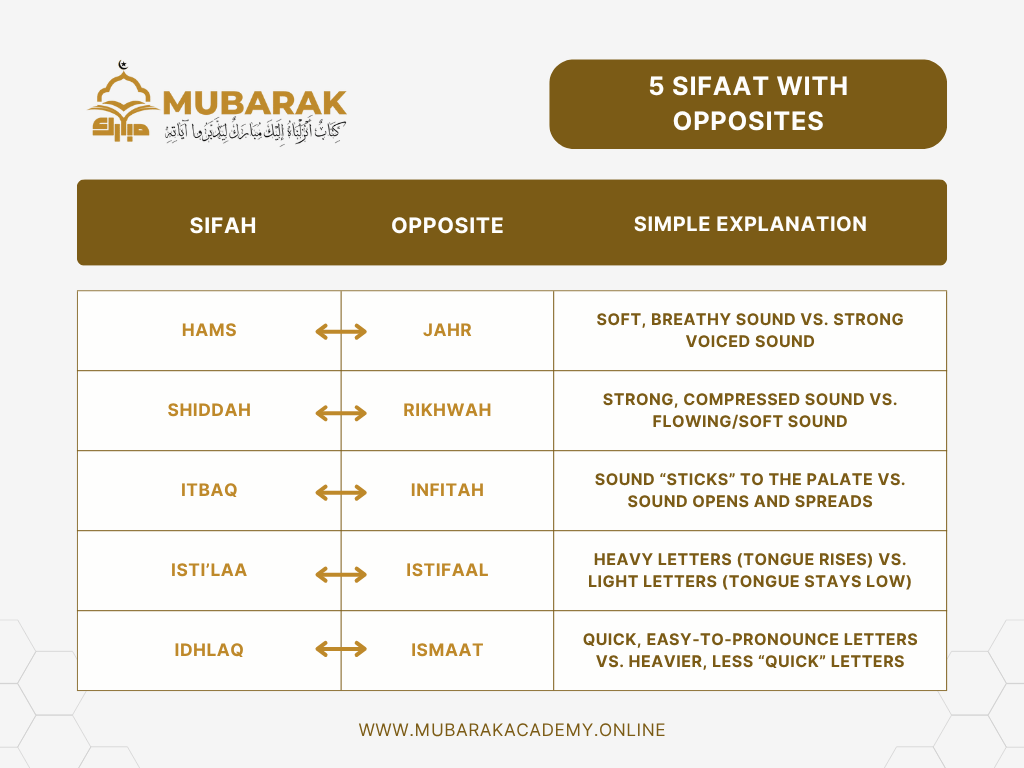
1. Hams (Breath Sound) vs. Jahr (Non-Breath Sound)
In Tajweed, letters behave differently when we pronounce them, some allow the breath to flow, like the Hams letters, while others block the breath and rely on voice, like the Jahr letters. Here’s a simple breakdown to help you understand the difference clearly:
Lips Letters in Arabic and Their Articulation Points in Tajweed
2. Shiddah, Tawassut, and Rakhawah
When reciting the Qur’an, not all letters behave the same way. Some letters stop the sound completely, others let it flow smoothly, and some fall right in between. Let’s explore these three sifat and understand how they shape the sound of each letter:
3. Isti‘laa’ استعلاء (Rising) vs. Istifaal استفال (Lowering)
Learning which letters sound heavy and which sound light helps prevent mistakes and improves your Qur’an recitation instantly.
Earn Your Tajweed Course Certificate Online and Recite with Confidence
4. Itbaaq إطباق (Adhesion) vs. Infitah انفتاح (Opening)
Some letters feel “heavy” and press against the top of the mouth, while others feel “light” and open. This is the difference between Itbāq and Infitāḥ. Here are more details:
Perfect Your Islamic Recitation of Holy Quran With Tajweed
5. Idhlaq (Fluency) vs. Ismat (Retention)
In Tajweed, some letters come out very light and quickly, almost like your tongue slides through them, these are the Idhlaq letters. Others need a bit more control and firmness, so the sound doesn’t slip out too fast, these are the Ismat letters. Understanding this helps you pronounce Arabic smoothly without losing clarity.
Simplified Rules of Tajweed for Easy Quran Recitation
Sifaat without Opposites (Al-Sifaat Ghayr al-Mutadaddah)
In Tajweed, letters can have special qualities that don’t come in pairs; these are known as Sifaat without Opposites. Understanding them is an important part of learning what is sifat in tajweed, because they help you recognize how certain letters should sound and flow when reciting the Qur’an.
These sifat give specific letters unique sound characteristics that others do not have, helping achieve clarity, beauty, and proper articulation in recitation.
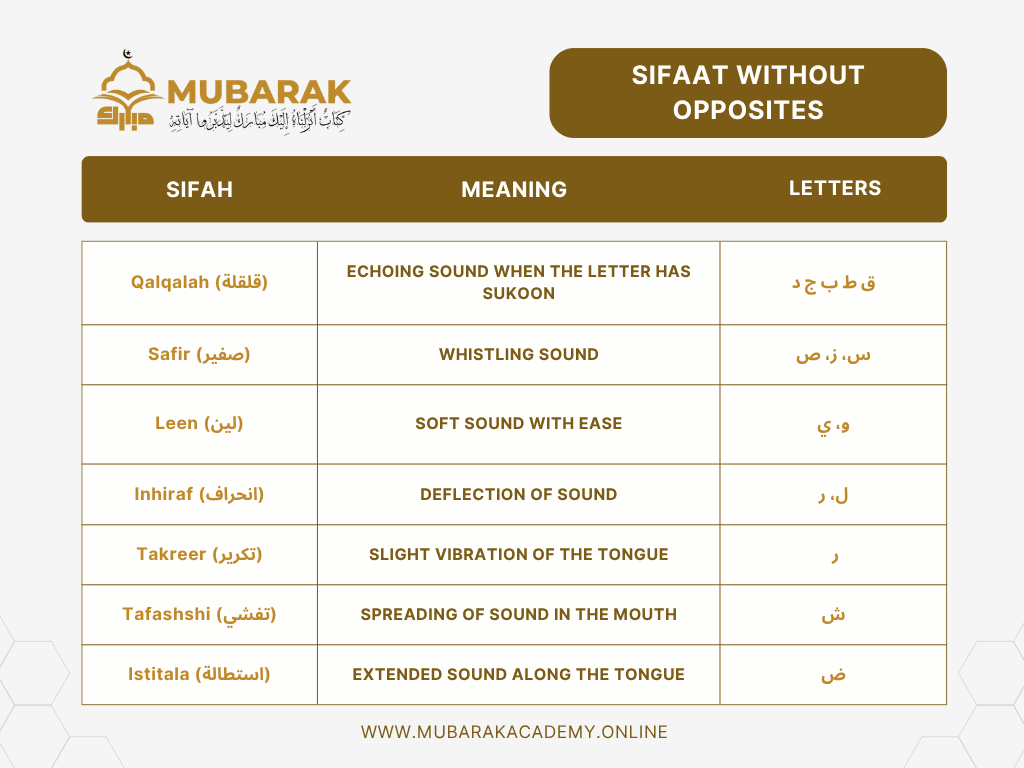
Each of these traits adds depth to the letter’s sound, and together they create the unique musical quality of Quranic recitation.
Advanced Quran Tajweed Rules for Accurate Quran Recitation
Strong and Weak Sifaat of Arabic Letters
In Tajweed, every Arabic letter has certain qualities called Sifaat. Some of these qualities are strong (powerful) and make the sound firm, clear, and intense. Others are weak, making the sound softer and lighter.
1. Strong Sifaat
These sifat give letters a strong, defined sound. Examples include:
- Shiddah
- Isti‘laa’
- Itbaaq
- Jahr
- Qalqalah
- Safir
- Tafashshi
- Takhreeq
- Leen
Strong sifat make the letter stand out powerfully and clearly in recitation
Quran Tajweed With English Translation for Easy Reading
2. Weak Sifaat
These sifat soften the sound of a letter. Examples include:
- Rikhwah
- Istifaal
- Infitah
- Hams
- Khafa’
Weak sifat don’t mean poor recitation, they mean the sound is soft and gentle by design
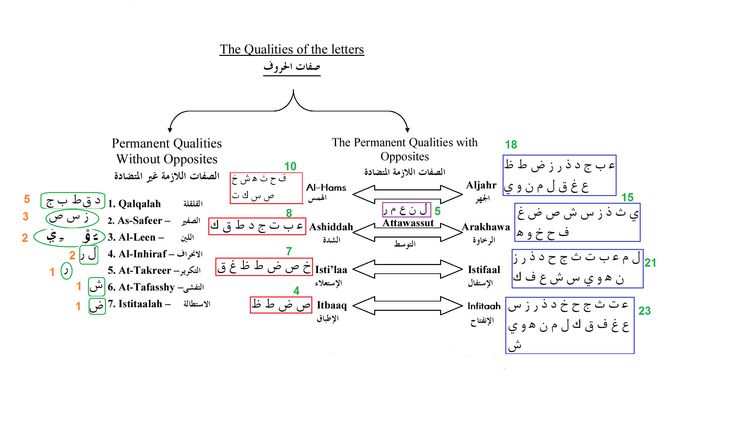
Sifaat Al Huroof Chart
Here’s a simplified Tajweed Sifaat Chart that organizes the key attributes:
Master Sifaat al-Huruf with Mubarak Academy
Learning Sifaat al-Huruf (characteristics of arabic letters) becomes much easier with the right guidance. At Mubarak Academy, your expert Quran tutors simplify Tajweed through interactive lessons, visuals, and real examples from the Qur’an.
You’ll learn:
- How to distinguish similar sounds clearly
- How to apply Sifaat naturally while reciting
- How to correct common pronunciation mistakes
- And how to recite beautifully with precision and khushu‘
Contact us and take your Quranic recitation to the next level!
Conclusion
Learning What is Sifaat in Tajweed helps you discover the true character of each Arabic letter, as it sharpens your pronunciation, adds beauty to your recitation, and brings you closer to the Qur’an. By mastering both Makharij and Sifaat, you recite not only with accuracy but with the same reverence and clarity that the Prophet ﷺ taught his companions.
At Mubarak Academy, we guide you step-by-step to perfect your Qur’an recitation (one sound, one letter, one verse at a time).
Begin your journey today and experience the beauty of Tajweed in your voice and your heart.
Frequently Asked Questions (FAQs)
1. Can I learn Sifaat without knowing Arabic?
Absolutely! You don’t need to be fluent in Arabic to learn Sifaat. Many online Tajweed courses, including Mubarak Academy, simplify the learning process of Sifaat using clear explanations, visual guides, and practical recitation exercises that build your understanding step by step.
2. Where can I learn Sifaat properly online?
You can join Mubarak Academy’s Tajweed Qur’an Course, where qualified tutors teach Sifaat, Makharij, and correct Qur’anic pronunciation through live lessons, personalized feedback, and structured progress plans to help you master Tajweed confidently.
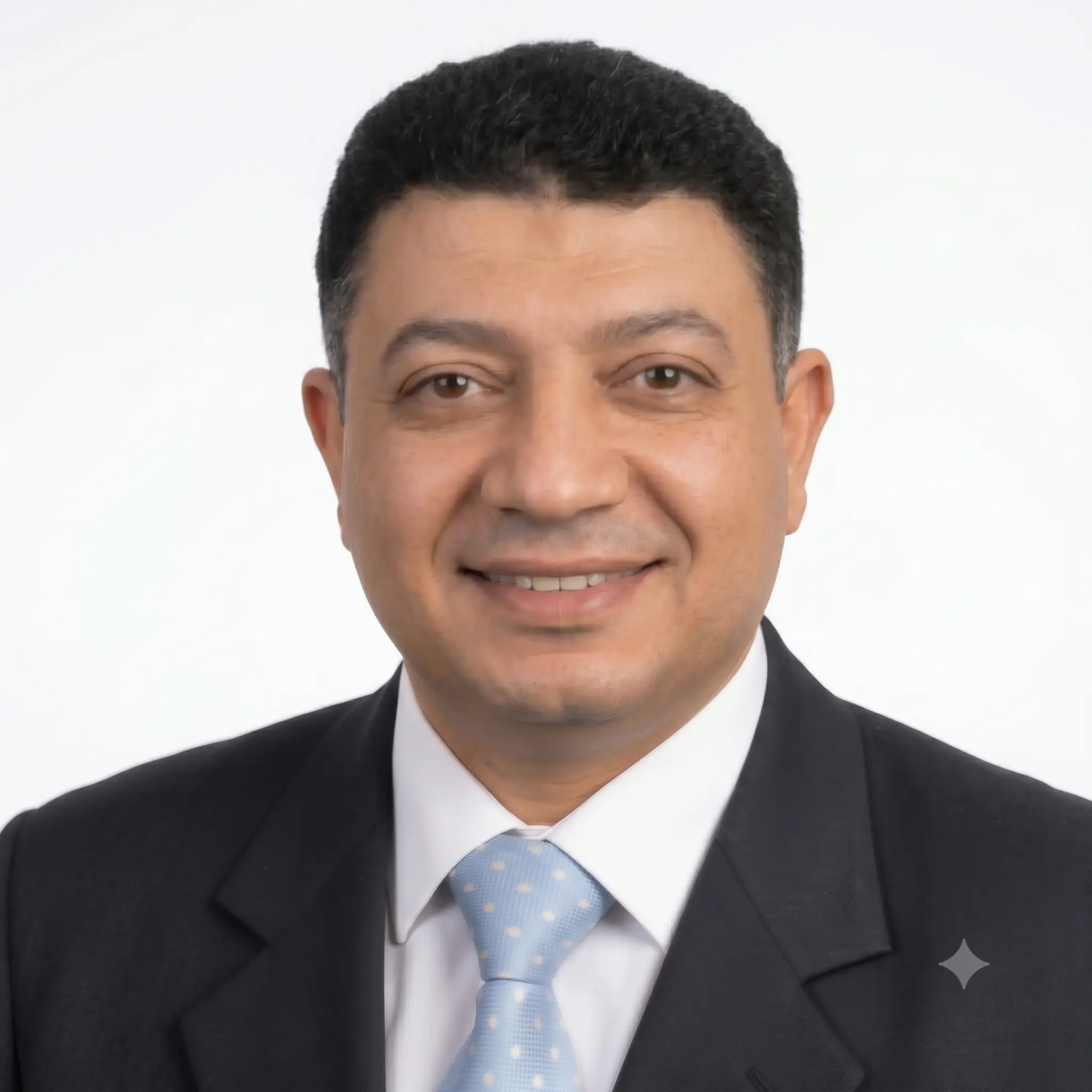
Ustadh Ahmed Mahmoud Abdulaziz is an experienced teacher of Arabic and the Holy Quran for native and non-native speakers. He holds a verified Ijazah in Hafs ‘an Asim and is certified in the foundational Tajweed texts Al-Jazariyyah and Tuhfat Al-Atfal. Drawing on his extensive background in traditional Quranic recitation and international pedagogy, he writes scholar-verified, accessible articles to help students worldwide master Tajweed rules and Arabic linguistics safely and accurately.