Millions have memorized the Quran across generations, but some of the most inspiring stories come from children who begin their journey at an exceptionally young age. Their dedication, innocence, and remarkable memory often leave adults amazed.
In this article, we explore the youngest person to memorize the Quran, the benefits of early memorization, how children achieve it, how scholars view it, and how parents can support their children at home.
Benefits of Early Quran Memorization for Children
When children begin memorizing the Qur’an at a young age, it enriches them in so many beautiful ways (spiritually, emotionally, and mentally). Here’s how it helps:
- Young kids learn quickly, and early memorization strengthens their memory even more.
- It helps them form a deep, natural bond with Allah’s words from the start.
- Reciting a little every day teaches them focus, routine, and patience.
- They pick up correct Tajweed easily and develop clear, confident recitation.
- The Qur’an guides their character, encouraging kindness, good manners, and strong Islamic values.
These benefits highlight the true importance of learning the Quran, as its influence can be life-changing. Some children have achieved remarkable milestones at ages younger than anyone could imagine. So, let’s now explain how children can memorize the Quran at an earlier age.
How Children Memorize the Quran at an Early Age
From our experience at Mubarak Academy, Children memorize faster because of several natural advantages:
- Strong auditory memory
- Ability to imitate pronunciation easily
- Fast learning capability
- Curiosity and love for repetition
- Brain flexibility that makes memorization long-lasting
With the right guidance, even toddlers can surprise their parents with how much they can memorize.
Who Is the Youngest Person to Memorize the Quran?
Around the world, many young children have amazed their communities by memorizing the Qur’an at a very early age. Here are a few remarkable examples:
- Abdul-Rahman Farih (Algeria): Memorized the entire Qur’an at 3 years old (youngest hafiz in the world)
- Muhammad Shamseddin Ali (Nigeria): Finished Hifz by the age of 3.
- Rukkayatu Fatahu Umar (Nigeria): Completed memorization at 3 years and 8 months.
- Muhammad Tahir (Nigeria): Completed the entire Qur’an at 3 years and 10 months.
At Mubarak Academy, we see young children reaching incredible milestones. Many can memorize entire surahs before the age of 4, simply through daily listening and guided practice!
Join the Quran memorization Course!
The Inspiring Story of Abdul-Rahman Farih
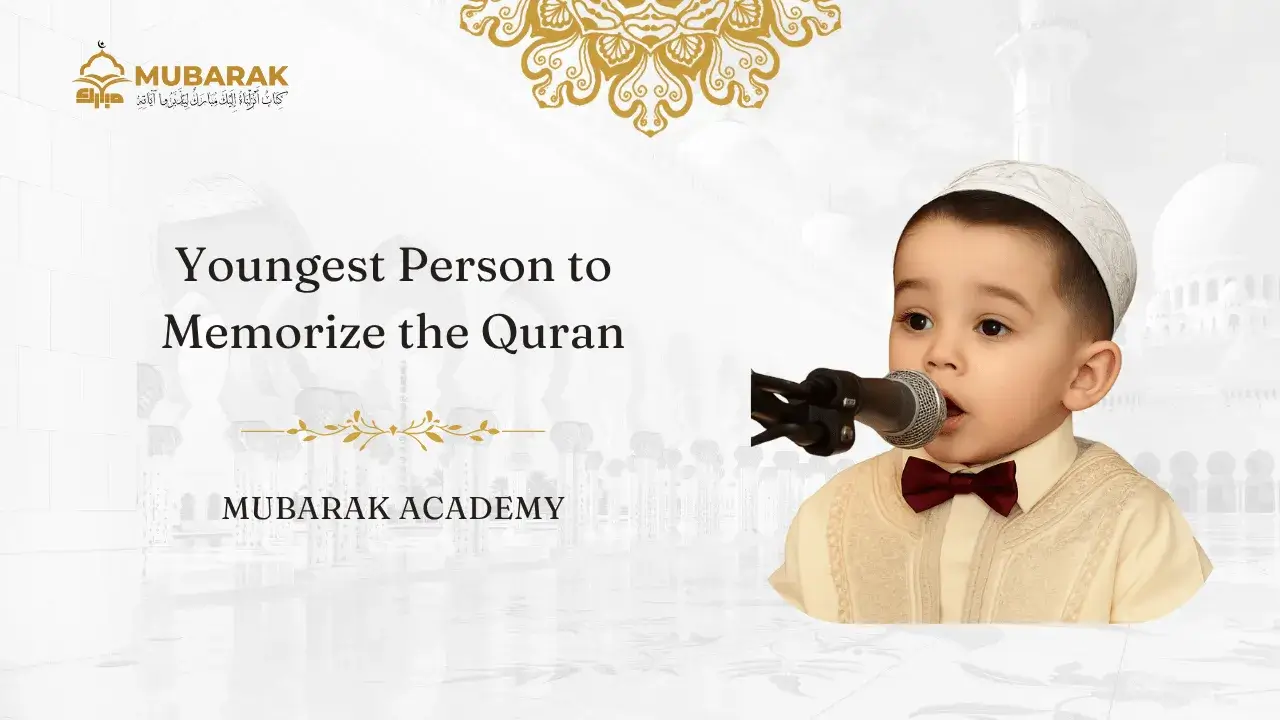
Abdul-Rahman Farih’s story captured the hearts of Muslims as a Youngest Person to Memorize the Quran. From a very young age, he showed a deep connection with the Qur’an, growing up in a home filled with its words and teachings.
- He began memorizing the Qur’an at the age of 2.
- He learned surahs simply by listening to them repeatedly on the radio.
- Within a year, he had memorized the entire Holy Qur’an (all without formal schooling).
- His extraordinary achievement even drew mention in connection with the Guinness World Records as the youngest Hafiz.
Abdul-Rahman’s journey is not unique. Across the globe, little girls and boys in Egypt, Indonesia, Pakistan, and Saudi Arabia have completed their Hifz before turning 6. Each story is shaped by love, patience, encouragement, and consistent effort.
These stories continue to inspire millions, showing that age is never a barrier when Allah grants a child exceptional focus and understanding.

How Scholars View Early Quran Memorization
Scholars love to see children memorizing early, but they emphasize balance, which is something Mubarak Academy always teaches parents:
- Memorization should never be forced
- Children learn best when the process is calm and positive.
- Children should also understand the meanings of what they recite, rather than just memorizing words.
- Consistency is more important than speed.
- Tajweed Quran should be taught correctly from the beginning.
Most importantly, scholars want the journey to feel joyful. When children enjoy learning the Qur’an, they grow into adults who love reciting and stay connected to the Book of Allah throughout their lives.
Proven Methods to Help Kids Memorize the Quran
Qur’an teachers around the world use these simple and effective techniques, and they work beautifully with children:
1. Repetition & Listening:
Children memorize best by listening to the same surah repeatedly every day. For the best results, let them listen to recitations from some of the top 10 Best Quran Reciters in the World, as their clarity and melody make memorization much easier.
2. Short, Daily Sessions:
A focused 5–15 minute session is far more effective than long, tiring lessons.
3. Start With Short Surahs:
Beginning with Juz Amma allows children to see quick progress, which boosts their confidence and excitement. Learn how to memorize Juz Amma fast to guide your child even better.
4. Use Rhythm & Melody:
A beautiful recitation or a gentle melody makes the verses easier to remember, as children naturally mimic the tune.
5. Visual Aids Make It Fun:
Color-coded mushafs, flashcards, or learning apps add fun and make memorization more engaging.
6. Daily Review (Muraja’a):
Half of each session should focus on reviewing previously memorized surahs, as this maintains strong and steady memorization.
7. Create a Simple Routine:
A regular time and place help children build a healthy Qur’an habit without feeling pressured.
8. Use Rewards & Encouragement:
Children love praise, stars, stickers, small treats, or even a warm “MashAllah!” can make them excited to keep going.
Start Your Child’s Hifz Journey With Mubarak Academy
At Mubarak Academy, recognized by many families as the Best Website to Learn Quran Online, we understand that every child learns differently; some learn quickly, while others learn slowly, and all possess great potential. That’s why our teachers focus on gentle guidance, patience, and encouragement, helping kids feel confident and excited about memorizing the Qur’an.
Our online classes feel like a second home: warm, supportive, and designed to build a real connection with Allah’s Book. Whether your child is taking their first step with Juz Amma or continuing their Hifz journey, we walk with them every step of the way.
If you want your child to love the Qur’an (not just memorize it), we’re here to help.
Conclusion
The journey of the Youngest Person to Memorize the Quran in the world reminds us of the incredible potential Allah places in the hearts of children. Early Qur’an memorization strengthens memory, builds character, and creates a lifelong spiritual bond with the Book of Allah.
With love, consistency, and the right techniques, any child can grow up with the Qur’an as a companion, guide, and source of mercy.
Frequently Asked Questions
1. Can a 4 or 5-year-old memorize the Qur’an?
Absolutely! With gentle guidance, daily repetition, and encouragement, many children can memorize large portions of the Qur’an even at this young age.
2. How long does it take a child to memorize the Qur’an?
It really depends on the child. Some complete it in 1-3 years, while others may take longer to finish.
3. Is it better to memorize early or later in life?
Memorizing at a young age can be easier because children’s memories are sharper at this stage, and they naturally pick up pronunciation.
4. What is the best age to start memorizing the Qur’an?
Many teachers recommend beginning between 4 and 7 years old, but children can start even earlier with short surahs if they are exposed to regular listening.
5. How can parents help their children memorize at home?
Parents play a crucial role. Support your child by:
- Setting simple, daily routines
- Playing Qur’an recitation regularly
- Choosing a qualified teacher or academy
- Creating a loving, motivating environment
- Encouraging and celebrating small achievements
6. Does memorizing the Qur’an increase IQ?
While it doesn’t directly increase IQ, memorizing the Qur’an offers many benefits for the brain, as memorization strengthens memory, sharpens the mind, and improves overall cognitive abilities.