It is difficult to choose the proper Arabic course for English speaking students when each application offers to have you fluent in Arabic in only a few weeks. Arabic has its own alphabet, it’s read from right to left, and it has sounds that English does not have but it’s still learnable. Learn what to learn first, how to say Arabic sounds correctly, and how to develop your confidence in speaking Arabic from the very beginning with this guide, and a 30-day plan to get started.
Is Arabic Hard for English Speakers to Learn?
Arabic is one of the most difficult languages for English speakers, but it won’t take as long as you think to get to basic conversation level. The Foreign Service Institute estimates that it takes 2,200 hours to reach fluency, but it takes about 240 hours to attain the level of basic survival Arabic.
What Should English Speaking Students Learn First in Arabic?
Therefore, the first thing to learn for English-speaking students is the Arabic alphabet and its sounds before they get to grammar or vocabulary. Script learning first, learning by shape second. This is how a well-paced Arabic course for English speaking students helps you to learn Arabic in English-taught lessons without confusion.
Rules of Raa in Tajweed Explained for Correct Recitation
How Does the Arabic Alphabet Work for English Speakers?
The Arabic alphabet consists of 28 letters, no capitals, and most of the letters take different forms depending on their positions in the word. The letters are written in a cursive style, not standing alone, and Arabic is read right to left. The letters are in different shapes according to their position:
- Isolated form when the letter stands alone
- Initial form at the start of a word
- Medial form in the middle of a word
- Final form at the end of a word
The most difficult aspect of learning to read and write Arabic is the changing of its shapes, and by practicing these drills daily, new students can master the automatic use of this aspect of the alphabet within 2-3 weeks, which is what a good arabic alphabet for beginners should emphasize first.
Hamzatul Wasl and Hamzatul Qat’: Rules, Differences, and Quran Examples
How Do English Speakers Pronounce Arabic Sounds Correctly?
English speakers learn to pronounce Arabic sounds correctly by listening to sounds that are not in English and then imitating them. Some Arabic letters are uttered a bit further back in the throat than they’re accustomed to in English. The ones that are the most of a problem:
- ع (ʿayn) a voiced sound from deep in the throat
- ح (ḥaa) a breathy “h” made further back than the English “h”
- ق (qaaf) a “k” sound produced at the very back of the throat
- ض (ḍaad) a heavy, emphatic “d”
Native speakers repeating minimal pairs before they try to speak helps them to learn an accurate pronunciation of the Arabic language more quickly than reading a written arabic pronunciation guide, but a pronunciation guide is a useful backup reference.
Explore more about Best Way to Learn Fusha Arabic
How Do You Read Arabic Right to Left as an English Speaker?
Read Arabic right to left by beginning each line of text at the right-hand side, just like English begins at the left. The direction seems to be wrong for the first week or two, particularly the fact that Arabic numbers are still written inside a right-to-left sentence.
- Read and trace lines from right to left using finger under the words
- Use large print and spacing before using normal-sized print
- Read familiar words again and again until they become automatic
Students usually adapt to everyday practice within 2 to 3 weeks.
Explore more about Arabic Classes for 3 Year Olds That Build Early Language Skills
What Vocabulary Should English Speaking Beginners Memorize First?
The first words that should be learned by English-speaking beginners are greetings, numbers, words related to the family, and words for common objects. These high-frequency words are repeated in authentic speech, so using them early can benefit the student straight away rather than waiting for them to be stored in the back of their textbook.
The following is a sample list of words that should be included in a practical Arabic vocabulary for beginners.
- Familiar words, polite phrases (hello, thank you, please)
- Numbers 1–20
- Use the terms family (mom, dad, brother, sister)
- Common objects and food words
Typically, about 150-200 of these basic words will suffice to have a very basic conversation.
Different Types of Arabic Language
When Should English Speaking Students Start Learning Arabic Grammar?
It’s best for English-speaking students to begin to learn Arabic grammar after they have become comfortable with the alphabet and have memorized some of the basic vocabulary, typically around week 4.
Students don’t need to start before the script comes across naturally, rather too early slows them down. When teaching Arabic grammar basics, it is considerably better to present the basics as a part of a sentence rather than as a rule.
Morphology of Arabic Language: Root System, Patterns, and Quranic Application
What Is the Best arabic course for english speaking students?
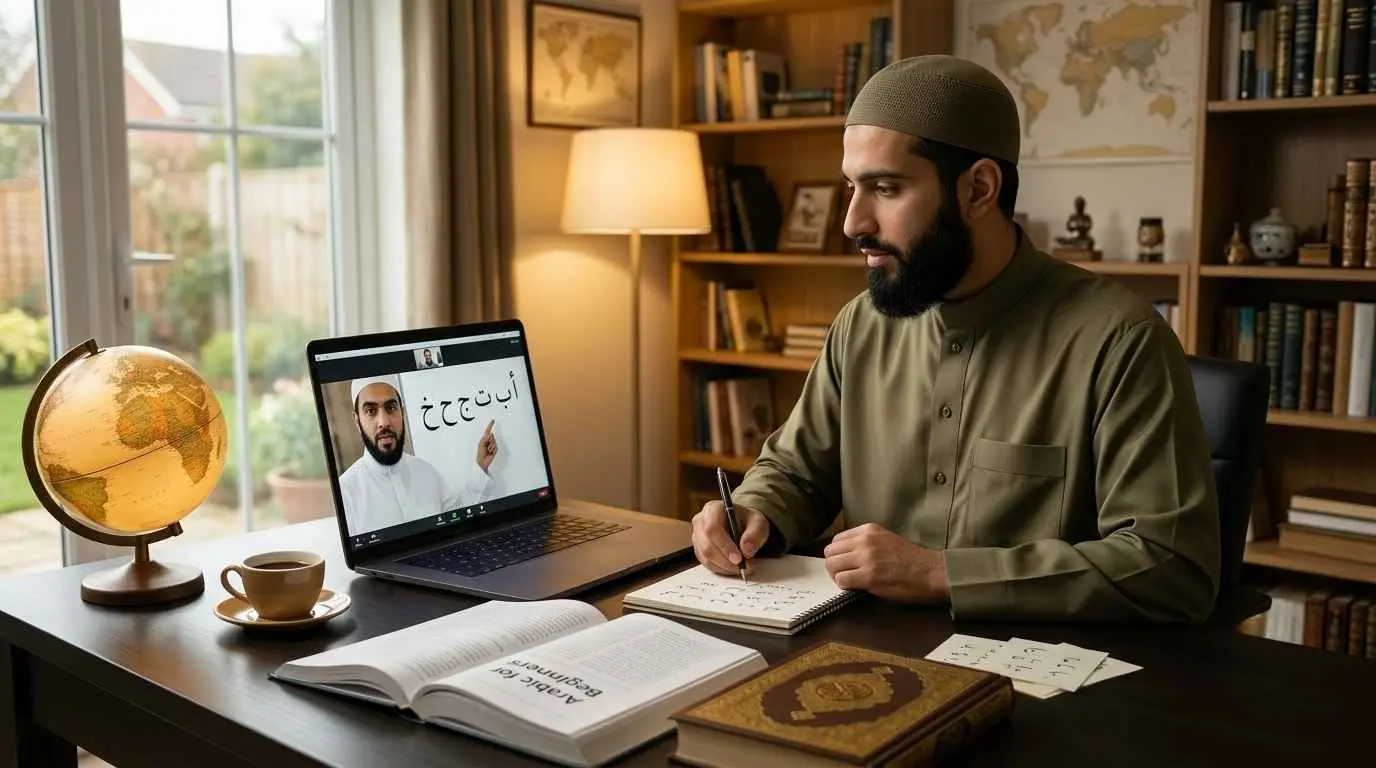
The best arabic course for english speaking students is a combination of a live native speaker teacher, a structured course, and real-time corrections, not a self-paced app. Apps can aid with word practice but cannot correct pronunciation in real time. Unlike many of the Arabic courses available online, Mubarak Academy matches each student with an Arabic native teacher via Zoom.
How Can English Speaking Students Practice Arabic Speaking from Day One?
English-speaking students can begin to practice speaking Arabic from day one, through simple phrases, in each lesson without having to wait until they “know enough.” The one thing that will get students to stall is waiting for perfect grammar before speaking. Practical steps:
- Say each new phrase out loud right away—even if not perfect.
- Record them each week and listen to them together to compare with a native speaker.
- Avoid single words; use short phrases with sentences.
- Get corrected with the teacher in real-time, rather than by self-checking using an app.
Repeatedly correcting errors in your pronunciation makes you fluent much more quickly than when you don’t speak at all.
Complete Guide to Arabic Syntax for Beginners
What Mistakes Do English Speakers Make When Learning Arabic?
The most typical errors by English speakers are the use of Modern Standard Arabic along with a spoken dialect without the awareness that they’re two distinct registers. All this is because grammar, vocabulary, and pronunciation do not always follow the same rules. Other common errors are:
- Avoiding the alphabet and using only transliteration (arabic in english letters)
- Learning grammar rules outside of sentences
- Failure to speak because of the fear of mispronouncing sounds
- Selecting Arabic lessons for English speakers without any feedback from the live teacher to correct errors, thus leaving them uncorrected for months!
Catching these early, ideally with a teacher who flags them live, saves months of relearning bad habits.
Arabic Grammar for English Speakers
What Does a 30-Day Arabic Learning Plan Look Like for English Speakers?
A realistic 30-day plan for learning Arabic emphasizes the alphabet during week one, the basic vocabulary during week two, simple sentences in week three, and speaking in week four. The momentum is maintained after learn arabic step by step approach to learning Arabic without overwhelming a total beginner.
- Week 1: Learn all 28 letters, their basic sounds, and how they connect
- Week 2: Build a 100-word vocabulary bank of greetings, numbers, and everyday objects
- Week 3: Form simple present-tense sentences using that vocabulary
- Week 4: Practice full conversations combining everything learned so far, with a teacher correcting live
By day 30 the majority of students can introduce themselves, count, and participate in a simple greeting exchange all in Arabic.
Learn Quranic Arabic Grammar with Experts
How Do English Speaking Students Choose the Right Arabic Course or Tutor?
For English speakers, the arabic course online and arabic tutor online should be selected in light of the teacher’s qualifications, the class format, and if feedback occurs in real time or at a later time. By reviewing these three points before signing up for any course, you can save yourself months of valuable time that will be wasted on a course that doesn’t really help
What to Look for in an Arabic Course for English Speaking Students
- A teacher who has a verifiable academic or Ijazah qualification and speaks the native language.
- One on one or small group lessons, not just video lessons.
- A systematic program from alphabet to vocabulary to grammar
- The ability to schedule sessions at different times of the day and year, as many tutors can be found online who have clients from around the world.
- The ability of students who speak English to take a free trial class before enrolling in a paid course of Arabic.
The most reliable indicator of whether a course is effective is to verify the teacher’s qualifications directly, not solely by star ratings.
The Best Way to Learn to Speak Arabic
What Comes After the Basics in an Arabic Course for English Speakers?
Once the basics are covered, students of an Arabic course for English speakers usually proceed to intermediate grammar, real conversation training, and reading of unvoweled Arabic text with no diacritics. Memorized phrases gradually give way to original sentences, and past and future tenses are integrated into the traditional reading book.
Here many students specialize; some go on to work with the Tajweed of the Quran, and others work on the modern standard or Egyptian Arabic, as most classes on Arabic for English speakers will eventually need to narrow down to a focus.
The Best Place to Learn Arabic Online for All Levels
Start Learning With Real Feedback, Not Just an App
If you’re ready to move past app-only study and get real feedback on every word, Mubarak Academy’s new arabic course for english speaking students pairs you with a native Arab teacher live over Zoom at any starting level. Book a free trial class—no cost, no obligation to continue.
Mubarak Academy has taught 1,000+ students across 20+ countries for over 80,000 live teaching hours, with no pre-recorded lessons. Teachers include Ms. Ayah Abdul-Majeed, a Cairo University graduate teaching non-native Arabic speakers since 2023, and Sheikh Ahmed Othman, a Cairo University Arabic Language graduate teaching non-native speakers since 2022. Every teacher passes an academic and practical assessment and holds a minimum of five years’ teaching experience.
Start your Arabic learning journey today with a personalized course built around your goals. Contact Mubarak Academy and book your free trial class with a native Arabic teacher.
Frequently Asked Questions
Is it better to start with Modern Standard Arabic or a spoken dialect?
Most English-speaking beginners should start with Modern Standard Arabic (MSA), since it’s understood across every Arab country and used in almost all learning materials. Dialects like Egyptian or Levantine Arabic are better added later, once MSA fundamentals are solid, especially if travel or regional conversation is the goal.
Can adults learn Arabic as effectively as children?
Yes, adults often learn Arabic faster than children in the early stages because they can consciously study grammar rules and recognize patterns. Children typically pick up native-like pronunciation more easily, but structured adult learners with a dedicated teacher frequently reach conversational ability sooner than kids in casual immersion.
Do I need to learn Arabic calligraphy to write correctly?
No, standard handwriting is enough for everyday Arabic reading and writing; calligraphy is a separate decorative art form. Students only need to master the standard connected letter shapes taught in any Arabic for beginners course to read and write Arabic accurately in daily use.
What is the best Arabic course for English-speaking students available online?
The best option combines a live native-speaking teacher, a structured beginner-to-advanced curriculum, and a free trial before payment. Mubarak Academy offers exactly this format, with Al-Azhar-accredited teachers, individual or group classes, and flexible scheduling for students in over 20 countries.
How much should I practice Arabic each day as a beginner?
Twenty to thirty minutes of focused daily practice beats a single long weekly session, since consistency builds pronunciation and memory retention faster than cramming. Beginners studying 15–20 minutes of vocabulary daily plus one live lesson per week typically see noticeable progress within a month.
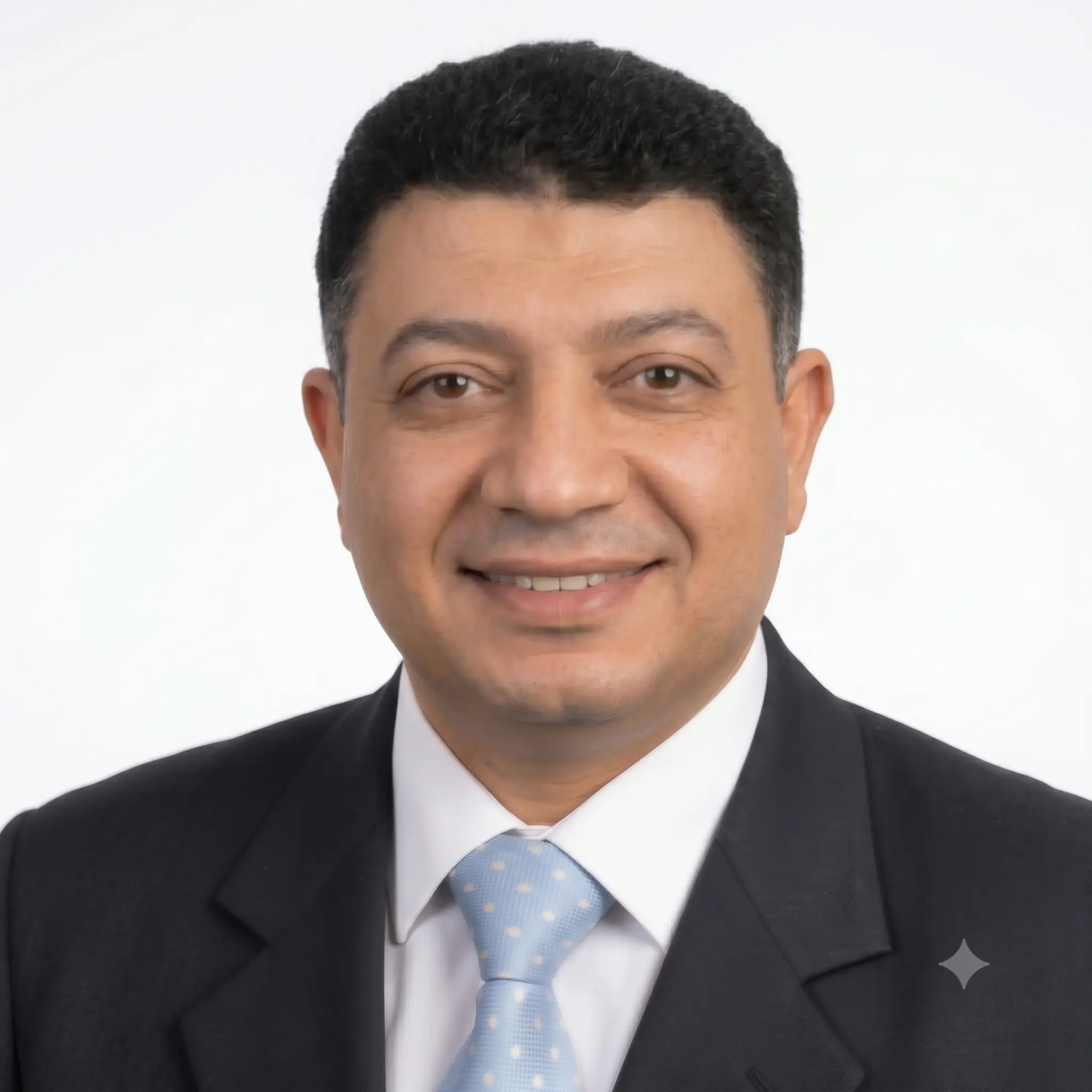
Ustadh Ahmed Mahmoud Abdulaziz is an experienced teacher of Arabic and the Holy Quran for native and non-native speakers. He holds a verified Ijazah in Hafs ‘an Asim and is certified in the foundational Tajweed texts Al-Jazariyyah and Tuhfat Al-Atfal. Drawing on his extensive background in traditional Quranic recitation and international pedagogy, he writes scholar-verified, accessible articles to help students worldwide master Tajweed rules and Arabic linguistics safely and accurately.