

A timetable for quran memorization is essential because it offers the stability, discipline, and structure required for long-term success. Establishing a pattern through the creation of a plan guarantees regular, concentrated study times that are more productive and make memorization easier and more enjoyable, whether you’re a beginner or already on your Hifz journey.
Importance of Quran Memorization Schedule
Having a Quran memorization schedule isn’t just about being organized; it’s about making your Hifz journey easier and more meaningful. Instead of waking up every day wondering “What should I memorize today?” a quran hifz schedule gives you structure and peace of mind.
Here’s how a simple Quran memorization schedule can transform your progress:
- Builds discipline: You set clear times for memorization and revision.
- Boosts retention: Regular practice helps maintain the strength of previously memorized pages.
- Reduces overwhelm: Breaking the Qur’an into manageable portions makes the memorization journey feel easier and more achievable.
- Strengthens your connection with the Qur’an: Consistency leads to deeper understanding and spiritual growth.
A proper Quran Hifz schedule doesn’t make you memorize faster; it makes you memorize smarter, especially when combined with Tajweed rules and guided practice.
How to Create a Practical Quran Memorization Schedule
Designing an effective Quran memorization schedule involves selecting the right tools and methods that align with your lifestyle. Here’s a simple way to build a schedule that works:
1. Choose the Right Tools
- A Quran memorization course or e-learning platform, like Mubarak Academy.
- A quran memorization planner Excel to track daily goals.
- Audio recitations by Sudais, Mishary, or Minshawi to strengthen listening and recall.
- Flashcards or sticky notes for hard-to-remember ayat.
2. Follow a Set Framework
Our recommended structure is simple and effective:
- 10–20 minutes for new verses
- 10 minutes reviewing yesterday’s lesson
- A weekly consolidation session
- A monthly full review of everything learned
3. Stick to One Mushaf
We encourage students to use the same Mushaf throughout their journey. This helps visual memory grow stronger, allowing them to “see” where each ayah is placed on the page.
4. Pair Memorization With a Teacher (Recommended)
At Mubarak Academy, every student learns with a qualified teacher who listens, corrects, and guides. Apps are helpful, but nothing replaces a teacher who ensures proper Tajweed Quran practice, adherence to Tajweed rules, correct memorization, and steady progress.
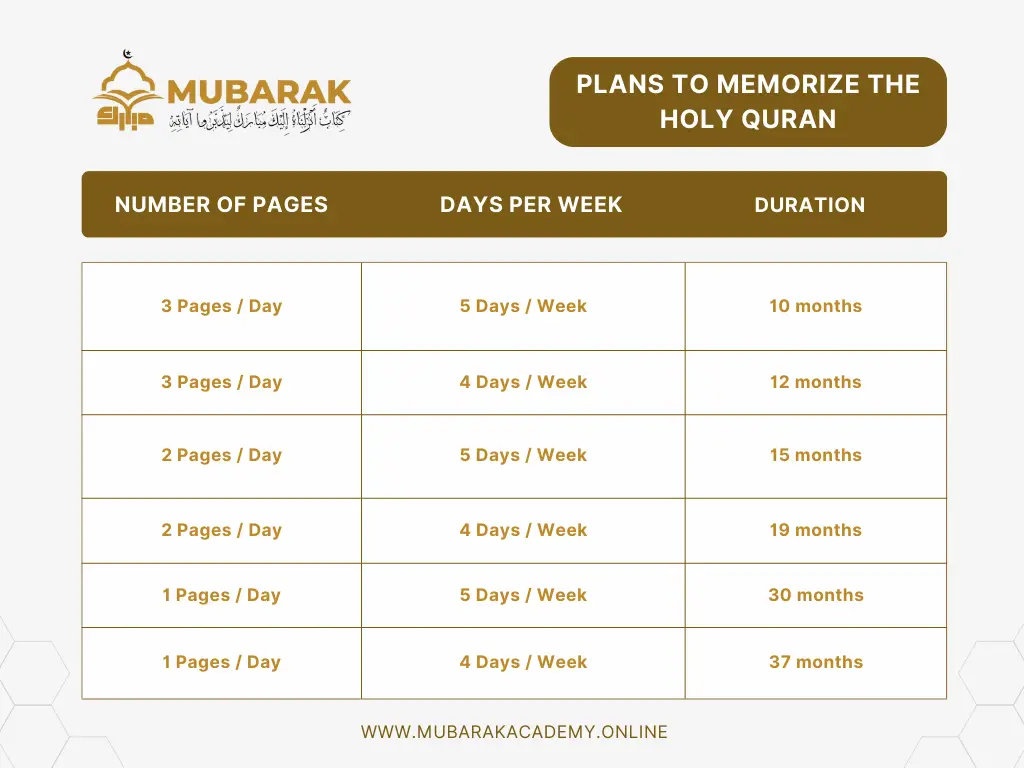
Three Main Schedules for Memorizing the Entire Qur’an
1. The Fast Plan (2–3 Years):
- Memorize 10–15 verses per day
- Includes daily revision and weekly consolidation
- Requires strong consistency and high commitment
2. The Standard Plan (4–5 Years)
- Memorize 5–8 verses per day
- Ideal for students, working adults, or busy parents
- Easier to maintain over the long term
3. Mubarak Academy’s Guided Learning Plan
For students who want structured progress with a qualified teacher, Mubarak Academy offers flexible weekly plans:
- Plan A: 1 class/week (Perfect for beginners or very young children)
- Plan B: 2 classes/week (Ideal for steady, balanced progress)
- Plan C: 3 classes/week (Great for fast learners aiming for quicker completion)
Each plan includes: Free trial → 24/7 support → Monthly progress tracking → Completion certificate.
Start your Qur’an memorization journey with Mubarak Academy today!
Daily Timetable for Quran Memorization
Following a daily timetable for Quran memorization helps you learn new verses, review what you’ve memorized, and remember them for the long term. Here’s a recommended daily timetable for Quran memorization:
Weekly Timetable for Quran Memorization
Following a weekly Timetable for Quran memorization word by word helps you balance learning new material with revising older verses, making memorization steady and long-lasting.
This schedule prevents forgetting and strengthens long-term retention by combining daily practice with weekly consolidation.
Quran Revision Timetable
Revision is just as important as memorization. A well-structured Quran revision timetable ensures you retain what you’ve memorized and prevents forgetting previous sections. Here’s our suggested plan:
1. Daily Revision
- Spend 15–30 minutes daily reviewing the verses you memorized the previous day.
- Recite aloud and check for correct Tajweed.
2. Weekly Revision
- Dedicate 1–2 days per week to review all verses memorized in that week.
- Combine newly memorized verses with older ones to strengthen retention.
3. Monthly Revision
- Allocate a day each month to revise all sections memorized in the past month.
- Focus on tricky parts and verses you tend to forget.
4. Quarterly or Half-Yearly Review
- Revise all sections memorized in the last 3–6 months.
- This ensures long-term memorization and builds confidence.
5. Incorporate Revision in Salah
- Use the verses you’ve memorized in daily prayers.
- Applying what you memorize spiritually reinforces memory.
How Long Does It Take to Memorize the Quran?
The time needed varies by schedule, dedication, and method:
- Fast pace: 1.5-2 years
- Moderate pace: 3-4 years
- Slow and steady: 5-6 years
Most students at Mubarak Academy finish Juz Amma in 1–3 months and complete Hifz according to their chosen pace.
9 Tips to Stay Consistent With Your Memorization
Memorizing the Qur’an is a beautiful journey, but it can feel challenging at times. The key is to take it step by step, stay consistent, and be kind to yourself along the way. Here are 9 tips to help you stay on track:
- Don’t try to memorize too much at once (Start small and build gradually)
- Memorize at the same time every day
- Don’t just read silently. Repeat the verses out loud
- Give your full attention to the Qur’an during your memorization session
- Use the Pomodoro technique (25 minutes on, 5 minutes off)
- Recite what you memorize in salah
- Review more than you memorize
- Stay patient (quality is more important than speed)
- Don’t forget following the rules for reading quran on phone
Success in Hifz = consistency + revision + correct Tajweed.
How Mubarak Academy Helps You Memorize the Quran
As a leading Online Quran Academy, we provide a structured and supportive environment to make Quran memorization easier and more effective:
- One-on-one online Hifz classes
- Qualified Egyptian teachers specializing in Tajweed & Hifz
- Personalized timetable for Quran memorization tailored to your pace
- Weekly progress reports
- Recorded recitations for tracking improvement
- Flexible timings for students and working adults
Whether you’re starting from zero or continuing your journey, our teachers guide you step-by-step with patience and expertise.
Conclusion
Memorizing the Qur’an becomes achievable and enjoyable when you follow a structured timetable for Quran memorization, revise consistently, and learn with proper Tajweed. Whether you choose a fast or slow plan, what matters most is staying committed and learning at a pace that suits your life.
With online programs like Mubarak Academy, you receive the guidance, accountability, and structure you need to complete your memorization journey successfully, right from home.
Frequently Asked Questions
1. How many hours a day should I spend memorizing the Qur’an?
30–60 minutes is ideal for most learners, plus short revision sessions.
2. What is the best time to memorize the Qur’an?
After Fajr, when the mind is fresh and focused.
3. Should I memorize with Tajweed?
Yes. Proper Tajweed ensures accurate memorization and prevents mistakes.
4. Can beginners start memorizing right away?
Yes, but learning basic Tajweed first is recommended.
5. Does Mubarak Academy offer Quran memorization courses?
Yes, flexible, one-to-one online classes for all ages and levels.