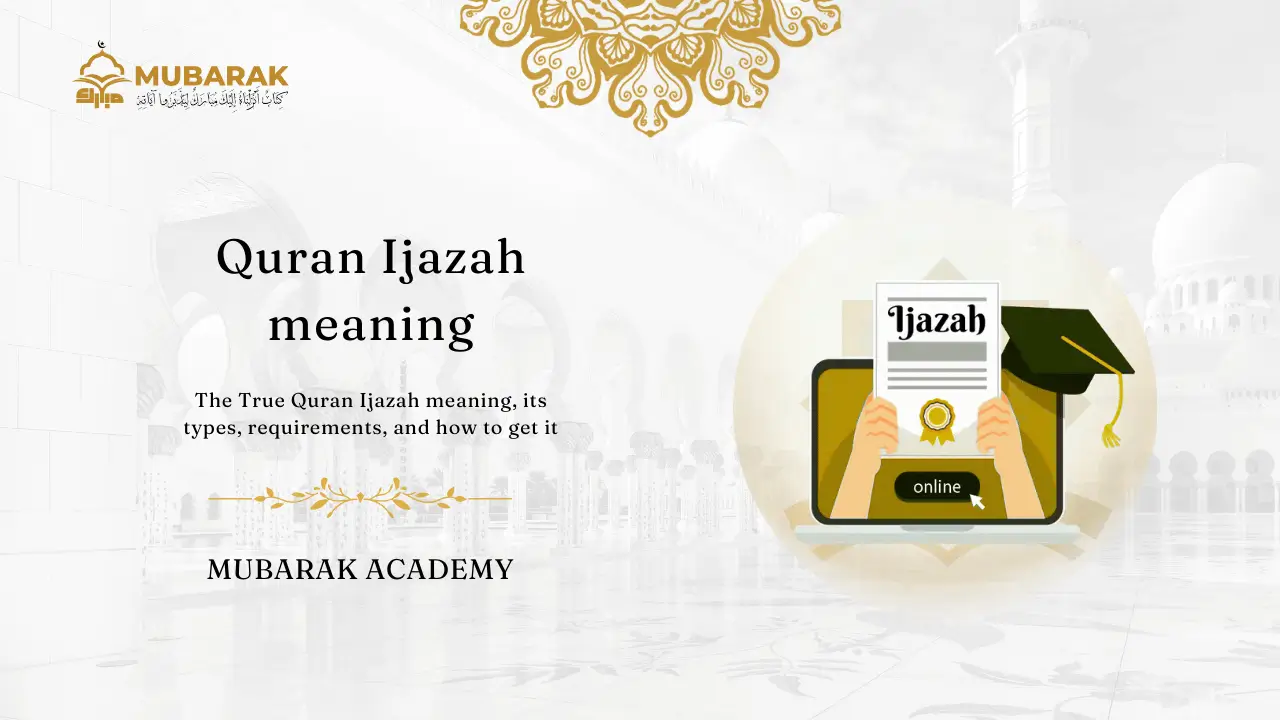
A Quran Ijazah in Islam is not just a certificate; it is a scholarly authorization that proves a student has mastered accurate Qur’an recitation and Tajweed through direct learning from a certified Sheikh. For over 1,400 years, the Qur’an has been preserved through this exact teacher-to-student chain (sanad). So, understanding the Quran Ijazah meaning is essential for anyone who wishes to recite, teach, or transmit the Qur’an with authenticity, precision, and trust. Today, we will explain what is ijazah in quran, the types of ijazah, their levels, and how to get ijazah in quran correctly.
What is Ijazah in Quran
Receiving a Quran Ijazah in Islam means that a student has mastered accurate recitation, Tajweed, or memorization and is qualified to teach the Qur’an under an authenticated scholarly chain (sanad).
In simple words, an Ijazah is a certificate of trust, because it shows that a student didn’t learn the Qur’an alone, but learned it directly from a qualified teacher, who also learned from their teacher, forming a continuous chain of learning that goes all the way back to the Prophet Muhammad ﷺ. This chain ensures the Qur’an has been taught accurately, carefully, and with deep respect across generations.
Learn: Difference Between Sanad and Isnad
What an Ijazah Confirms
An Ijazah shows that the student:
- Recites the Qur’an accurately, applying Tajweed rules the right way
- Has completed full recitation or memorization while being closely guided by a qualified teacher
- Has reached the level of excellence required by the Sheikh
- Is connected to an authentic chain of transmission
Why Ijazah Is Important
Understanding what is ijazah in Islam explains why it plays a vital role in preserving the Qur’an. Ijazah helps ensure that:
- Pronunciation and recitation rules are not altered
- Qur’anic knowledge is passed accurately from generation to generation
- Teachers are properly qualified, not self-certified
In short, the Quran Ijazah meaning represents mastery, authenticity, and responsibility in preserving Allah’s Book.
Explore more about: What is a Sanad in Islam
Types of Ijazah
After explaining what is Ijazah in Quran, it becomes easier to understand that Ijazah is not limited to one level or purpose. In fact, there are different types of Ijazah, and each one reflects a specific area of mastery and responsibility in serving the Book of Allah.
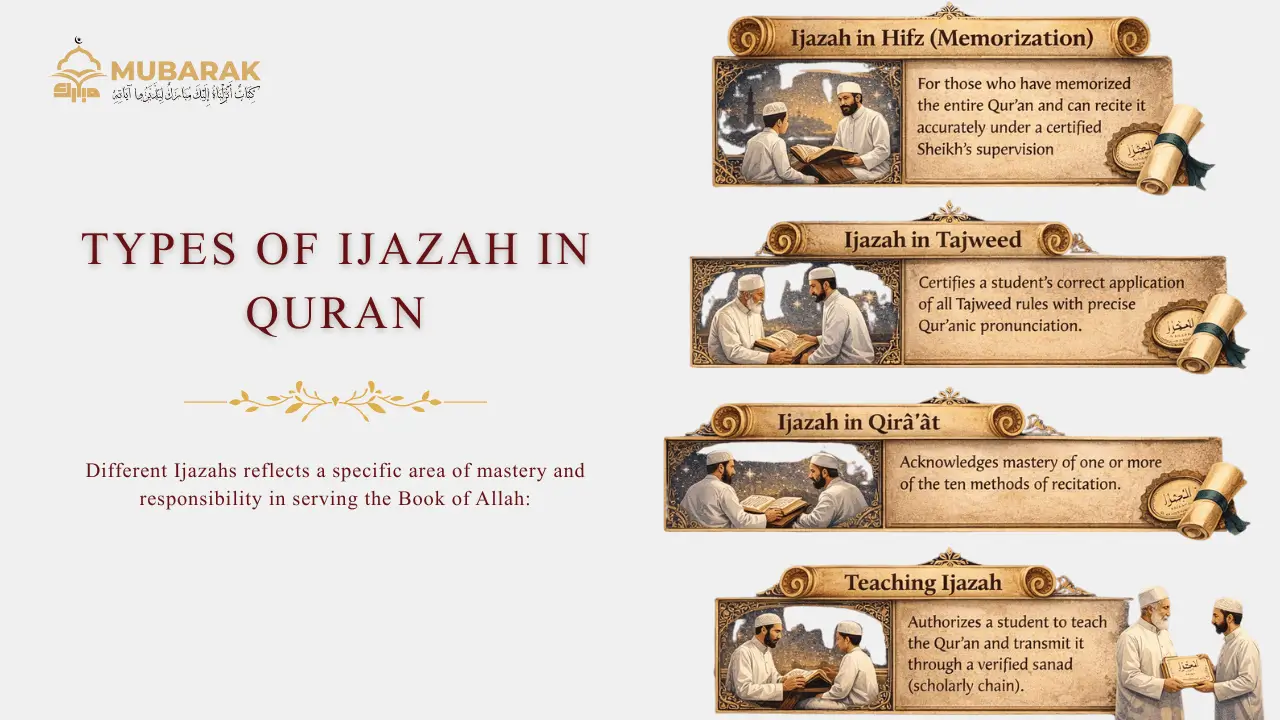
Below are the main levels and types of Ijāzah:
1. Ijazah in Hifz (Memorization):
This level is granted to students who have memorized the entire Qur’an (30 Juz) and can recite it accurately from beginning to end under the supervision of a certified Sheikh.
This Ijāzah confirms memorization, not teaching authority.
2. Ijazah in Tajweed:
Confirms that the student applies all Tajweed rules correctly and recites the Qur’an with proper pronunciation and precision.
Focus areas:
- Makharij (points of articulation)
- Sifāt (characteristics of letters)
- Rules of elongation, stopping, and merging
This Ijazah ensures high-quality Qur’anic recitation. Depending on the Sheikh, it may also grant permission to teach Tajweed.
How to Get Ijazah in Tajweed
The student studies both Tajweed theory and practical application, recites regularly under the supervision of a certified Sheikh, and completes a final evaluation. The Ijazah is awarded only when the teacher is fully confident in the student’s recitation accuracy and, if applicable, their ability to teach Tajweed correctly.
3. Ijazah in Qirā’āt:
An advanced Ijazah, which is given to those who have mastered one or more authentic styles of Qur’anic recitation.
Levels within Ijazah in Qirā’āt include:
- One Riwayah, such as Ḥafs ‘an ‘Āṣim
- Multiple Riwayāt
- The Seven Qirā’āt
- The Ten Qirā’āt (minor or major)
Achieving this level requires strong theoretical knowledge, precise practical recitation, and long-term study under qualified scholars.
To understand this better, you can explore our guide on the types of recitation of Quran.
4. Teaching Ijazah:
This is the highest level of Ijāzah. It grants official authorization to teach and transmit the Qur’an to others with a verified Sanad (scholarly chain) connecting back to the Prophet ﷺ. Holders of this Ijāzah can grant Ijāzah to students.
Each type of Ijazah represents a level of trust and responsibility, ensuring that the Qur’an continues to be preserved and taught exactly as it was revealed.
Start Your Ijazah Journey Today
Requirements for Receiving Ijazah
Now that you understand what is Ijazah in quran and its different types, it’s important to know the main requirements for obtaining one.
Receiving a Quran Ijazah is a meaningful journey that takes time, patience, and sincere effort. It’s not just about skill, but about learning the Qur’an the right way, directly from a qualified teacher who guides and corrects you step by step.
To receive an Ijazah in Quran, a student usually needs to:
- Learn under a certified Sheikh who has an authentic chain of transmission (sanad)
- Recite or memorize the Qur’an accurately while applying Tajweed correctly
- Complete the entire Qur’an under the teacher’s close supervision
- Show commitment, consistency, and respect throughout the learning process
- Maintain good manners and a sincere attitude toward the Qur’an
- Successfully pass a final assessment approved by the Sheikh
An Ijazah is only granted when the teacher is confident that the student is ready, not just in recitation, but in responsibility. It is a sign of trust, care, and continuation of a sacred tradition.
How to Get Ijazah in Quran (Step-by-Step Guide)
Getting an Ijazah in Quran means earning a formal certification from a qualified Sheikh confirming that you recite the Quran accurately and are connected through an authentic sanad (chain of transmission) back to the Prophet ﷺ. Depending on the type, it may authorize you to recite, teach, or grant Ijazah to others.
Here are the essential steps:
1. Build a Strong Foundation in Qur’an Recitation
Before starting the Ijazah journey, the student must:
- Read the Qur’an fluently and confidently
- Apply correct pronunciation and recitation rules
- Learn Tajweed Quran as part of proper Qur’an recitation
A Sheikh will not begin Ijazah recitation if the student’s reading level is weak.
2. Recite the Entire Qur’an to a Certified Sheikh
The core requirement for Ijazah is complete recitation (tilawah) from memory or from the Mushaf:
You will recite:
- From Al-Fatiha to An-Nas
- With accurate pronunciation and correct application of recitation rules
- Under the supervision of a Sheikh who already holds an Ijazah with a sanad
This process is called “al-qirā’ah wa al-‘ard”.
3. Correct Mistakes in Recitation
During your sessions:
- The Sheikh will correct errors in tajweed, pronunciation, fluency, and rhythm
- You repeat until you recite flawlessly
- Consistency and patience are essential
Your performance must reach a minimum acceptable standard set by the Sheikh.
4. Demonstrate Understanding of Recitation Rules
Most Sheikhs test the student’s knowledge of:
- Qur’an recitation principles
- Practical application of Tajweed rules
- Common recitation errors and how to avoid them
Some Sheikhs include a short oral or practical assessment.
5. Complete the Sanad Verification
To receive ijazah:
- The Sheikh confirms their chain of transmission (سند)
- Your name will be added to their sanad
- This sanad links you directly to the Prophet ﷺ through authentic chains of reciters
This is what makes ijazah unique and valuable.
6. Receive the Official Ijazah in the Qur’an
Once you complete:
- Full Qur’an recitation
- Required corrections and assessments
- Sanad verification
You receive a written Ijazah (إجازة خطية) confirming your authorization to:
- Recite the Qur’an accurately
- Teach the Qur’an
- Grant Ijazah to others (depending on the type of Ijazah received)
This certification typically represents the final stage for those researching how to become online quran teacher with professional credibility and global recognition.
Mubarak Academy’s Online Ijazah Programs
Mubarak Academy offers a comprehensive Quran Ijazah course for students who want to earn an authentic Ijazah with a valid sanad. Through this fully online program, you can master tajweed, recitation, and Quranic transmission under the guidance of certified teachers.
Our quran ijazah course ensures that every learner receives proper training aligned with traditional Islamic scholarship while maintaining flexibility for modern students.
Conclusion
Understanding “What is Ijazah in Quran” is essential for anyone who wants to recite, teach, or transmit the Qur’an with authenticity. By mastering quran recitation correctly, learning Tajweed rules, and progressing through different certification levels, students strengthen both their knowledge and their spiritual connection.
Frequently Asked Questions
1. Can you get an Ijāzah without a Sanad?
No. A sanad is essential for an Ijāzah, as it preserves the authentic chain of Qur’anic transmission and confirms the legitimacy and accuracy of the Qur’an Ijāzah.
2. What is Ijāzah in Quran?
It is a certification that confirms a student can recite the Quran correctly and accurately according to established recitation rules, with a verified sanad connecting them to the Prophet ﷺ.
3. How to get Ijāzah in Tajweed?
You can obtain an Ijāzah in Tajweed by studying under a certified Sheikh, practicing consistently, mastering Tajweed rules, and passing a final recitation evaluation that proves your accuracy and understanding.
4. What are the different types of Ijāzah?
Types of Ijāzah include memorization Ijāzah, recitation Ijāzah, specialized Tajweed Ijāzah, and Ijāzah in teaching.
5. What is the difference between Ijāzah and a general certificate?
An Ijāzah represents a direct, authenticated authorization to teach or recite the Quran, while general certificates only confirm course completion and do not include formal authorization or a chain of transmission.