Tajweed in Quran (تَجْوِيد) is the set of rules that governs how the Quran must be pronounced — giving every Arabic letter its correct articulation point and characteristics so the recitation matches the way the Prophet Muhammad ﷺ received it from the angel Jibreel. The word comes from the Arabic root ج-و-د (jawwada), meaning “to improve” or “to make excellent.” In practice, Tajweed protects the meaning of Allah’s words: a single mispronounced letter can change a word entirely, so these rules keep recitation accurate, clear, and beautiful.
This guide explains what Tajweed means, where its rules came from, whether learning it is obligatory, the core rule categories every reciter studies, and how to begin learning it correctly. It is written for beginners and improving reciters who want a clear, scholarly starting point.
What Is Tajweed in Quran?
Tajweed has two layers of meaning, and understanding both clears up most beginner confusion.
Linguistically, Tajweed comes from jawwada (جَوَّدَ) — to better, perfect, or beautify something. Technically, in the science of Quranic recitation, Tajweed means giving every letter its rights and its dues when reciting.
Definition: Tajweed is the science of reciting the Quran by pronouncing each letter from its correct articulation point (makhraj) with its proper characteristics (sifaat), while observing the rules that apply to letters in different positions.
Classical scholars draw a precise distinction here. The rights of a letter (حق الحرف, haqq al-harf) are the essential qualities that never leave it — for example, the throat origin of ح or the heaviness of ص. The dues of a letter (مستحق الحرف, mustahaqq al-harf) are the qualities that appear only in certain situations — such as the nasalisation (ghunnah) that appears when specific letters meet, or the elongation of a vowel under particular conditions. Most ranking articles define Tajweed only by its first layer; the rights-and-dues framework is what scholars actually use, and it is why Tajweed is treated as a structured science rather than a loose set of tips.
Listen: Tajweed Rules in Practice
The best way to understand Tajweed is to hear it applied. The table below maps each core rule to a specific Quranic verse and a recommended reciter. Use these as listening exercises alongside your study.
This definition, rooted in the classical works of Imam Ibn al-Jazari (rahimahullah), makes clear that Tajweed is not about beautifying sound for its own sake. Its primary purpose is accuracy: protecting the divine text from errors that arise when letters are pronounced from the wrong part of the mouth or throat.
| Tajweed Rule | Recommended Verse | Reciter | What to Listen For & Audio |
|---|---|---|---|
| Ghunnah — Noon Mushaddad غُنَّة — النون المشددة |
Surah Al-Fatiha (1:1–7) | Sheikh Husary — Muʻallim |
Nasal hum on نّ in Bismillah — hold it for exactly 2 counts. |
| Idgham with Ghunnah إدغام بغنة |
Surah Al-Zalzalah (99:7) | Sheikh Husary — Muʻallim |
Noon merging into yaa in فَمَن يَعْمَلْ — no gap, no separate Noon sound. |
| Iqlab إقلاب |
Surah Al-Baqarah (2:18) | Sheikh Mishary Alafasy |
Noon → Meem before ba’ in صُمٌّ بُكْمٌ — lips barely close. |
| Ikhfa’ (concealment) إخفاء |
Surah Al-Baqarah (2:5) | Sheikh Husary — Muʻallim |
Partial nasal before kaaf — neither fully pronounced nor fully merged. Tongue doesn’t touch the roof of the mouth. |
| Madd al-Muttasil (4 counts) مد متصل |
Surah Al-Baqarah (2:285) | Sheikh Abdul Basit — Murattal |
Elongation of waw before hamza in جَاءَ — extended hold, longer than a natural syllable. |
| Madd Lazim (6 counts) مد لازم |
Surah Al-Baqarah (2:1) — Alif Lam Meem | Sheikh Husary — Muʻallim |
6-count stretch on each opening letter. Count silently as you listen. |
| Qalqalah light (mid-word) قلقلة خفيفة |
Surah Al-Ikhlas (112:1–4) | Sheikh Mohammed Ayoub |
Bounce on qaf (ق) in قُلْ — a light echo, not a heavy thud. |
| Qalqalah heavy (end-stop) قلقلة ثقيلة |
Surah Al-Masad (111:1–5) | Sheikh Abdul Basit — Murattal |
Heavy echo on ba’ (ب) at verse-end — resonant bounce noticeably heavier than mid-word. |
| Tafkheem of Ra’ (heavy) تفخيم الراء |
Surah Al-Rahman (55:1) | Sheikh Mishary Alafasy |
Heavy Ra’ in الرَّحْمٰنُ — the tongue does not touch the front teeth. |
| Waqf — Stopping rules أحكام الوقف |
Surah Yusuf (12:1–2) | Sheikh Husary — Muʻallim |
Mandatory (م) vs. permissible (ج) stop — listen for where the reciter pauses and flows. |
Why Tajweed Matters?: Preserving the Meaning of Allah’s Words
The strongest reason to learn Tajweed is not beauty — it is accuracy. Arabic is a language where a small change in sound produces a completely different word, and the Quran is the precise speech of Allah. Reciting it carelessly risks distorting that speech.
A well-known example makes this concrete. The word قَلْب (qalb, “heart”) and كَلْب (kalb, “dog”) differ only in their first letter — ق versus ك. Both come from nearby points in the mouth, so a reciter who has not learned their articulation can swap them without noticing, and the meaning collapses. Tajweed exists precisely to prevent this kind of error.
The command to recite carefully is in the Quran itself. Allah says: وَرَتِّلِ الْقُرْآنَ تَرْتِيلًا — “and recite the Quran with measured recitation” (Surah Al-Muzzammil, 73:4). The word tarteel in this verse means slow, deliberate, well-articulated recitation. When Ali ibn Abi Talib (may Allah be pleased with him) was asked about its meaning, he explained that tarteel is “the Tajweed of the letters and knowing where to stop.” In other words, the verse itself points to what we now call Tajweed.
There is also a direct reward for striving. The Prophet ﷺ said that the one who is proficient in reciting the Quran will be with the noble, recording angels, and the one who recites with difficulty, struggling through it, will have two rewards — one for the recitation and one for the effort (Sahih al-Bukhari 4937; Sahih Muslim 798, agreed upon). The hadith is a relief for beginners: you are rewarded for trying, not only for perfection.
Beyond accuracy, Tajweed deepens focus, supports memorisation, and connects the reciter to an unbroken oral chain stretching back to the Prophet ﷺ. We cover these benefits in detail in our guide on the importance of Tajweed in the Quran.
A Brief History: Where Did the Rules of Tajweed Come From?

Tajweed was not invented centuries after the revelation — it was revealed with the Quran. When Jibreel (peace be upon him) recited the words of Allah to the Prophet Muhammad ﷺ, he recited them with specific pronunciation, and the Prophet ﷺ taught his companions to recite the same way. This method of learning face-to-face from a qualified teacher is called talaqqi, and it remains the foundation of Quranic study today.
The terminology of Tajweed, however, was formalised later. As Islam spread in the early centuries and large numbers of non-Arabs embraced the faith, pronunciation errors began to appear among new reciters. Scholars responded by documenting the rules systematically. Abu Ubaid al-Qasim ibn Sallam (d. 838 CE) is credited as the first to record a written system of recitation. Ibn Mujahid (d. 936 CE) later limited the canonical readings to the seven well-known qira’at. Centuries afterward, Imam Ibn al-Jazari composed Al-Muqaddimah al-Jazariyyah, a poem that beginners still memorise as their first Tajweed text.
Ibn al-Jazari summarised the seriousness of the science in a famous line: applying Tajweed is a matter of absolute necessity, and whoever does not apply it to the Quran is sinful. This connects Tajweed to the wider science of qira’at — the authenticated readings of the Quran transmitted through generations. For a broader historical overview of the readings and reciters, the reference entry on Tajwid traces this chain in detail.
Is Learning Tajweed Obligatory?
This is one of the most common beginner questions, and the scholarly answer has two parts. Knowing the technical rules of Tajweed as a formal science — the names, definitions, and categories — is generally considered a communal obligation (فرض كفاية, fard al-kifaya): enough qualified people in the community must master it so the knowledge is preserved, but not every individual must become a specialist.
Applying Tajweed correctly enough to recite without distorting the words is viewed more strictly. Many scholars hold that reciting Al-Fatihah and what one regularly reads in prayer with correct pronunciation is an individual obligation (فرض عين, fard al-ayn) on every Muslim, even if they never learn the technical vocabulary. The reasoning is simple: prayer requires correct recitation, and correct recitation requires the practical application of Tajweed.
Scholars classify recitation errors into two types. A major, clear error (لحن جلي, lahn jali) changes a letter or vowel in a way that alters the meaning — this is the type every Muslim is obligated to avoid. A minor, hidden error (لحن خفي, lahn khafi) breaks a finer rule, such as an imperfect ghunnah or a slightly short elongation, without changing the meaning. Avoiding minor errors is the mark of mastery rather than a strict obligation on the average reciter.
Imam Ibn al-Jazari (rahimahullah) captured the weight of this in his classic poem Al-Muqaddimah al-Jazariyyah:
“Applying Tajweed is an inviolable obligation; whoever does not apply it in the Quran is sinful — for Allah revealed it thus, and thus it descended.”
This obligation is proportional to ability. A learner sincerely working to improve is not sinful for the mistakes made along the way; what is blameworthy is deliberate negligence — knowing your recitation has correctable errors and making no effort to fix them. For children, the obligation itself begins at the age of religious accountability (bulugh), though parents and teachers are encouraged to introduce Tajweed well before that.
The Core Rules of Tajweed:
Tajweed is studied as a set of connected rule groups, each governing a different aspect of pronunciation. A beginner does not learn them all at once — they build up in a logical order, starting with how to produce individual letters and moving toward how letters interact. Each rule below has its own dedicated lesson, and you can see every rule applied to real verses in our reference of Tajweed rules with examples.
| Rule group | What it governs | Example concept |
|---|---|---|
| Makharij al-Huruf | The articulation point of each letter | Throat letters vs. lip letters |
| Sifaat al-Huruf | The characteristics/qualities of letters | Heavy vs. light, echoing, whispering |
| Noon Sakinah & Tanween | Rules when a silent noon or tanween meets another letter | Izhar, Idgham, Iqlab, Ikhfa |
| Meem Sakinah | Rules for a silent meem | Ikhfa Shafawi, Idgham, Izhar |
| Madd (Elongation) | How long to extend vowel sounds | Natural madd vs. extended madd |
| Qalqalah (Echoing) | The bouncing sound on five specific letters | ق ط ب ج د with sukoon |
| Waqf & Ibtida | Where to stop and where to start | Stop signs in the Mushaf |
1. Makharij al-Huruf — Articulation Points:
Every Arabic letter has an exact place in the mouth or throat from which its sound emerges. Classical scholars identify 17 articulation points spread across the throat, tongue, lips, and nasal passage. This is the first rule group beginners learn, because you cannot pronounce a letter correctly until you know where it comes from. Confusing nearby points — like س and ص, or ت and ط — is one of the most common early mistakes. Learn the full map in our lesson on what makhraj is in Tajweed.
2. Sifaat al-Huruf — Letter Characteristics:
Once you know where a letter is produced, sifaat describe how it sounds. Some characteristics are permanent and never leave the letter; others appear only in certain contexts. Among the most important are heaviness and lightness (tafkheem and tarqeeq), the echoing quality (qalqalah), and the whispered letters (hams). Sifaat are what let you distinguish two letters that share a similar articulation point.
3. Rules of Noon Sakinah and Tanween:
This is the most frequently applied rule group in the entire Quran, which is why it is often taught early. A noon sakinah is the letter ن carrying a sukoon, and tanween is the doubled vowel ending. Depending on the letter that follows, the sound is pronounced clearly (Izhar), merged (Idgham), converted to a meem (Iqlab), or hidden with nasalisation (Ikhfa). Because these four cases appear on almost every page, mastering them transforms a beginner’s recitation quickly. See the complete breakdown in our guide to the rules of noon sakinah and tanween.
4. Rules of Meem Sakinah:
A silent meem (مْ) follows its own three-case system — hidden at the lips (Ikhfa Shafawi) before ب, merged before another meem, and pronounced clearly before all other letters. These rules mirror the logic of noon sakinah and are usually studied right after it.
5. Madd — Elongation:
Madd governs how long a vowel sound is held. The natural madd is held for two counts; other types extend to four or six counts depending on what follows. Getting madd wrong is rarely meaning-changing, but it is one of the clearest signs of whether a reciter has trained properly, because rhythm depends on it.
6. Qalqalah — The Echoing Letters:
Five letters — ق ط ب ج د, grouped in the mnemonic qutb jad — produce a slight bouncing or echoing sound when they carry a sukoon. The echo is light in the middle of a word and stronger at the end of a verse. Qalqalah adds the recognisable rhythmic quality you hear in skilled recitation.
7. Waqf and Ibtida — Stopping and Starting:
Knowing where to pause is as important as knowing how to pronounce. Stopping in the wrong place can join or separate phrases in a way that distorts meaning, which is why the Mushaf includes stop signs above the text. Ali ibn Abi Talib’s definition of tarteel explicitly included “knowing where to stop,” placing this rule group at the heart of the science.
Tajweed Symbols in the Quran:
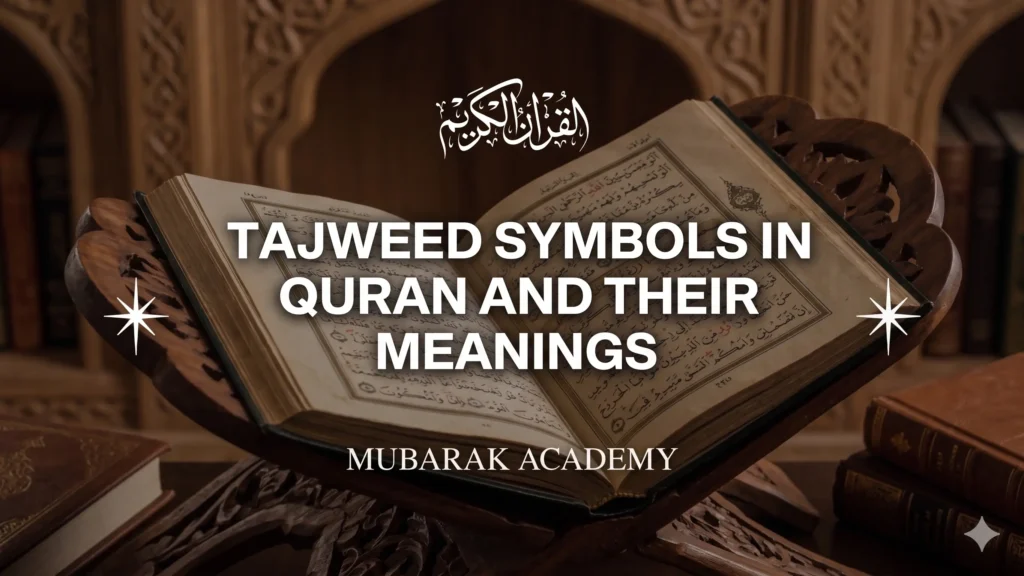
The standard Mushaf (Hafs ‘an ‘Asim recitation) includes a system of diacritical marks and marginal symbols that encode Tajweed rules directly into the text. Understanding them is the equivalent of having a teacher guide every recitation session.
For a detailed guide with Quranic examples, see: Quran Stop Signs with Examples.
| Symbol | Arabic Name | Meaning / Instruction |
|---|---|---|
| مـ | Waqf Lazim (Mandatory Stop) | Must stop here; continuing without pausing may distort the intended meaning. |
| لا | La (Do Not Stop) | Recitation must continue; stopping here breaks the grammatical or legal sense. |
| ج | Waqf Jaiz (Permissible Stop) | An optional pause — the reciter may stop or continue without error. |
| قلى | Qeela / Qif (Preferable Stop) | Stopping is preferred here, though continuing remains permissible. |
| صلى | Sili (Preferable Continuation) | Continuing recitation is preferred, though a pause is technically allowed. |
| س | Saktah (Brief Pause) | A very brief silence without drawing breath — distinct from a full stop. |
| ۩ | Sajdah Symbol | Indicates a verse of prostration (Sujood al-Tilawah); prostration is required or recommended here. |
| ۞ | Ruku’ Sign | Marks the start of a Ruku’ (section), as used in Salah recitation cycles. |
| ~ | Madd (Prolongation) | Signals vowel elongation for 2, 4, or 6 counts according to the applicable Madd rule. |
Consistent engagement with these symbols during daily recitation accelerates internalization. A student who understands what each symbol instructs will apply the corresponding rule automatically, even during recitation from memory.
Common Mistakes Beginners Make:
In our experience teaching Tajweed to new reciters at Mubarak Academy, the same handful of errors appear again and again — and almost all of them are fixable with focused practice on the right rule group.
The first is confusing similar letters. Beginners regularly swap ق for ك, س for ص, or ح for ه, because they have not yet internalised the articulation points. This is a major error (lahn jali) when it changes a word, so makhraj training comes first for a reason.
The second is rushing the madd. New reciters either cut elongations short or stretch them unevenly, which breaks the rhythm of the verse. Counting consistently — and listening closely to a skilled qari — corrects this faster than any written explanation.
The third is weak or missing ghunnah, the nasal sound in noon and meem rules. Because it is a hidden error (lahn khafi), beginners often do not realise they are dropping it until a teacher points it out. This is exactly why Tajweed cannot be learned from books alone — some corrections require a trained ear listening to you in real time.
How to Learn Quran with Tajweed?
The single most important principle is this: Tajweed is learned from a qualified teacher, not from books or apps alone. The science was transmitted face-to-face for fourteen centuries precisely because pronunciation involves the movement of the mouth and the sound it produces — things only a trained listener can correct. A book can tell you what ghunnah is; only a teacher can tell you whether yours is correct.
A sensible learning order looks like this:
| Stage | Focus | Goal |
|---|---|---|
| 1 | Arabic letters and harakat | Read letters and short vowels confidently |
| 2 | Makharij and sifaat | Pronounce each letter from its correct point |
| 3 | Noon & meem sakinah rules | Apply the most common rules across pages |
| 4 | Madd and qalqalah | Build correct rhythm and timing |
| 5 | Waqf and full-page application | Recite whole passages with all rules together |
Consistency matters more than long sessions. A focused fifteen to twenty minutes a day with a teacher’s feedback will outpace occasional long study. If you are starting from home, our step-by-step guide on how to learn Quran with Tajweed at home? walks through the practical setup, tools, and weekly routine.
Quick tip:
Record yourself reciting a short surah, then compare it to a renowned reciter such as Sheikh Mishary Rashid Al-Afasy. Hearing the gap between the two is one of the fastest ways to identify which rule to work on next — though it complements, rather than replaces, a teacher.
Conclusion
Tajweed is the science that connects the Muslim’s voice to the voice of revelation. Its rules are not arbitrary conventions — they are the preserved record of how the Quran sounded when it descended, transmitted faithfully by each generation to the next. Mastering even the foundational rules produces a recitation that is more accurate and — over time — unmistakably more present. Every Muslim who recites the Quran has both the obligation and the capacity to recite it as it was revealed.
Frequently Asked Questions
Is Tajweed compulsory in Islam?
Reciting the Quran without distorting its meaning — which requires the practical application of Tajweed — is considered an individual obligation by many scholars, especially for what you recite in prayer. Mastering Tajweed as a formal science with all its terminology is a communal obligation, meaning enough people must preserve the knowledge, but not every individual must become a specialist.Can I learn Tajweed on my own?
You can learn the theory of Tajweed from books and videos, but you cannot fully master it alone. Correct pronunciation depends on subtle sounds and mouth movements that a trained teacher must hear and correct. The science was transmitted face-to-face (talaqqi) for this exact reason, and serious students always recite to a qualified teacher.How long does it take to learn Tajweed?
Most beginners grasp the foundational rules in three to six months of regular practice with a teacher. Reaching refined, fluent recitation that applies every rule naturally usually takes one to two years. The timeline depends on how often you practise and the quality of feedback you receive.What is the difference between Tajweed and Tarteel?
Tarteel is the slow, measured, careful style of recitation commanded in Surah Al-Muzzammil (73:4). Tajweed is the set of rules that makes that recitation correct. In short, tarteel is the manner, and Tajweed is the rulebook that governs it — you achieve proper tarteel by applying Tajweed.Does mispronunciation invalidate my prayer?
A pronunciation error that changes the meaning of a word in an obligatory part of the prayer, such as Al-Fatihah, can affect the validity of the recitation according to many scholars. Minor errors that do not change meaning do not invalidate the prayer, though correcting them is encouraged. This is the strongest practical reason to learn at least the Tajweed needed for your daily prayers.Which Tajweed rule should I learn first?
Start with the articulation points of the letters (makharij al-huruf). You cannot apply any other rule correctly until you can produce each letter from its proper place. After makharij, the rules of noon sakinah and tanween give the fastest visible improvement because they appear on nearly every page of the Quran.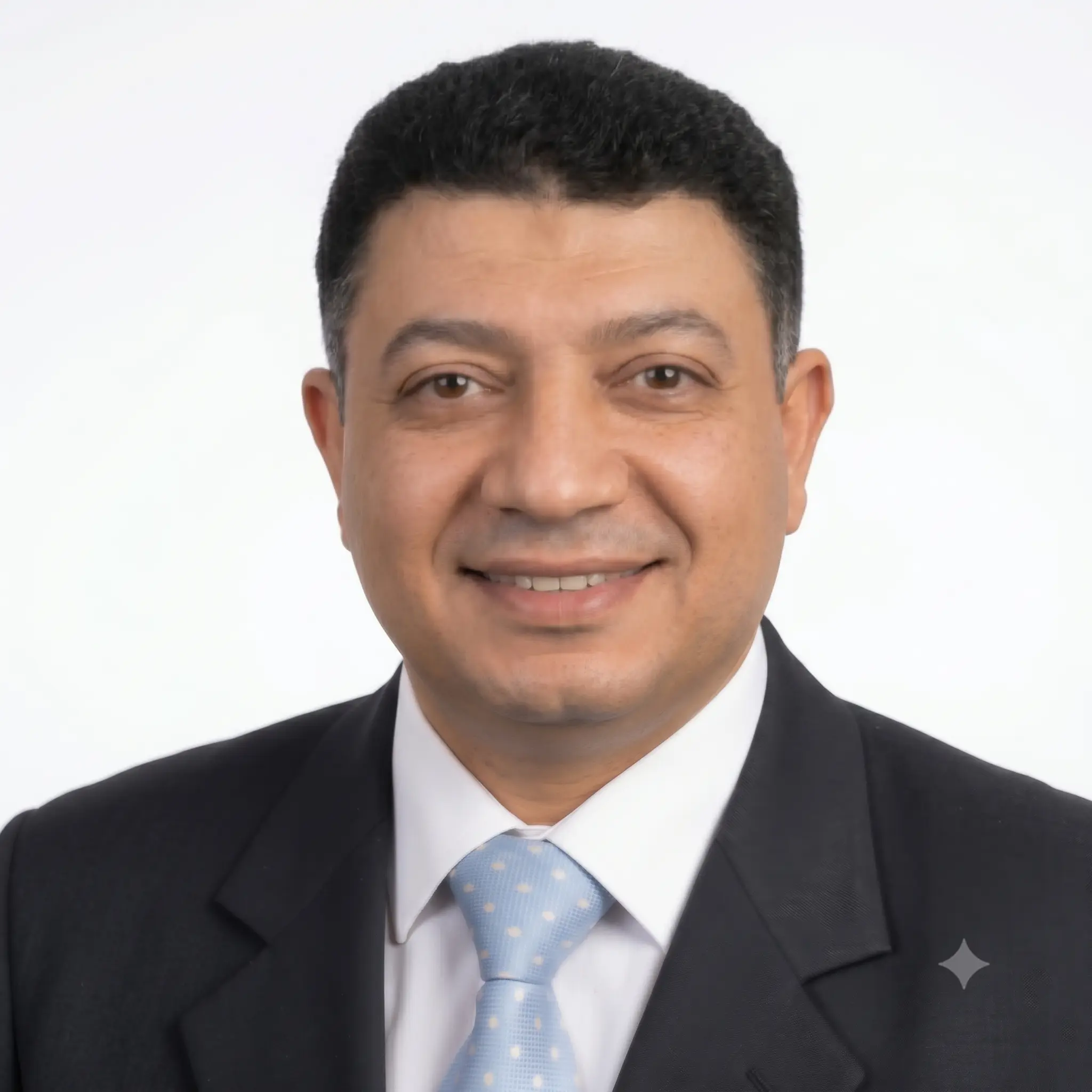
Ustadh Ahmed Mahmoud Abdulaziz is an experienced teacher of Arabic and the Holy Quran for native and non-native speakers. He holds a verified Ijazah in Hafs ‘an Asim and is certified in the foundational Tajweed texts Al-Jazariyyah and Tuhfat Al-Atfal. Drawing on his extensive background in traditional Quranic recitation and international pedagogy, he writes scholar-verified, accessible articles to help students worldwide master Tajweed rules and Arabic linguistics safely and accurately.