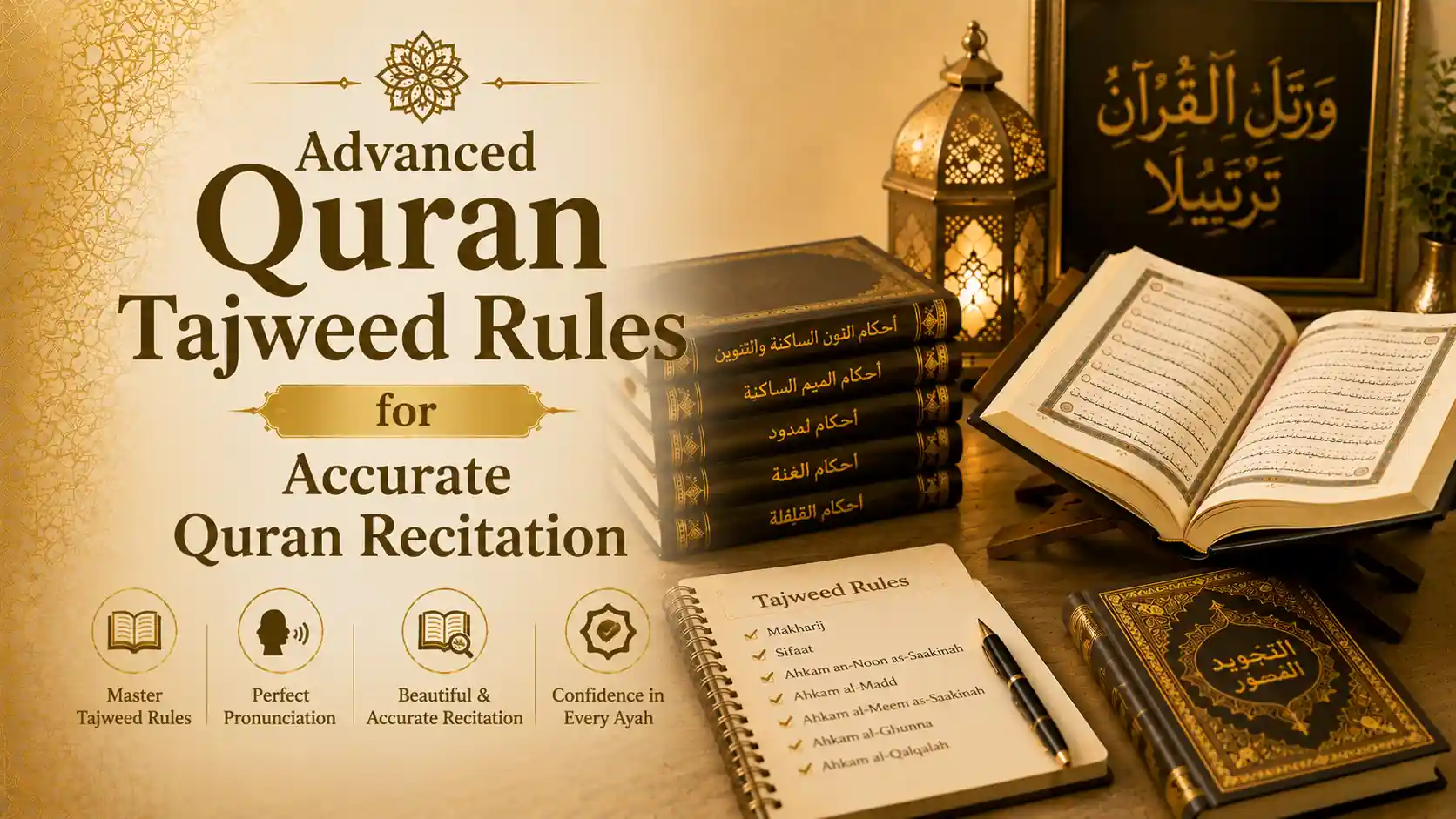
The common ground of most reciters is that they have learned Noon Sakinah, Qalqalah, and basic Madd, but the advanced quran tajweed rules, such as Sakt, Iltiqaa as-Sakinayn, and the advanced Madd categories, are still not very clear. This guide will explain what each of those rules is, how they’re used, and how much time it takes to master them in reality. You’ll also learn the most common mistakes students make, practical ways to practice each rule, and why live correction plays.
What are the advanced quran tajweed rules?
The advanced quran tajweed rules include more aspects of qira’ah than the basics such as the rules of Noon-Sakinah and basic madd. They encompass rules like Sakt, Iltiqaa as-Sakinayn, advanced Idgham, Waqf and Ibtida, and accurate Tafkheem and Tarqeeq, which aid the reciters in achieving accuracy and consistency in each verse.
What is the difference between basic and advanced quran tajweed rules?
Basic tajweed rules are basic rules that every reciter should know to apply to all cases, and that correct makharij, noon sakinah, and simple madd. Advanced quran tajweed rules are the rules that refine the precision in rare cases and in specific situations. The basic level of Tajweed rules get you to say it correctly, the advanced level of Tajweed rules get you to say it exactly as it was transmitted to you, including pause points and interactions of the letters.
Quran Tajweed With English Translation for Easy Reading
How long does it take to master advanced quran tajweed rules?
Advanced quran tajweed rules are required to be applied properly and this usually takes 3 to 6 months of regular and correct practice, but for full mastery at the level studied for Ijazah, it takes a year or more of regular and correct practice. The difference between “knowing the rule” and “applying the rule automatically when reciting” is precisely how to tell the difference between a rush and a proper learner.
Can I learn advanced tajweed rules without a teacher?
Not reliably. Written guides give you the idea of sound and strength, but they are not able to correct the subtle timing and pronunciation nuances that a live teacher can instantly detect. Online tajweed courses that allow for corrections in real-time will only allow you to be sure that these advanced rules of tajweed are actually being used and not merely learned as theory.
Ikhfa Rules of Tajweed Explained with Letters Examples and Tips
What are the advanced madd rules in tajweed?
Eventually the advanced Madd rules become mastered by the reciter, and they have a set number of counts: Madd Muttasil, Madd Munfasil, Madd Laazim, Madd Aridh lis-Sukoon, and Madd Lin. In this stage, Al Madd Tajweed becomes less of an issue of knowing when to lengthen and more an issue of using the correct count correctly
What is sakt in advanced tajweed?
A short, breathless pause of about two counts that may fall between two words that are not otherwise separated if recited without pause. In the narration of Hafs ‘an ‘Asim, there are four fixed places where ‘sakt is obligatory.
- Surah Al-Kahf (18:1-2), after “عِوَجًا”
- Surah Ya-Sin (36:52), after “مَرْقَدِنَا”
- Surah Al-Qiyamah (75:27), after “مَنْ”
- Surah Al-Mutaffifin (83:14), after “بَلْ”
Sakt, in contrast to Waqf, does not require any breath but only the brief interruption before a continuation.
Easy Tajweed Rules in English for Complete Beginners
What are the types of advanced idgham in tajweed?
The advanced Idgham beyond Noon Sakinah rules are distinguished by the relationship of the two meeting letters:
- If two identical letters meet, the first is fully absorbed by the second, and then it is called Idgham Mutamathilain.
- idgham rules Mutananisain: two letters have the same articulation point, and they differ in characteristics.
- The two letters below have similar articulations, but not exactly. Idgham Mutaqaribain: Two letters with similar articulations, but not exactly the same.
How do waqf and ibtida affect advanced recitation?
At a higher level, wqf (stopping) and ibtida (resuming) have a much greater impact on meaning than on pronunciation, for the reason that the meaning of a verse can be altered if wqf occurs at the wrong place. They are used correctly as follows:
- Correctly reading the stop symbols in the Mushaf (obligatory, permissible, or prohibited)
- Selecting a grammatically complete stopping point at a position where there is flexibility in the symbol.
- Restarting (Ibtida) at a point to retain the meaning of the sentence.
- Making a Madh or Qalqalah that varies due to a specific stop.
- Established practice from whole passages rather than individual verses because many Waqf decisions will be made with reference to the context.
Advanced Tajweed Rules for Accurate and Beautiful Recitation
What is iltiqaa as-sakinayn in tajweed?
Iltiqaa’ as-Sakinayn is the rule that resolves two letters that are sukoon with two sukoon in continuous recitation, which is not possible in the Arabic pronunciation. In reality, if a word with a long madd letter comes after a word with a sukoon, the madd letter is dropped or shortened, and the vowel sound that follows the madd letter.

How do tafkheem and tarqeeq work at an advanced level?
Tafkheem (heaviness) and Tarqeeq (lightness) at an advanced level require controlling degree, not just presence, since some letters shift between heavy and light depending on context:
- Master the seven letters that are always heavy (خص ضغط قظ)
- Learn when Raa shifts between heavy and light based on its vowel
- Learn when Lam is heavy only in the word “Allah,” following a fatha or damma
- Practice mid-strength letters that aren’t fully heavy or fully light
- Apply consistent tongue and mouth positioning across full passages, not single words
Rules of Raa in Tajweed Explained for Correct Recitation
What are common mistakes in advanced tajweed?
The most common errors at the advanced level are not pronunciation mistakes but timing and consistency mistakes:
- The hasty commitment of Sakt towards Waqf, or its omission altogether
- Madd Counts Variability between comparable words within the same session
- Skipping the Sunnah of the Quran in the fast and continuous recitation
- The use of tafkheem on conditional letters such as Raa is not consistent.
- To ignore Waqf symbols and stop wherever it is felt, rather than at the indicated place. To avoid Waqf symbols and stop anywhere where it is felt, rather than at the Waqf place.
Is sakt the same in every qiraat?
No, the four fixed Sakt positions mentioned here are specific to the narration of Hafs ‘an ‘Asim, which is the narration that is most widely recited today, whereas the other narrations and Qira’ats might have a different interpretation of the same words. A very common confusion point that students seem to have when comparing recitations from different reciters, without considering narration differences.
Basic Rules of Tajweed for Beginners and Correct Quran Recitation
Do I need to memorize all madd counts before advanced tajweed?
You don’t need every Madd count perfectly memorized before starting advanced tajweed, but you do need the core distinction between 2, 4, and 6-count Madd solid, since advanced rules build directly on that foundation. Trying to learn Sakt or Iltiqaa as-Sakinayn while still confusing basic Madd counts usually just creates more confusion, not faster progress.
What is the best way to study advanced quran tajweed rules?
The best way to study quran tajweed rules combines focused weekly topics with live correction, not a single long study session:
- Dedicate one week per rule category instead of mixing several at once
- Practice each rule in its real Quranic context, not isolated drills
- Record your recitation and compare it against a certified teacher’s correction
- Review makharij and tafkheem regularly, since advanced rules expose old habits
- Apply new rules directly during live Quran recitation practice, not just theory review
Iqlab in Tajweed: Definition, Letter, Rules, and Examples from the Quran
Are advanced tajweed rules necessary for hifz students?
Yes, advanced tajweed rules matter for hifz students specifically because memorization locks in whatever pronunciation habits are already present, correct or not. A hifz student who skips advanced tajweed rules early on typically has to unlearn and re-memorize sections later, which takes far longer than applying the rules correctly from the start.
Refine Your Recitation Starting This Week
Written guides explain the theory, but the difference between correct and incorrect Tafkheem strength, Ghunnah duration, or Sakt timing can’t be judged by reading alone. At Mubarak Academy, advanced tajweed rules are taught by Ijazah-certified teachers in live, one-on-one Zoom sessions.
with weekly progress reports tracking exactly which rules a student has mastered. The academy’s team of over 100 teachers has delivered more than 80,000 hours of live instruction to over 1,000 students across more than 20 countries.
Reading about noon sakinah, ikhfa rules, and meem sakinah rules only gets a reciter so far without a teacher correcting the details live. Book a free trial class with Mubarak Academy and get matched with an Ijazah-certified teacher, no card required and no obligation to continue.
Frequently Asked Questions
Do advanced tajweed rules differ for Arabic speakers versus non-native reciters?
No. All of the rules are the same for all students, regardless of their native language. In fact, non-native reciters must have more practice in pronunciation, heavy and light letters, articulation points, and listening to apply the advanced rules of tajweed confidently and consistently.
Can I skip straight to advanced tajweed if I already read Arabic fluently?
Not everyone who reads Arabic fluently can apply Tajweed properly. It is important to learn these tajweed rules well with good fundamentals, otherwise it is likely that mistakes will recur that will be more difficult to rectify when practising from the intermediate stage up.
Is there a certification for completing advanced tajweed study?
Yes. Once students have successfully learned the advanced tajweed rules, they can progress to an Ijazah, which is an authentic transmission of the knowledge of tajweed by a qualified teacher who assesses their recital for accuracy, consistency, and proper application of each rule before awarding certification.
Do advanced tajweed rules apply the same way in every surah?
They are the same throughout the Quran; however, they are executed based on the words, grammar, and stopping places of the Surah. Certain rules like Sakt, Waqf, and some of the Madds are only present in certain places, so it is crucial to practice these rules in various places.
How often should I practice advanced tajweed rules?
It’s better to do short, regular study sessions than longer, infrequent ones. Carefully reciting the Quran for 15–30 minutes with frequent feedback from the teacher is sufficient to help reinforce the higher tajweed rules for consistency and for confidence to recite the Quran accurately over time.
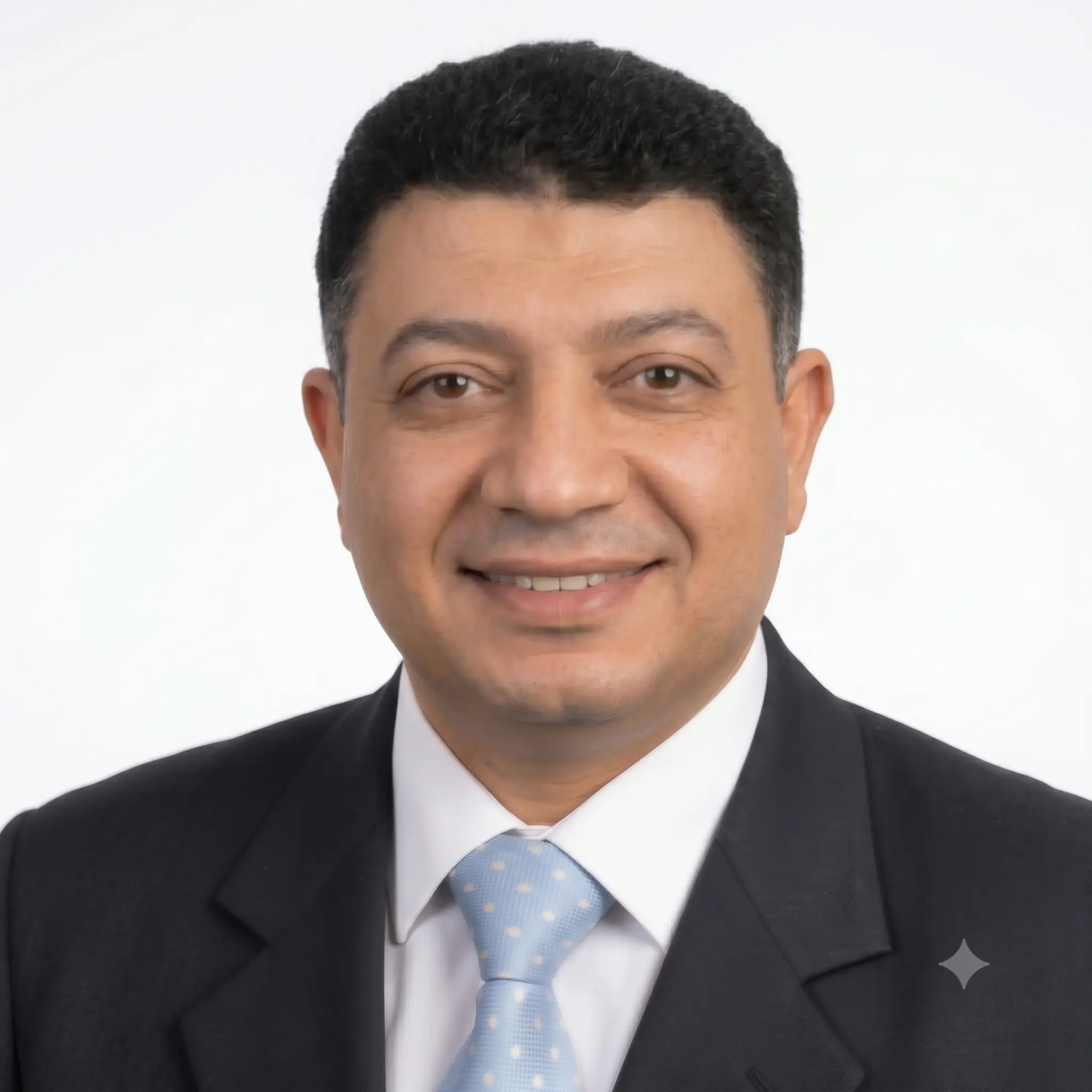
Ustadh Ahmed Mahmoud Abdulaziz is an experienced teacher of Arabic and the Holy Quran for native and non-native speakers. He holds a verified Ijazah in Hafs ‘an Asim and is certified in the foundational Tajweed texts Al-Jazariyyah and Tuhfat Al-Atfal. Drawing on his extensive background in traditional Quranic recitation and international pedagogy, he writes scholar-verified, accessible articles to help students worldwide master Tajweed rules and Arabic linguistics safely and accurately.