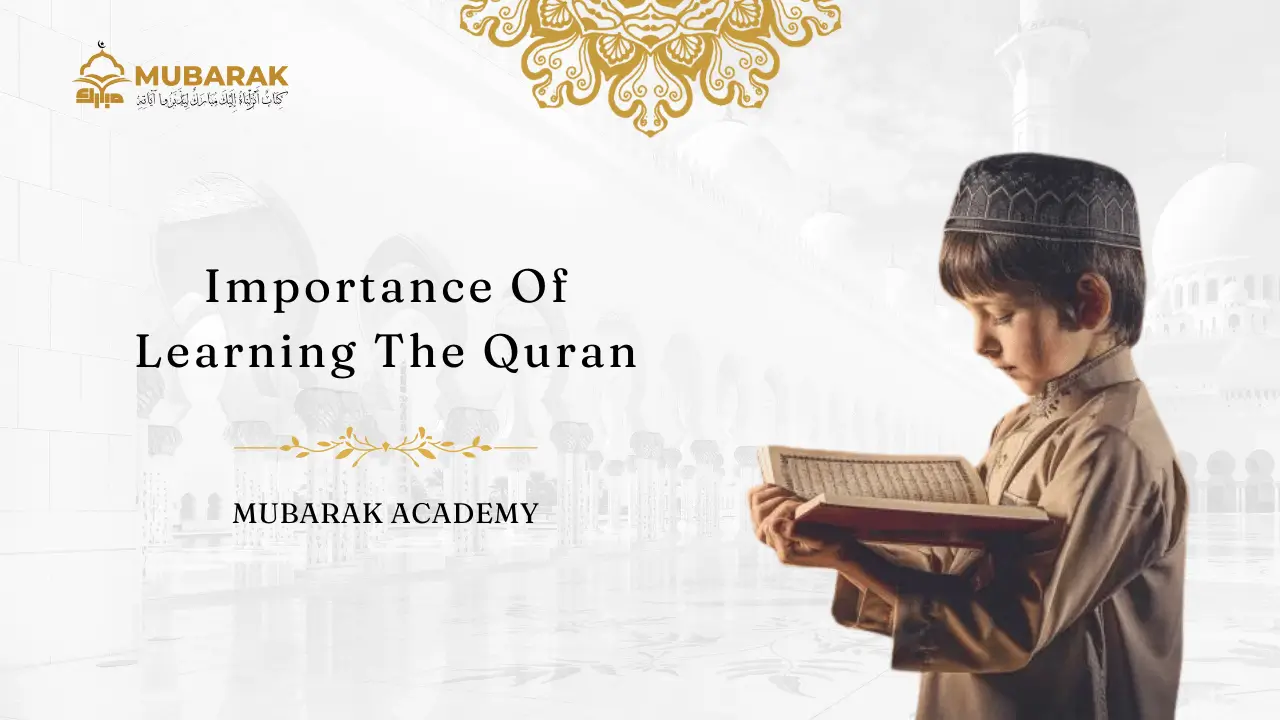
Understanding the importance of learning the Quran is the starting point of every Muslim’s journey with Allah’s Book. The Prophet ﷺ said:
“The best of you are those who learn the Quran and teach it.” [Sahih al-Bukhari, No. 5027]
Not wealth. Not status. Learning the Quran and teaching it. This guide covers 10 reasons — grounded in Quran and authenticated Sunnah — that explain why this is the most significant undertaking in a Muslim’s life.
What Is the Importance of Learning the Quran in Islam?
The importance of learning the Quran in Islam is that it is the primary source of divine guidance for all of humanity, the means of direct communication with Allah (SWT), the intercessor on the Day of Judgment, and the purifier of the heart and soul. It is not merely a religious text — it is the living word of Allah, revealed in Arabic to the Prophet Muhammad ﷺ over 23 years, preserved without alteration, and intended as complete guidance for every dimension of human life.
Allah (SWT) says:
بَلْ هُوَ آيَاتٌ بَيِّنَاتٌ فِي صُدُورِ الَّذِينَ أُوتُوا الْعِلْمَ
“Rather, they are clear verses in the breasts of those who have been given knowledge.” [Surah Al-Ankabut 29:49]
Is Learning the Quran Obligatory in Islam?
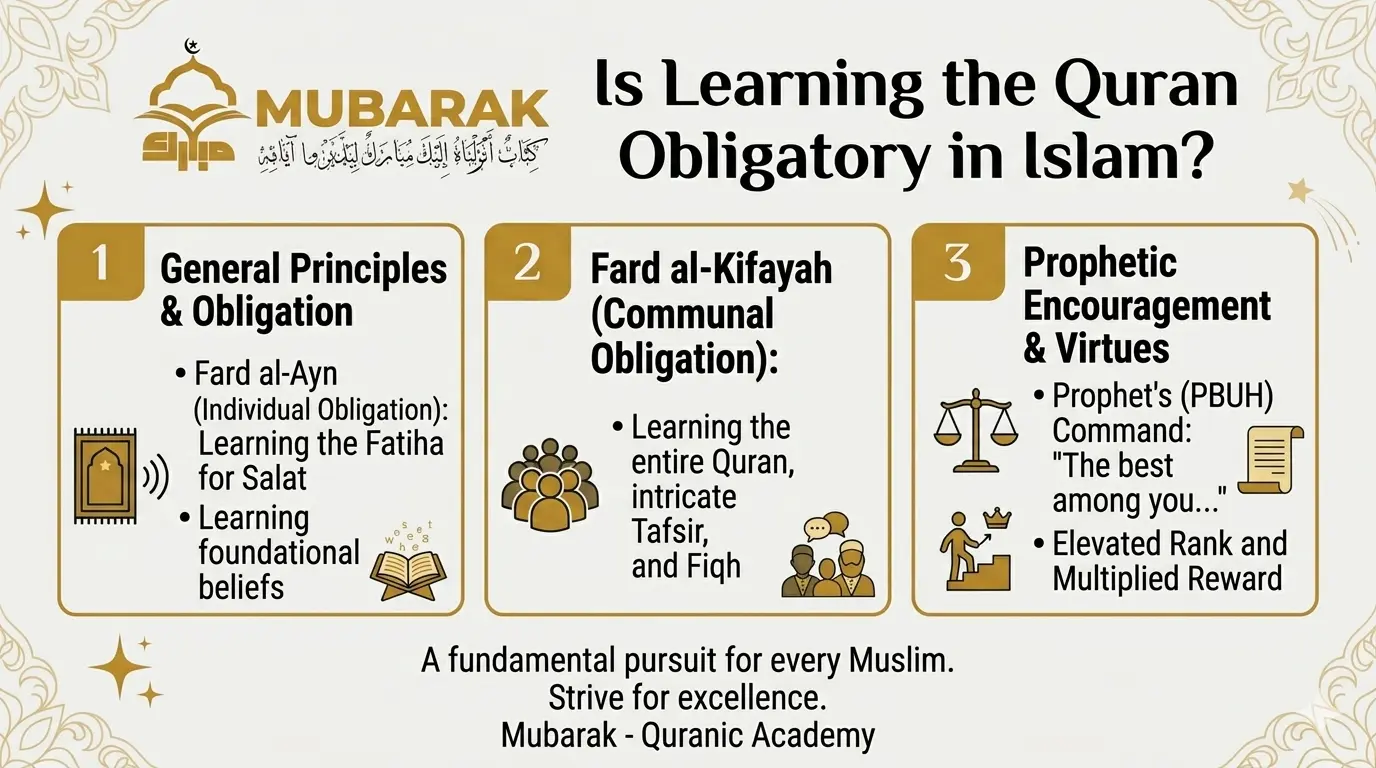
Islamic scholars have established that learning the Quran carries two levels of obligation:
- Fard Ayn (فَرْضُ عَيْن) — Individual Obligation: Learning enough to perform Salah correctly, specifically Surah Al-Fatiha — is obligatory upon every adult Muslim without exception.
- Fard Kifayah (فَرْضُ كِفَايَة) — Communal Obligation: Deeper study, memorisation, and mastery of the Quran’s meanings. If a sufficient number of Muslims in a community fulfil it, the obligation lifts from the rest. If none fulfil it, every member bears responsibility.
This means some level of Quranic learning is not optional for any Muslim. The question is not whether to learn — it is how far to go.
10 Reasons That Show the Importance of Learning the Quran
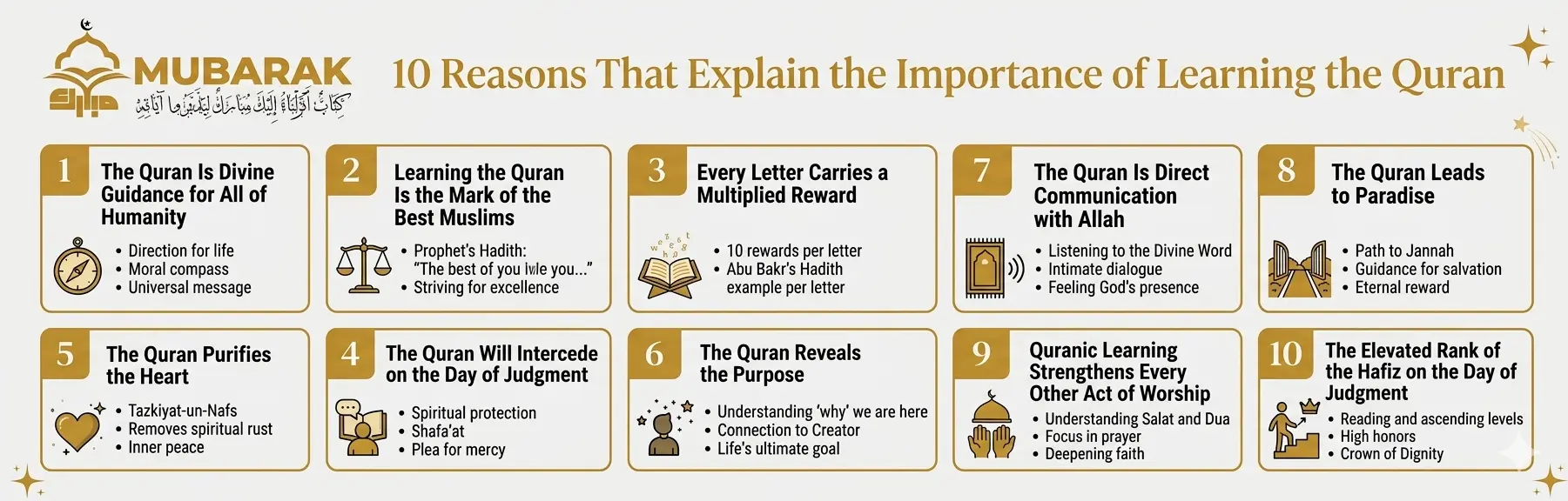
1. The Quran Guides You to the Right Path
Allah (SWT) says:
“This is the Book about which there is no doubt, a guidance for those conscious of Allah.” [Surah Al-Baqarah 2:2]
And:
“[This is] a Book We have revealed to you so that you might bring mankind out of darkness into light.” [Surah Ibrahim 14:1]
A Muslim who does not learn the Quran navigates life without the light Allah (SWT) specifically sent for that purpose. Guidance is not found elsewhere — it is here, in this Book, waiting to be read.
2. Every Letter You Recite Carries a Multiplied Reward
The Prophet ﷺ said:
“Whoever reads one letter from the Book of Allah will receive a good deed, and a good deed is multiplied ten times. I do not say that Alif Lam Mim is one letter — Alif is a letter, Lam is a letter, and Mim is a letter.” [Sunan al-Tirmidhi, No. 2910; graded Sahih]
The Quran contains approximately 323,000 letters. At ten good deeds per letter, a single complete recitation produces over three million good deeds. For a Muslim who recites consistently, the accumulation of reward across a lifetime is beyond calculation.
For a detailed breakdown of these rewards, the guide on Benefits of Reciting Quran Daily expands on every dimension with further hadith evidence.
3. Learning the Quran Makes You the Best of Muslims
The Prophet ﷺ said:
“The best of you are those who learn the Quran and teach it.” [Sahih al-Bukhari, No. 5027; narrated by Uthman ibn Affan (رضي الله عنه)]
This hadith establishes the highest standard of Muslim excellence. The narrator — Uthman ibn Affan (رضي الله عنه), the third Caliph of Islam and the companion who commissioned the standardised Mushaf — embodies the very message he transmitted.
4. The Quran Will Intercede for You on the Day of Judgment
The Prophet ﷺ said:
“Read the Quran, for it will come on the Day of Resurrection as an intercessor for its companions.” [Sahih Muslim, No. 804; narrated by Abu Umamah Al-Bahili (رضي الله عنه)]
He ﷺ also said specifically about Surah Al-Baqarah and Surah Al-Imran:
“Recite the two bright ones — for they will come on the Day of Resurrection like two clouds, interceding for their companions.” [Sahih Muslim, No. 804]
On the day when no intercession avails except what Allah permits, the Quran will stand for the one who honoured it in this life.
5. The Quran Purifies and Heals the Heart
Allah (SWT) says:
يَا أَيُّهَا النَّاسُ قَدْ جَاءَتْكُم مَّوْعِظَةٌ مِّن رَّبِّكُمْ وَشِفَاءٌ لِّمَا فِي الصُّدُورِ
“O mankind, there has come to you instruction from your Lord and healing (shifa’) for what is in the breasts.” [Surah Yunus 10:57]
The Arabic word shifa’ (شِفَاء) means healing and cure — not merely comfort. The Quran actively addresses what ails the heart. Regular Quranic learning maintains the spiritual alertness — khushu’ — that every act of worship requires.
6. The Quran Reveals the Purpose of Your Existence
Allah (SWT) says:
وَمَا خَلَقْتُ الْجِنَّ وَالْإِنسَ إِلَّا لِيَعْبُدُونِ
“And I did not create the jinn and mankind except to worship Me.” [Surah Adh-Dhariyat 51:56]
And:
“He who created death and life to test you as to which of you is best in deed.” [Surah Al-Mulk 67:2]
A Muslim who does not learn the Quran is left without the framework Allah designed for understanding existence, purpose, accountability, and the Hereafter.
7. The Quran Is Direct Communication with Allah
Islamic scholars describe the relationship between prayer and the Quran as a two-way conversation. When a Muslim prays, they speak to Allah. When a Muslim reads the Quran, Allah speaks to them. Allah (SWT) says:
“Indeed, this Quran guides to that which is most suitable.” [Surah Al-Isra 17:9]
Every believer who opens the Mushaf is receiving direct address from their Creator — words that are not historical, but present, alive, and applicable to their precise circumstances.
8. The Quran Leads to Paradise
The Prophet ﷺ said:
“The Quran is an intercessor — it is given permission to intercede. Whoever places it before them, it will lead them to Paradise. Whoever places it behind them, it will drive them to the Fire.” [Reported by Ibn Hibban; graded Sahih]
The Quran is not neutral. It either leads or it drives — depending on whether the Muslim places it in front of or behind them in their life. Learning, reciting, and implementing it places it in front.
9. Quranic Learning Strengthens Every Other Act of Worship
Salah requires the Quran in every rak’ah. Dua is enriched by Quranic phrases. Fiqh rulings are derived from Quranic injunctions. The Quran is not one department of Islamic practice — it is the foundation from which every other department draws.
A Muslim who learns the Quran well will find that their Salah deepens, their dua becomes more precise, and their understanding of Islamic rulings becomes clearer. The Quran Memorization Word by Word method explains how meaning-based learning builds this comprehension systematically.
10. The Hafiz Is Elevated in Rank on the Day of Judgment
The Prophet ﷺ said:
“It will be said to the companion of the Quran: Recite and ascend — for your rank will be at the last verse you recite.” [Sunan Abu Dawud, No. 1464; graded Hasan]
Every verse memorised is a permanent elevation of rank in the Hereafter. This is the ultimate motivation for Hifz — not achievement in this world, but a rank in the Next measured precisely by the depth of engagement with Allah’s Book. To begin this journey under qualified guidance, the Quran Memorization Course provides structured, teacher-led instruction for all ages and levels.
Important Considerations Before Learning the Quran
Before beginning any Quranic study, understanding the proper adab (أَدَب) — the etiquette of engaging with the Book of Allah — prepares both heart and environment for meaningful learning:
- Purify your intention (Niyyah) — The Prophet ﷺ said: “Actions are judged by intentions.” [Sahih al-Bukhari, No. 1]. Begin every session establishing that this learning is for Allah alone.
- Maintain wudu — Allah (SWT) says: “None touch it except the purified.” [Surah Al-Waqiah 56:79]. Maintaining ritual purity before touching the Mushaf is the practice of the scholars and the standard of respect.
- Choose the right time — The best time is after Salah Al-Fajr. The Prophet ﷺ supplicated: “O Allah, bless my Ummah in its early hours.” [Sunan al-Tirmidhi, No. 1212].
- Create a distraction-free environment — A consistent, quiet space conditions the mind to enter a focused state more quickly each session.
- Respect the Mushaf — Hold it with clean hands, keep it elevated, and never place it on the floor. The same respect applies to digital Quran applications.
- Say Bismillah before beginning — and maintain full attention throughout the session.
How to Start Learning the Quran
- Complete beginners — Start with a qualified teacher who establishes correct pronunciation (Makharij) and basic Tajweed rules before any memorisation begins. Errors learned first become deeply embedded.
- Those with basic recitation — Move into structured Tajweed study and begin Hifz with Juz’ Amma. The guide on How to Memorize Juz Amma Fast provides a complete week-by-week plan.
- Those returning after a gap — Begin with revision of what was previously known before adding anything new. The guide on How to Memorize Quran Without Forgetting covers exactly this scenario.
- All levels — Pair recitation with a basic understanding of meaning. Even a one-sentence Tafsir note per passage creates a semantic anchor that pure phonetic recitation cannot produce.
- For those progressing toward Hifz — The How to Memorize Quran Easily guide covers the complete method from Tajweed foundation through the classical sabaq, sabqi, and manzil revision system.
Practical Tips for Learning the Quran
- Choose a reliable teacher — A qualified teacher who hears your recitation and corrects errors in real time is the single most important variable in Quranic learning.
- Set small, consistent daily goals — The Prophet ﷺ said: “The most beloved deeds to Allah are those done consistently, even if they are small.” [Sahih al-Bukhari, No. 6464].
- Listen to qualified reciters daily — Sheikh Mahmoud Khalil Al-Husary and Sheikh Muhammad Siddiq Al-Minshawy are the most widely recommended for measured, accurate recitation.
- Understand before memorising — Combine recitation with Tafsir study. The Dua for Memorizing the Quran guide also provides authenticated supplications that support every stage of this process.
- Be consistent — Fifteen minutes daily produces more durable Quranic learning than two hours once a week.
Frequently Asked Questions about Importance of learning the Quran
1. What is the importance of learning the Quran in Islam?
The importance of learning the Quran in Islam is that it is the primary source of divine guidance, the intercessor on the Day of Judgment, the purifier of the heart, and the path to Paradise. Learning it is partially Fard Ayn — individually obligatory — for every Muslim, and carries a reward of ten good deeds per letter recited [Sunan al-Tirmidhi, No. 2910].
2. Is learning the Quran obligatory for every Muslim?
Yes. At the level required for correct Salah — specifically Surah Al-Fatiha — learning the Quran is Fard Ayn for every adult Muslim. Deeper study and memorisation is Fard Kifayah — a communal obligation that falls upon every member of a community if no one fulfils it.
3. What are the rewards of learning the Quran?
Ten good deeds per letter recited [Sunan al-Tirmidhi, No. 2910], the rank of the best Muslims for those who learn and teach it [Sahih al-Bukhari, No. 5027], intercession on the Day of Judgment [Sahih Muslim, No. 804], and an elevated rank in Paradise measured by the last verse memorised [Sunan Abu Dawud, No. 1464].
4. What is the best age to start learning the Quran?
There is no minimum age. Children as young as four or five can begin with basic letter recognition. For adults, the Prophet ﷺ promised a double reward to the one who finds recitation difficult yet persists [Sahih al-Bukhari, No. 4937] — a promise directed specifically at those for whom Arabic is not native.
Conclusion
The importance of learning the Quran is established in Quran and Sunnah with precision. Every letter carries reward. Every verse memorised raises a rank. The Quran will intercede on the Day of Judgment. And the best Muslims — in the explicit words of the Prophet ﷺ — are those who learn it and teach it.
Allah (SWT) says:
وَلَقَدْ يَسَّرْنَا الْقُرْآنَ لِلذِّكْرِ فَهَلْ مِن مُّدَّكِرٍ
“And We have certainly made the Quran easy for remembrance, so is there any who will remember?” [Surah Al-Qamar 54:17]
That question is addressed to every Muslim — and the answer begins today.
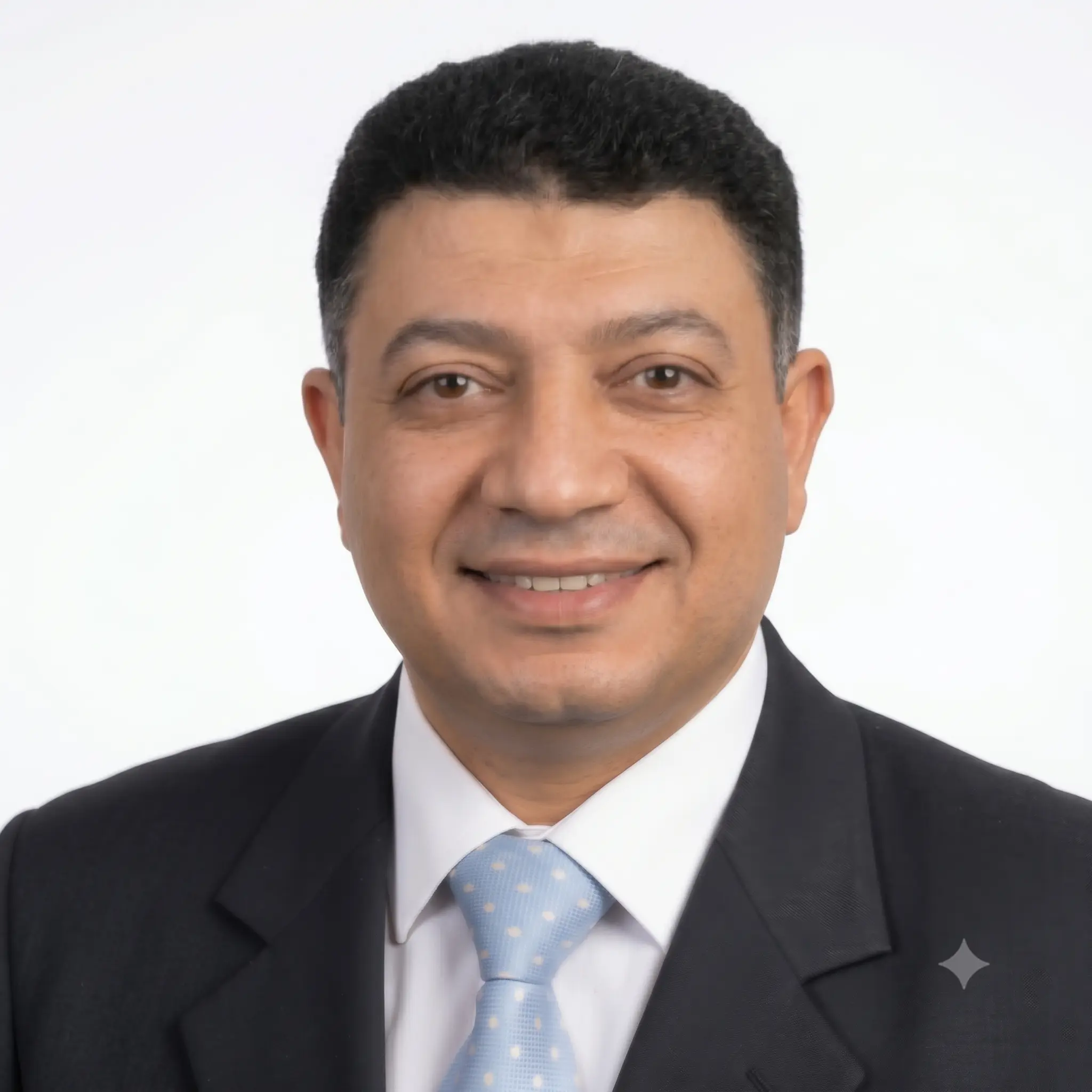
Ustadh Ahmed Mahmoud Abdulaziz is an experienced teacher of Arabic and the Holy Quran for native and non-native speakers. He holds a verified Ijazah in Hafs ‘an Asim and is certified in the foundational Tajweed texts Al-Jazariyyah and Tuhfat Al-Atfal. Drawing on his extensive background in traditional Quranic recitation and international pedagogy, he writes scholar-verified, accessible articles to help students worldwide master Tajweed rules and Arabic linguistics safely and accurately.