

Allah (SWT) says: “And We have certainly made the Quran easy for remembrance, so is there any who will remember?” (Surah Al-Qamar 54:17). That promise is the foundation of every serious hifz attempt — and learning how to memorize Quran in one year is among the most balanced, achievable timelines available to a dedicated student. Not so short that it requires full-time institutional study, and not so long that urgency fades. One year, structured correctly, is where many of the most durable Huffaz are made.
This guide provides everything needed to complete hifz in one year: a month-by-month breakdown, a daily and weekly schedule, the revision system that prevents forgetting, techniques for the hardest parts of memorisation, and a recovery plan for when life interrupts.
Is It Possible to Memorize the Quran in One Year?
Yes, Memorize the Quran in One Year is achievable for a student who commits to approximately 2 pages per day across 6 days per week, maintains a structured three-tier revision system, and studies under a qualified teacher. The Quran contains 604 pages. At 2 pages per day for 6 days, 12 pages are completed per week, finishing all 604 pages in approximately 50 to 51 weeks — leaving the final two weeks for comprehensive revision before completion, The Prophet ﷺ himself reviewed the entire Quran with Jibreel (عليه السلام) once every Ramadan — and twice in his final year [Sahih al-Bukhari, No. 3624]. That annual review cycle is not merely a historical note — it establishes that a complete Quran cycle in twelve months is a Prophetically grounded standard, Success depends on four variables: daily consistency over speed, a structured revision system that runs simultaneously with new memorisation, correct Tajweed from the start, and a qualified teacher who hears the recitation regularly.
How to Memorize Quran in One Year ? Step-by-Step Monthly Plan
Dividing the Quran into monthly targets converts an overwhelming 604-page undertaking into a sequence of manageable milestones. The plan below is a tested five-step framework, beginning with Juz’ Amma, the shorter surahs of the 30th juz’ already familiar from daily Salah — and progressing systematically through the longer surahs of the earlier juz.
| Step | Focus | Key Target |
|---|---|---|
| 1. Set the daily target | Fix your pace before starting | 2 pages/day, 6 days/week |
| 2. Follow the progression plan | Juz’ order across 12 months | Juz’ 30 back to Juz’ 1 |
| 3. Build the four-session routine | Fajr, midday, Asr, before sleep | 4 sessions/day |
| 4. Apply sabaq–sabqi–manzil | Layered revision system | New + recent + distant review |
| 5. Reserve Month 12 for revision | Full Quran, no new pages | Every juz’ recited twice |
Step 1: Establish Your Daily and Weekly Memorization Target
Before opening the Mushaf on day one, the numbers must be fixed. Attempting to memorize Quran in one year without a locked daily target produces inconsistent output and accumulating revision debt within weeks.
The targets that make the one-year timeline mathematically achievable are:
| Timeframe | Target |
|---|---|
| Per day | 2 pages (1 full leaf — both sides) |
| Per week | 12 pages (6 days memorization + 1 day revision) |
| Per month | 48–50 pages (approximately 1.5 to 2 juz’) |
Two pages per day is the standard daily load used in traditional Quran memorization institutes (madaris) worldwide. It is neither too light to complete in a year nor too heavy for the revision load to remain manageable.
Step 1: Establish Your Daily and Weekly Memorization Target
Before opening the Mushaf on day one, the numbers must be fixed. A daily target that isn’t locked in produces inconsistent output and accumulating revision debt within weeks.
| Timeframe | Target |
|---|---|
| Per day | 2 pages (1 full leaf — both sides) |
| Per week | 12 pages (6 days memorization + 1 day revision) |
| Per month | 48–50 pages (approximately 1.5 to 2 juz’) |
Two pages per day is the standard daily load used in traditional Quran memorization institutes (madaris) worldwide — light enough to sustain for a full year, heavy enough to finish on schedule.
Step 2: Follow the Month-by-Month Progression Plan
The sequence in which juz’ are memorized matters. Starting at Juz’ 30 and working backward through the Quran, rather than starting at Al-Baqarah, serves two purposes: the shorter surahs of the later juz’ build the daily habit quickly, and partial familiarity from Salah reduces the initial cognitive load.
| Months | Phase | Focus | Cumulative |
|---|---|---|---|
| 1–2 | Foundation | Juz’ 30 and 29 — short surahs, build the daily habit | 2 Juz’ |
| 3–5 | Building | Juz’ 28 to 24 — longer surahs begin, revision load increases | 7 Juz’ |
| 6–8 | Momentum | Juz’ 23 to 17 — pace stabilises, manzil cycle expands | 14 Juz’ |
| 9–11 | Advanced | Juz’ 16 to 8 — longest surahs, teacher supervision critical | 23 Juz’ |
| Month 12 | Completion | Juz’ 7 to 1 + full Quran revision — no new pages this month | 30 Juz’ |
Months 9 to 11 bring the student to Al-Baqarah, Aal-Imran, and An-Nisa — the three longest continuous sections of the Quran. These surahs contain clusters of ayat with near-identical phrasing that cause chronic confusion without supervised correction, which is why a qualified Huffaz teacher (Sheikh or Ustadh) supervises this stage directly rather than checking in occasionally.
Step 3: Build the Four-Session Daily Routine
One memorization session per day is insufficient for the one-year plan. Four distinct sessions each perform a separate function within the memorization cycle, and skipping any one of them breaks the revision chain protecting previously memorized pages.
| Session | Duration | Activity | Function |
|---|---|---|---|
| After Fajr | 45–60 min | New memorization (sabaq) — 2 pages, repeat each line 10 times aloud | Prime retention window |
| Midday | 15–20 min | Revise yesterday’s 2 pages from memory without Mushaf (sabqi) | Short-term consolidation |
| After Asr | 20–30 min | Older revision cycle — pages from 2 weeks ago (manzil) | Long-term protection |
| Before sleep | 10 min | Listen to today’s sabaq via audio recitation | Sleep consolidates auditory memory |
The Prophet ﷺ supplicated: “O Allah, bless my Ummah in its early hours” [Sunan al-Tirmidhi, No. 1212; graded Sahih]. Spiritual elevation following Fajr, maximum mental clarity, and minimal distraction combine to make this the most productive memorization window of the day — the one session experienced Huffaz treat as fixed, never optional.
Step 4: Apply the Sabaq–Sabqi–Manzil Revision System
Sabaq–sabqi–manzil is the classical three-tier revision system qualified Huffaz have used for centuries, and every sustainable Quran memorization program is built on it.
- Sabaq (today’s new lesson): the 2 pages memorized fresh each morning after Fajr
- Sabqi (recent revision): pages from the past 7–14 days, recited from memory without the Mushaf at the midday session
- Manzil (distant revision): a rotating portion of all previously memorized juz’, cycled through at the Asr session to protect long-term retention
Before beginning any new sabaq session, recite yesterday’s 2 pages from memory first. This old-to-new warm-up links each session to the one before it, rather than starting in isolation. Students who skip this step end up with memorization that exists as disconnected sections — passages they know individually but cannot recite as one continuous, flowing sequence.
Step 5: Reserve Month 12 Entirely for Revision — No New Pages
Most one-year plans collapse at this final stage, and this rule is usually why. Month 12 contains no new memorization whatsoever — every session is dedicated to a full, sequential recitation of all 30 juz’.
The completion standard: every juz’ recited in full, from memory, at least twice before the completion date. Attempting new pages in Month 12 alongside full revision overloads both processes and finishes neither reliably. The final month consolidates; it does not continue.
Read More: How to Memorize Quran Easily ?
The Weekly Schedule for Memorizing Quran in One Year: The 6+1 System
TThe most important structural element of the one-year plan is the weekly schedule. Six days of active memorization followed by one dedicated revision day — no new pages on the seventh day, without exception.
| Day | Activity |
|---|---|
| Days 1–6 | 2 new pages (sabaq) + daily sabqi and manzil revision |
| Day 7 | No new pages — recite all 12 pages memorized this week from memory in one sitting |
How the 6+1 Weekly Structure Works
Six days of memorization produces 12 new pages per week. Day 7 does not add to that number — it secures it. The full-week recitation on Day 7 is the mechanism that converts 12 pages of short-term memorization into 12 pages of durable long-term retention.
Students who skip Day 7 consistently find that their weekly pages feel uncertain by Week 3 and are effectively lost by Week 6. The one-day investment on Day 7 is what makes the previous six days permanent.
The Juz’ Completion Review: One Extra Day After Each Juz’
After completing each full juz’, add one additional review day before beginning the next juz’. This means approximately every two to three weeks, the student pauses new memorization for a single session dedicated to reciting the completed juz’ in full — from memory, without the Mushaf.
This review day serves one purpose: keeping every completed section in active memory while new material continues to accumulate. Without it, the earlier juz’ weaken silently in the background while the student’s attention is absorbed by new pages. By Month 6, that silent weakening becomes an acute revision crisis.
The Mindset Required for a One-Year Hifz Plan:
The most common reason students fail to complete hifz in one year is not lack of time — it is the wrong mindset about what consistent effort looks like. The Prophet ﷺ said: “The most beloved deeds to Allah are those done consistently, even if they are small.” [Sahih al-Bukhari, No. 6464; narrated by Aisha (رضي الله عنها)].
The one-year plan does not reward intensity. It rewards daily non-negotiable commitment. A student who memorises 2 pages every day without exception — even on difficult days, even when the session feels unproductive — will complete the Quran. A student who memorises 5 pages for three weeks and then stops for a week will not, regardless of their total volume.
Three mindset principles that successful students consistently report:
- Set the daily minimum as a floor, not a target. Two pages is the minimum. On good days, exceed it. On difficult days, hit the minimum and stop. Never miss the minimum.
- Measure consistency, not speed. Track your streak — the number of consecutive days without a missed session — not how many pages you completed this week. A 300-day streak at 2 pages per day produces a stronger Hafiz than a 150-day inconsistent effort at 4 pages per day.
- Accept the forgetting as part of the process. The Prophet ﷺ warned: “Keep refreshing your knowledge of the Quran, for by the One in Whose Hand is my soul, it escapes faster than a camel from its tying ropes.” [Sahih al-Bukhari, No. 5033; narrated by Abu Hurairah (رضي الله عنه)]. Forgetting is not failure — it is the reason revision exists. A student who panics when old verses feel uncertain has misunderstood how memory works. The manzil revision cycle addresses this systematically.
How to Handle Similar Verses (Mutashabihat)?
The Quran contains hundreds of verses that are nearly identical — the same passage appearing in multiple surahs with small but precise differences of one or two words. These are called mutashabihat (الْمُتَشَابِهَات) — similar verses — and they represent the single greatest source of confusion for memorisation students at every level.
Examples: Surah Al-Baqarah and Surah Al-Imran share passages with near-identical wording. The endings of verses in Surah Al-Rahman repeat 31 times. Surah Al-Mursalat repeats its refrain throughout. Students who memorise without specifically addressing mutashabihat will find that these similar passages bleed into each other during recitation.
The method for mutashabihat:
When two similar verses are encountered, open the Mushaf to both simultaneously — literally place a finger on each passage and compare them word by word. Identify the exact word or phrase that differs. Repeat that specific difference 20 times in isolation, not the full verse — just the distinguishing words. Then recite both verses consecutively until the distinction is automatic.
This comparison method, documented by scholars of hifz including Imam al-Nawawi (rahimahullah) in his guidance on Quran revision, transforms the point of confusion into one of the most securely memorised passages in the student’s hifz.
For the full technical approach to memorisation methods including how to handle difficult passages, the Quran Memorization Techniques guide covers each method with practical implementation.
What to Do When You Fall Behind in Quran memorization?
Every student on a one-year plan will fall behind at some point. Illness, Ramadan schedule shifts, examinations, family emergencies — life will interrupt. The question is not whether a gap will occur but what the correct response is in the 24 to 48 hours after it.
Do not try to catch up by doubling the daily amount. A student who missed 3 days and attempts to memorise 6 pages the following day will produce shallow memorisation on all 6. The one-year plan has no catch-up mechanism — it has a reset mechanism.
- Do not try to catch up by doubling the daily amount. A student who missed 3 days and attempts to memorise 6 pages the following day will produce shallow memorisation on all 6. The one-year plan has no catch-up mechanism — it has a reset mechanism.
- The reset protocol — apply immediately after any gap:
- Suspend new memorisation for one full session
- Recite all sabqi pages (past 14 days) from memory and mark every hesitation
- Repair each marked verse — 15 repetitions in isolation
- Resume normal 2-page sabaq the following session
- One missed week — if a full week is lost, do not attempt to recover the missed pages. Adjust the completion target by one week and continue from where you stopped. A student who began in January and lost a week in April will complete in January of the following year — not in December. That is acceptable. Attempting to compress the plan to compensate produces errors that take months to unlearn.
- Ramadan is a revision opportunity, not a setback. The Prophet ﷺ reviewed the entire Quran with Jibreel (عليه السلام) during Ramadan [Sahih al-Bukhari, No. 3624]. Students on the one-year plan should reduce new memorisation during Ramadan to half the normal rate and use the additional time for deep manzil revision. Tarawih prayer is the most powerful revision tool available during this month — recite current memorised portions in the voluntary rak’ahs every night.
For specific strategies on protecting memorised portions during difficult periods, the guide on How to Memorize Quran Without Forgetting covers the full recovery and retention system.
Proven Techniques to Memorize the Quran Efficiently in One Year:
1. Repetition With Full Attention
Repeat each new line a minimum of 10 times aloud before moving to the next — not quietly, not in the mind, but with full vocalization. The tongue, ear, and mind must all engage simultaneously. This is the basis of tarteel — the measured, deliberate recitation commanded in Surah Al-Muzzammil (73:4).
2. Listen Before You Memorise
Play the audio recitation of today’s sabaq 3 to 5 times through before opening the Mushaf. Sheikh Mahmoud Khalil Al-Husary‘s measured recitation is the most widely recommended for memorisation students — his pace is deliberate enough to embed the correct pronunciation before any independent recitation begins.
3. Understand Before You Commit
When a verse is understood, it is retained as meaning rather than sound. Read a one-sentence Tafsir note for each new passage before memorisation. The Quran commands this engagement directly: “Do they not reflect upon the Quran, or are there locks upon their hearts?” (Surah Muhammad 47:24). The Quran Memorization Word by Word method builds this comprehension systematically alongside memorisation.
4. Recite to a Teacher Daily
Tasmi’ — the daily recitation of new sabaq to a qualified teacher for correction — is the practice that prevented errors from accumulating across every generation of oral Quran transmission. The student cannot hear their own mistakes reliably. A teacher who hears the recitation catches Tajweed errors before they become embedded. This is not a luxury — it is the standard that has maintained the Quran’s integrity since the time of the Prophet ﷺ.
5. Use the Dua for Memorisation
Pair every hifz session with the authenticated supplication: “O Allah, make the Quran firm in my heart, and do not let me forget it as long as I live.” Memorisation is ultimately a gift from Allah (SWT), not merely a product of technique. The complete guide on Dua for Memorizing the Quran covers every authenticated supplication with Arabic text and transliteration.
Ream More: Quran Memorization Techniques: A Complete Guide for Hafiz
Who Can Memorize the Quran in One Year?
Children and Students
Young learners with fewer competing responsibilities and a naturally more plastic memory are the best candidates for the one-year plan. Children who begin Juz’ Amma at age 7 to 9 and maintain the daily routine under parental support and qualified teacher supervision consistently complete full hifz within this timeline.
Working Adults
The one-year plan is achievable for working adults using the 3-window method: 45 minutes after Fajr for new sabaq, 15 minutes at midday for sabqi, and 20 minutes after Isha for manzil. The total daily commitment of 80 minutes, distributed across the day, fits within most professional schedules. For a complete breakdown of how busy adults structure their memorisation time, the guide on How to Memorize Quran Easily covers the busy adult approach in detail.
Those Returning After a Break
Students who previously memorised portions of the Quran and stopped should begin the one-year plan with a 2 to 4 week revision-only period before adding any new sabaq. Re-establishing what was memorised before building new material is essential — starting new pages on top of uncertain old ones creates confusion that becomes increasingly difficult to resolve.
Frequently Asked Questions about How to Memorize Quran in One Year?
How many pages a day to memorize the Quran in one year?
Two pages per day, six days per week, produces 12 pages weekly and completes all 604 pages in approximately 50 to 51 weeks. The 7th day is reserved for full weekly revision with no new memorisation. This pace requires approximately 90 minutes to 2 hours of daily practice distributed across two to three sessions — new memorisation after Fajr, sabqi revision at midday, and manzil revision in the evening.Is it possible for a beginner to memorize the Quran in one year?
Yes, with two conditions: the student must have correct Tajweed before beginning — memorising with incorrect pronunciation produces errors that are very difficult to unlearn — and the student must work with a qualified teacher throughout. A beginner who attempts the one-year plan through self-study without Tajweed foundation or teacher supervision will very likely produce a memorisation with systematic errors, regardless of the time invested.What is the best time of day to memorize the Quran?
The period immediately after Fajr prayer is the most productive memorisation window of the day. The Prophet ﷺ supplicated for barakah in the early hours [Sunan al-Tirmidhi, No. 1212], and cognitive research consistently shows peak declarative memory encoding in the morning memory hours. The combination of spiritual state, mental clarity, and minimal distraction after Fajr is unmatched at any other time of day.What should I do if I keep forgetting memorised verses?
Forgetting is normal and expected — the Prophet ﷺ described it directly in Sahih al-Bukhari (No. 5033). The solution is not more new memorisation — it is protecting the manzil revision cycle. Every day, before new sabaq begins, recite yesterday’s pages from memory and cycle older sections through the manzil. Students who maintain this discipline find that forgetting becomes rare within 4 to 6 weeks of consistent practice.How do I handle verses that sound similar to each other?
Similar verses (mutashabihat) require direct comparison — open the Mushaf to both passages simultaneously, identify the exact distinguishing word, and repeat that word in isolation 20 times. Never try to memorise past a point of confusion. Stop, compare, isolate the difference, and master it before moving forward. Confusion left unaddressed at one verse compounds into confusion across entire passages.Do I need a Quran memorization course for the one-year plan?
A qualified teacher is strongly recommended — not for accountability alone, but because the student cannot reliably detect their own pronunciation mistakes or hidden errors in memorization. A structured course provides expert oral correction (talaqqi), monthly progress assessments, and professional revision systems that are critical during the final months when the revision load is heaviest.Conclusion
How to memorize Quran in one year is answered not by motivation but by method: 2 pages per day, 6 days per week, with the Day 7 revision session protected as non-negotiable. The sabaq/sabqi/manzil system running simultaneously ensures that what is memorised is kept. The new-to-old link connects every session to the last. The mutashabihat method resolves the passages that confuse every student. And the reset protocol — not catch-up, reset — keeps the plan intact when life inevitably interrupts.
Allah (SWT) promises: “And We have certainly made the Quran easy for remembrance, so is there any who will remember?” (Surah Al-Qamar 54:17). The method above is how that promise is claimed — one page at a time, every morning after Fajr, for one year.
If you are ready to begin under qualified guidance with a structured programme, the Quran Memorization Course at Mubarak Academy provides one-on-one instruction with certified Egyptian teachers for all ages and levels.
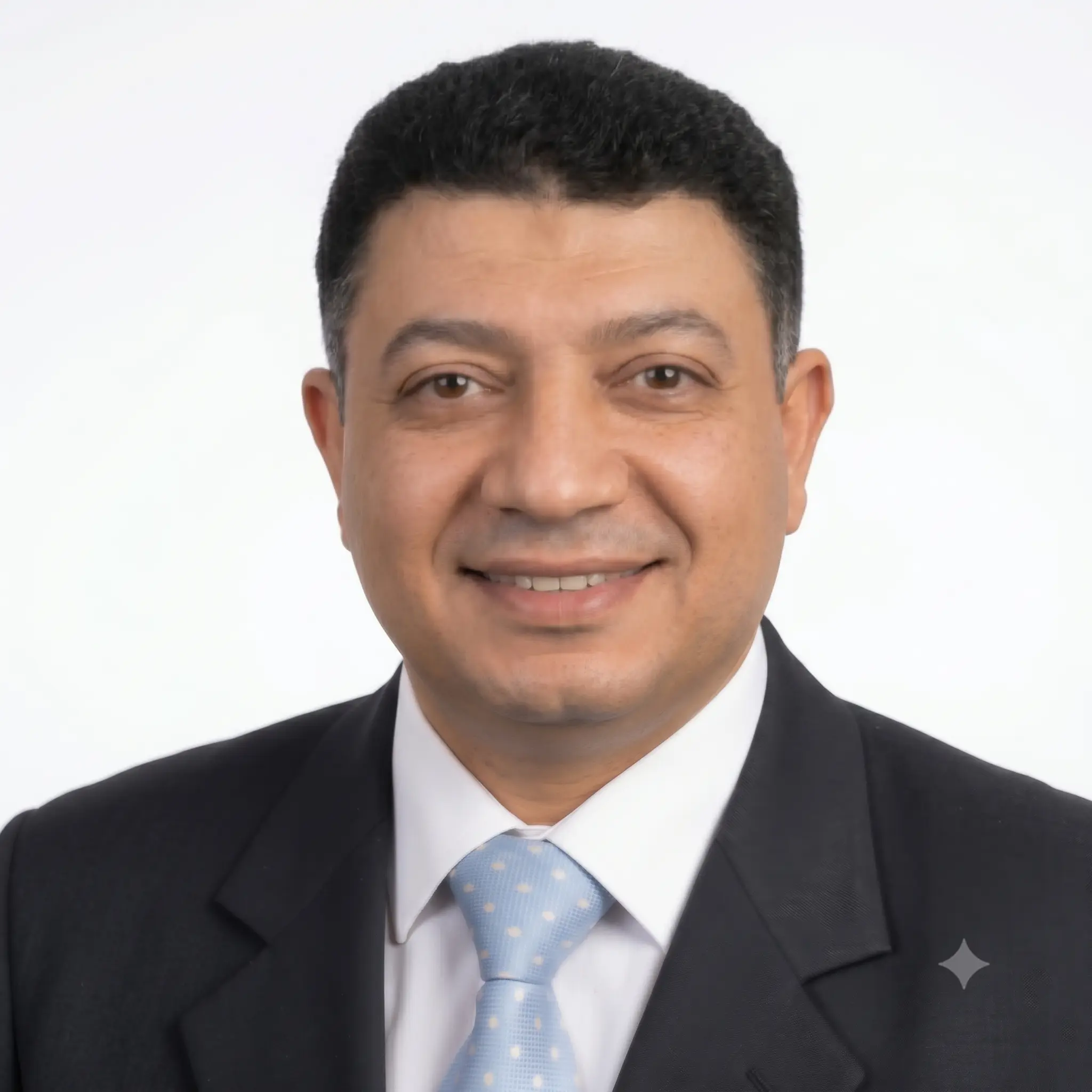
Ustadh Ahmed Mahmoud Abdulaziz is an experienced teacher of Arabic and the Holy Quran for native and non-native speakers. He holds a verified Ijazah in Hafs ‘an Asim and is certified in the foundational Tajweed texts Al-Jazariyyah and Tuhfat Al-Atfal. Drawing on his extensive background in traditional Quranic recitation and international pedagogy, he writes scholar-verified, accessible articles to help students worldwide master Tajweed rules and Arabic linguistics safely and accurately.