If you’re looking for a hifzul quran & islamic education centre — whether for your child, a teenager, or yourself — the options can feel overwhelming. Online academies, boarding schools, weekend madrasahs, full-time hifz programs. Each one describes itself differently. This guide cuts through that noise. It covers how hifz education actually works, what separates a serious program from a mediocre one, and what to look for before you commit your family’s time and money to any institution.
What Is a Hifzul Quran & Islamic Education Centre?
A hifzul quran & islamic education centre is an institution dedicated to Quran memorisation — hifz literally means “preservation” or “memorisation” in Arabic — alongside broader Islamic education such as Tajweed, Islamic studies, arabic course online, Seerah, and Fiqh.
These centres exist in several forms: physical madrasahs, full-time boarding schools, part-time weekend classes, and increasingly, online academies that serve students in the UK, USA, Australia, and beyond. What they share is a structured approach to helping students memorise the entire Quran — all 30 juz — under the supervision of qualified teachers.
The demand for them has grown considerably among Muslim communities in Western countries, where parents want their children to receive religious education that doesn’t conflict with a standard school timetable.
The Core Curriculum of a Hifzul Quran & Islamic Education Centre
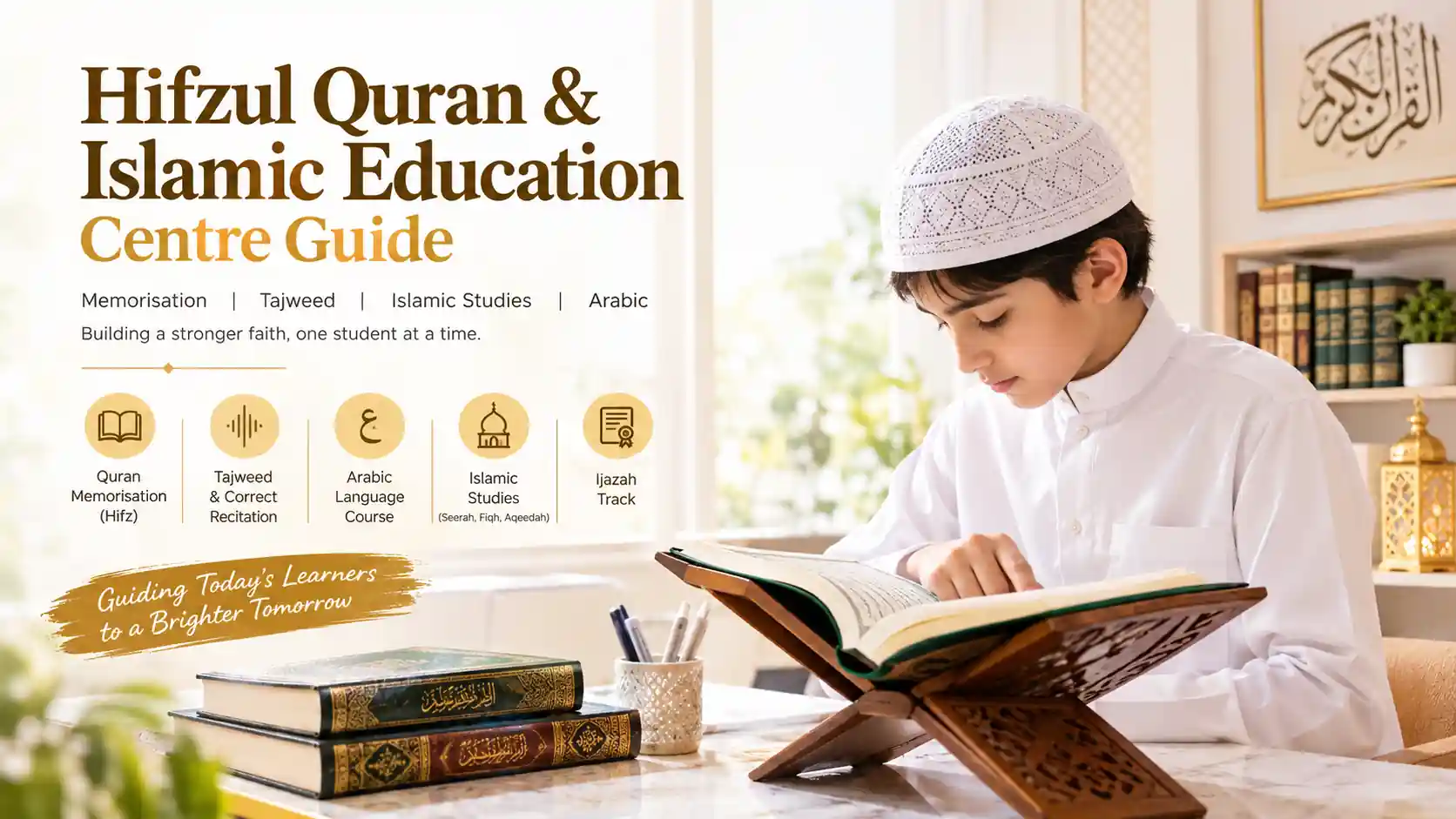
Most hifzul quran & islamic education centres teach more than memorisation alone. A well-rounded programme typically covers:
- Hifz (Memorisation): The central focus. Students work through the Quran systematically, from Surah Al-Fatiha through to the end of Juz Amma, progressing toward full completion.
- Tajweed: The rules governing correct Quranic pronunciation. No serious hifz programme skips this.
- Arabic Language: Reading, writing, and comprehension — especially important for non-Arab students.
- Islamic Studies: Aqeedah (belief), Fiqh (jurisprudence), Seerah (prophetic biography), and basic Hadith studies.
- Ijazah Track: For advanced students who want a certified chain of transmission back to the Prophet ﷺ.
A hifz academy worth considering integrates all of these, not just raw memorisation. Students who memorise without Tajweed often have to re-learn their recitation later, which costs more time than doing it correctly from the start.
Master Tongue Letters in Arabic for Perfect Quran Recitation
Can you memorise the Quran without learning Tajweed first?
Technically, yes — but it’s not a good idea. Tajweed and memorisation are meant to run in parallel. Students who skip Tajweed tend to embed pronunciation errors into their hifz, and those errors are genuinely difficult to correct later.
The standard approach at a reputable hifzul quran & islamic education centre is to introduce basic Tajweed rules before the student begins memorising new content, then reinforce those rules continuously during daily revision. This is why qualified teachers matter: they catch errors in real time, before bad habits form.
A good benchmark — if a centre doesn’t have a formal Tajweed component in its hifz programme, treat that as a red flag.
What are Sabq, Sabqi, and Manzil in hifz?
These three terms describe the three layers of daily Quran revision that most serious hifz programs use:
- Sabq (السبق): New lesson — the freshly memorised portion from today’s session.
- Sabqi (السبقي): Recent revision — material memorised over the past week or so, reviewed daily to prevent it from fading.
- Manzil (المنزل): Older revision — a rotating section covering the entire memorised portion of the Quran, revisited on a weekly cycle.
This three-tier system is used in traditional hifz boarding schools across the Muslim world and has been adopted by online hifz academies including Mubarak Academy. The structure is designed to reinforce both newly memorised and previously memorised material through repeated revision, addressing both short-term encoding and long-term retention.
Students who skip the Sabqi and Manzil layers often find that new memorisation pushes out older material. The structure exists precisely to stop that from happening.
Best Online Quran Memorization Program for Every Student
Which is better — a residential hifz school or online hifz classes?
It depends on the student and the family’s circumstances. Here’s an honest comparison:
| Factor | Physical / Boarding Hifz School | Online Hifz Academy |
|---|---|---|
| Environment | Full immersion — Quran-focused 24/7 | Student stays at home with family |
| Distractions | Removed — no social media, no inconsistent home schedules | Requires a disciplined home routine |
| Peer accountability | Strong — surrounded by students with the same goal | Limited to teacher relationship and parental support |
| Family separation | Required, often for years | None |
| Geographic access | Limited — you go to where the school is | Available anywhere with internet |
| Cost & accessibility | Higher — fees, boarding, travel | Generally more affordable and flexible |
| Teacher quality | Varies widely by institution | Depends on the academy — top online centres have certified teachers with Ijazah |
| Scheduling | Fixed timetable | Flexible around school hours and family commitments |
| Technology needed | None | Zoom or equivalent platform |
| Example | Traditional UK boarding madrasahs | Mubarak Academy — 100+ certified teachers, 20+ countries |
For families in the world where physical hifz boarding schools for young children are either unavailable or culturally difficult, online hifz classes from a reputable hifzul quran & islamic education centre are a practical and proven alternative.
Learn Quranic Arabic Language Course From Absolute Beginner to Advanced
Do hifz students fall behind in regular school?
This is one of the most common concerns among parents, and it’s a fair one. Full-time physical hifz schools often run a separate timetable from mainstream education, which can create gaps. That’s why many Muslim families in the West prefer a dual-curriculum approach or online hifz classes that fit around regular school.
At Mubarak Academy, sessions are scheduled flexibly — students don’t have to choose between secular academics and Quran education. The model works best when parents structure the home environment to support both: school in the day, hifz sessions in the afternoon or evening.
Some Islamic boarding schools in the UK do offer dual curricula, covering GCSE subjects alongside the full hifz programme. These are a legitimate option for families prepared for residential schooling from age 11 or 12 onward.
What should you actually check before enrolling?
Don’t rely on marketing pages. Ask the following:
- Do the teachers hold an Ijazah in the Quran they’re teaching? An unqualified teacher can pass on errors.
- What is the student-to-teacher ratio? One-to-one or small groups (2–5) allow meaningful correction. Large group sessions do not.
- How is progress tracked and reported to parents? Weekly reports, parental check-ins, or a student portal — some form of structured accountability matters.
- What happens when a student falls behind or has a difficult week? Good centres have a recovery plan, not just a warning.
- Is there a free trial lesson? A reputable online hifzul quran & islamic education centre will offer one. Mubarak Academy provides a free trial session so families can assess teacher quality before committing.
- Can you speak to parents of current students? Real testimonials from real parents carry more weight than website reviews.
Learn Quran Recitation Classes Online With a Certified Teacher
What does it mean for a Quran teacher to be qualified?
At minimum, a Quran teacher at a hifzul quran & islamic education centre should:
- Be a Hafiz or Hafiza (have completed their own memorisation of the Quran)
- Hold an Ijazah — a formal certification from a qualified Sheikh, establishing an unbroken chain of transmission
- Have practical teaching experience, not just personal memorisation
- Be trained in Tajweed rules and able to explain them, not just demonstrate them
The Ijazah is especially important. It isn’t just a certificate — it connects the teacher to a centuries-old chain that traces back to the Prophet ﷺ himself. A teacher without Ijazah may recite correctly but cannot formally confer certification on students, which matters if the student eventually wants their own Ijazah.
Mubarak Academy’s teachers are certified and academically qualified, with both male and female teachers available — an important factor for families seeking female hifz teachers for daughters.
What does a student’s hifz day actually look like?
At a residential hifz boarding school, the day typically runs something like this:
| Time | Activity |
|---|---|
| Fajr (pre-dawn) | Morning Quran revision (Manzil) |
| After Fajr | New lesson preparation (Sabq) |
| Mid-morning | Teacher session — recitation and correction |
| Afternoon | Academic subjects (in dual-curriculum schools) |
| After Asr | Sabqi revision |
| Evening | Self-directed revision |
For online hifz students, the structure looks different but should still be consistent. Most online academies schedule one or two live sessions per day — typically 30–60 minutes each — with independent revision expected between sessions.
Without daily revision outside of live classes, memorisation doesn’t stick. The online model works, but parents need to build that independent revision time into the child’s day.
Is there a standard timeline for completing memorisation?
It varies considerably based on age, hours per day, the student’s memory strength, and consistency. General benchmarks from traditional hifz programmes:
- Full-time students (4–6 hours/day): 2 to 4 years
- Part-time students (1–2 hours/day): 4 to 7 years
- Adults with prior Quran exposure: sometimes faster, sometimes slower — Adults may approach memorisation differently because of differences in available time, attention, prior Quran exposure, and daily responsibilities
- Young children (ages 7–10): often faster at initial memorisation but need more revision support
These numbers assume consistent daily effort. A student who memorises for a month then takes three weeks off will lose significant ground. The hifz journey rewards consistency over intensity.
Earn Your Tajweed Course Certificate Online and Recite with Confidence
What actually works when children struggle to memorise?
A few things that genuinely help:
Repetition over time, not in one sitting.
Memory consolidates during sleep. A child who revises a passage before bed and again in the morning retains more than one who tries to drill it for two hours straight.
Keep sessions short and frequent.
Shorter, regular revision sessions can be easier for children to sustain than a single long session. This is one reason online hifz classes with Mubarak Academy — typically scheduled in 30–60 minute blocks — suit children better than marathon sessions.
Remove the pressure of speed comparisons.
Children who see peers progressing faster often become demotivated. Every student’s pace is their own. The goal is a Hafiz, not a fastest Hafiz.
Celebrate small milestones.
Completing a Surah, finishing a Juz, reaching the halfway point — these deserve acknowledgment. It keeps the journey feeling achievable.
How involved should parents actually be?
More involved than most expect. A hifzul quran & islamic education centre provides the teacher and the structure. But the daily home environment is the parents’ responsibility, and it makes or breaks a child’s progress.
Practically, this means:
- Creating a quiet, distraction-free revision space at home
- Listening to the child’s revision recitation — even if the parent doesn’t know Tajweed well
- Keeping the session schedule consistent, even on school holidays and weekends
- Communicating with the teacher promptly when the child is struggling
- Modelling respect for the Quran in the home
Mubarak Academy builds this in through regular parental update sessions and progress reports. But the parents who see the strongest progress in their children are the ones who treat the home as an extension of the classroom, not an afterthought.
Is there a right age to start hifz?
No single right age — but the conditions for success differ by stage:
Children (ages 5–10): Memory retention is often strongest at this stage. Children don’t overthink the process. The main challenge is sustaining motivation over what will be a multi-year commitment.
Teenagers (ages 11–17): Competing demands — exams, social life, identity development. Teenagers need a programme that respects their schedule and treats them as capable of real commitment, not just passive recipients.
Adults: Stronger self-discipline and intention. Weaker raw memory in many cases. Adults often progress more slowly in initial memorisation but retain material more stably. Adult hifz classes online are a growing segment, and Mubarak Academy accommodates adult students with flexible scheduling.
All three groups are served by a good hifzul quran & islamic education centre. The teaching approach should adapt to the age group — the same method doesn’t work across all three.
What should families know about hifz boarding schools specifically?
Residential hifz schools offer the most immersive experience. Students live on campus, follow a structured daily timetable, and are surrounded by peers with the same goal. Some of the most respected hifz graduates in the UK came through this system.
The trade-off is separation from family, which is significant for younger children. Most reputable hifz boarding schools in the UK accept students from age 11 or 12, not younger, for this reason. Female hifz residential schools exist in the UK but are fewer in number.
Before choosing a boarding school, visit in person. Check the living conditions, speak to current students’ parents, and ask specifically about the pastoral care — how they support students emotionally and spiritually, not just academically.
Why do families in Western countries choose online hifz academies?
The practical reasons are obvious: no local hifz school nearby, incompatible schedules, wanting the child to stay home. But there’s another reason that’s less often discussed — access to better teachers.
A family in rural Norway or a mid-sized American city might have no qualified local Quran teacher within driving distance. Online hifz classes give them access to certified teachers with Ijazah, something that simply wasn’t possible a generation ago.
Mubarak Academy serves students across more than 20 countries, with dedicated programmes for students in the UK, , Norway, Canada, and Australia. Sessions run on Zoom, and the student management system tracks progress, session attendance, and revision logs — visible to both teachers and parents.
The critical success factor for online students isn’t the platform. It’s the daily routine at home.
What is an Ijazah and why does it matter for hifz students?
An Ijazah (إجازة) is a formal certification granted by a qualified Sheikh to a student who has demonstrated mastery of Quran recitation or memorisation. It isn’t just a diploma — it establishes an unbroken chain (Sanad) linking the student, through the Sheikh, through generations of scholars, back to the Prophet Muhammad ﷺ.
This chain matters for two reasons:
- It guarantees the student was taught by someone who themselves received proper, verified transmission.
- It allows the student to later teach and grant Ijazah to their own students — continuing the chain.
Not every hifz student will pursue Ijazah. But for serious students, completing hifz with a teacher who holds Ijazah is the difference between informal memorisation and formally recognised transmission. Mubarak Academy offers an online Ijazah programme through certified Sheikhs for students who reach the required level.
Is hifz education just about memorisation, or does it do more?
A good hifzul quran & islamic education centre is a community, not just a curriculum delivery service. The social dimension — connecting Muslim youth with peers who share their values and goals — has real effects on identity development, especially for young Muslims growing up in non-Muslim majority countries.
Islamic studies, Seerah classes, and character development sessions give students context for what they’re memorising. A Hafiz who understands the meaning and circumstances of the Quran carries something more substantial than one who has memorised sounds without comprehension.
Beyond the religious dimension, the discipline required for hifz — daily revision, long-term consistency, managing setbacks — builds habits that transfer. Many Huffaz report that the work ethic formed during their hifz journey directly shaped how they approach studies and careers later in life.
What’s the practical process for finding the right programme?
Start with a checklist:
- Teacher credentials: Ijazah, hifz completion, teaching experience
- Programme structure: Does it use a formal Sabq/Sabqi/Manzil system?
- Parental communication: Regular updates, not just final-term reports
- Trial lesson available: Any serious centre offers one
- Transparent pricing: No hidden fees or pressure to commit before seeing the teacher
- Gender options: Male teachers for male students, female teachers for female students — especially for older students
For families outside the Muslim-majority world, an online hifzul quran & islamic education centre with qualified teachers, flexible scheduling, and genuine parental involvement is often the most realistic and effective option.
Mubarak Academy has been serving students across the world, with a team of 100+ certified teachers, proven hifz programmes, and a free trial lesson to start.
Ready to start or take the next step? Whether it’s for your child, a teenager, or yourself — the first session is free, no commitment required.
book a free trial class with a certified teacher — our team will match you with the right teacher and answer any questions before you begin.
Frequently Asked Questions
How many hours per day does hifz require?
For a structured online programme, most students spend 30–60 minutes in a live session and 30–60 minutes in independent revision daily. Full-time residential hifz can involve 4–6 hours of combined lesson and revision time. Consistency across the week matters more than the total hours in a single session.
Can adults who have never memorised Quran before start a hifz programme?
Yes. Adult hifz programmes exist specifically for beginners. Adults generally find initial memorisation slower than children but retain what they learn more stably once it’s fixed. The key is a realistic pace and daily commitment. Mubarak Academy offers hifz classes for adult beginners with flexible scheduling.
What happens if my child misses sessions or falls significantly behind?
At a reputable hifzul quran & islamic education centre, missed sessions and falling behind are treated as something to manage, not punish. A good teacher adjusts the pace, revisits weak sections, and communicates with parents about what support is needed at home. If a centre’s only response to falling behind is issuing warnings, that’s worth noting.
Is online hifz as effective as attending a physical hifz school?
For many students in Western countries, online hifz with a qualified teacher is more effective in practice than a local option with weaker teaching. Teacher quality matters more than the format. A certified teacher on Zoom, with daily sessions and parental accountability, produces better results than an unqualified local teacher in person. The format is a delivery mechanism; the teacher is the product.
Does Mubarak Academy offer Ijazah for students who complete hifz?
Yes. Mubarak Academy runs an online Ijazah programme for students who reach the required level of memorisation and recitation. This connects the student to a certified Sanad through qualified Sheikhs. Contact the academy directly for details on eligibility and assessment.
Are there female Quran teachers available for girls and women?
Yes. Mubarak Academy has both male and female certified teachers. Families can request a female teacher for daughters or adult female students. This is confirmed during the trial session booking process.
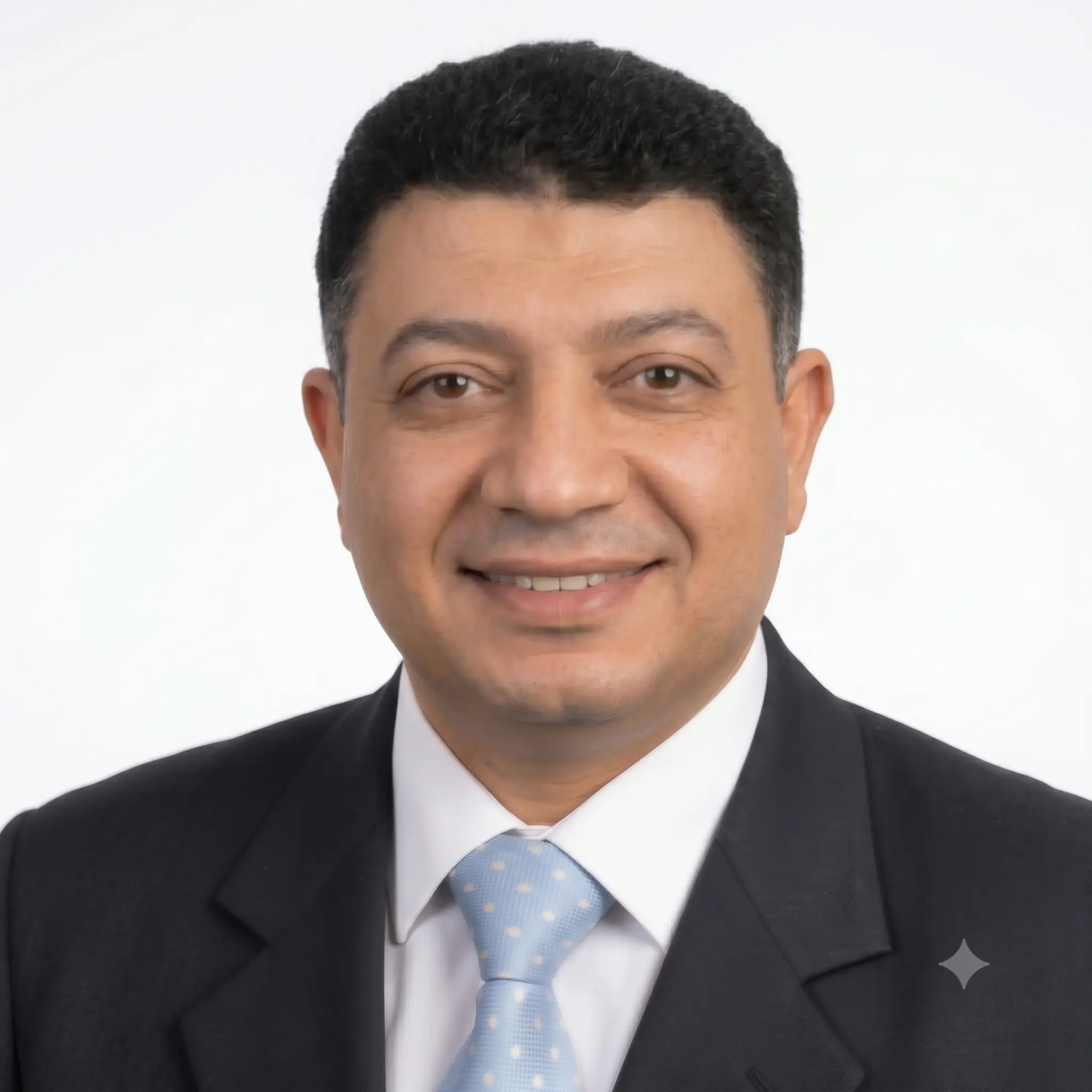
Ustadh Ahmed Mahmoud Abdulaziz is an experienced teacher of Arabic and the Holy Quran for native and non-native speakers. He holds a verified Ijazah in Hafs ‘an Asim and is certified in the foundational Tajweed texts Al-Jazariyyah and Tuhfat Al-Atfal. Drawing on his extensive background in traditional Quranic recitation and international pedagogy, he writes scholar-verified, accessible articles to help students worldwide master Tajweed rules and Arabic linguistics safely and accurately.