Start Your Study Journey Today
Book a FREE trial class with a certified Quran teacher. No payment, no commitment.
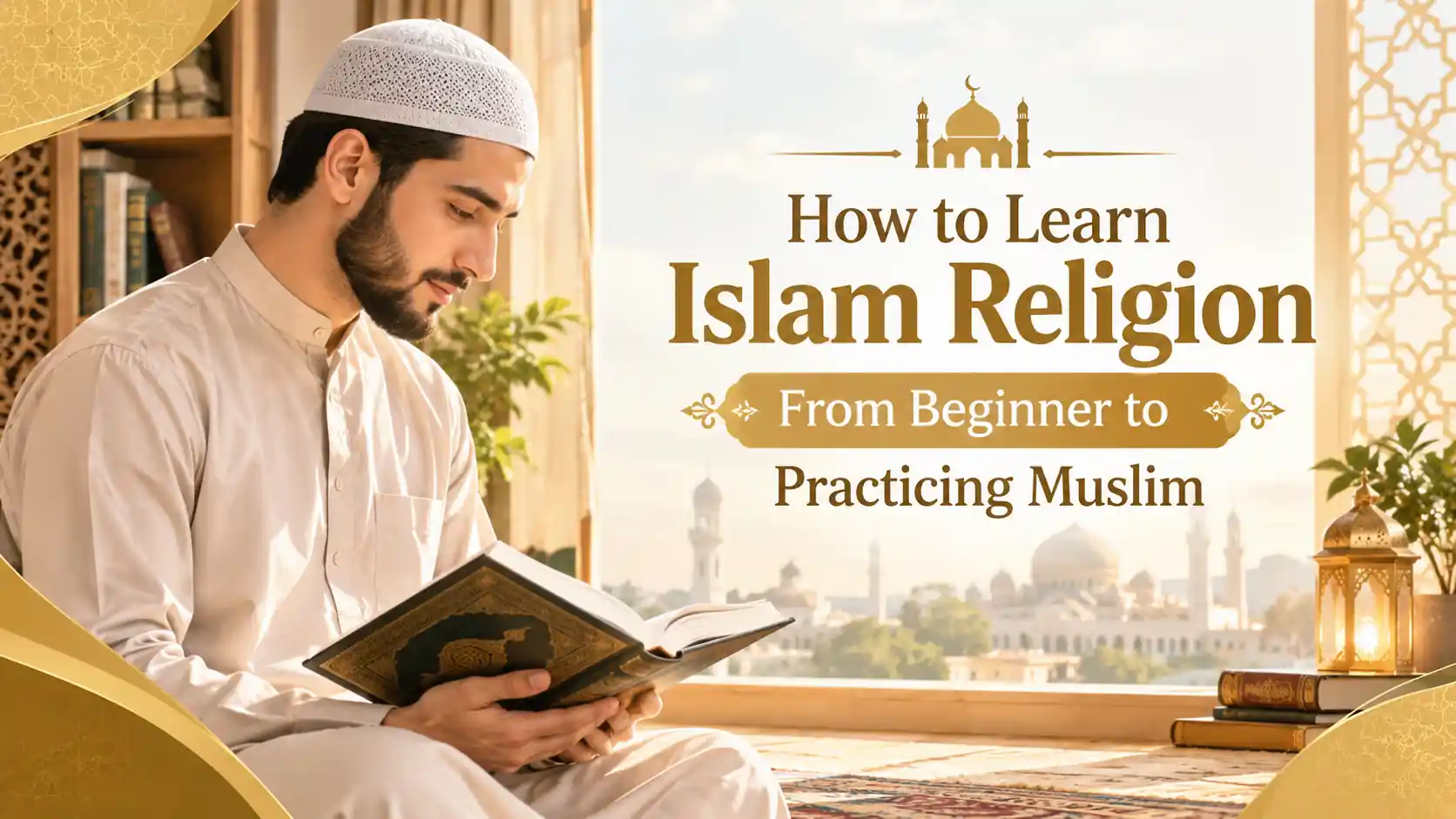
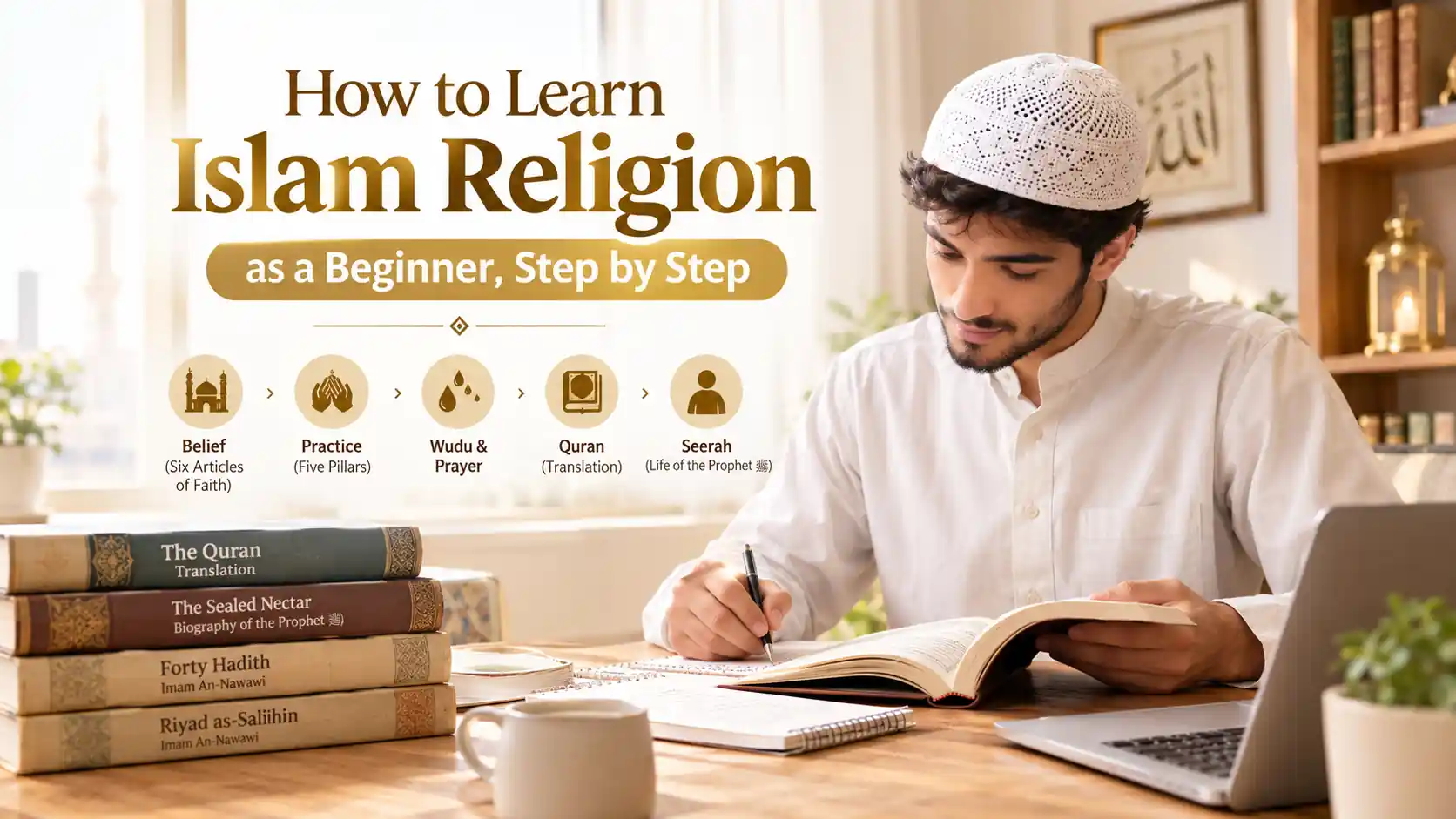
How to learn Islam religion as a beginner follows a clear order. Start with the six articles of faith and the five pillars, then wudu and prayer, then the Quran in translation and the life of the Prophet ﷺ. About 25 minutes a day and one weekly class with a qualified teacher are enough. Before you pick a book or a channel, learn the 4 questions that test a teacher and the habit with online clips that confuses many beginners.
Where should you start when learning about Islam?
Start with belief before practice: who Allah is, who the Prophet Muhammad ﷺ was, and what Muslims believe about the Last Day. These basics fit into your first 2 weeks. Detailed rulings and scholarly debates can wait, because they make little sense until the foundations are clear.
Many people searching for how to learn Islam religion start the other way round, with online debates or rare rulings, and end up more confused than when they began.
What are the six articles of faith and the five pillars?
The six articles of faith describe what a Muslim believes, and the five pillars describe what a Muslim does. The Prophet ﷺ listed the articles of faith in the Hadith of Jibril (Sahih Muslim 8). They are belief in Allah, His angels, His Books, His messengers, the Last Day, and divine decree, both its good and its bad.
The five pillars come from the hadith “Islam is built upon five” (Sahih al-Bukhari 8 and Sahih Muslim 16):
| Pillar | Meaning | In practice |
|---|---|---|
| Shahada | Declaring that there is no god but Allah and that Muhammad ﷺ is His messenger | Said with conviction to enter Islam, and repeated in every prayer |
| Salah | The 5 daily prayers | Fajr, Dhuhr, Asr, Maghrib and Isha |
| Zakat | Paying a fixed share of wealth to those entitled to it | Due once a year on savings above a minimum amount (nisab) |
| Sawm | Fasting from dawn to sunset | Every day of the month of Ramadan |
| Hajj | Pilgrimage to Makkah | Once in a lifetime, for those physically and financially able |
How do you learn Islam step by step?
Six steps cover the first month for a complete beginner, and each one builds on the step before it. Keep the order: prayer is easier to learn once you understand the Shahada, and the Quran makes more sense once you know the beliefs it keeps returning to.
- Learn the meaning of the Shahada and how to say it in Arabic.
- Learn the six articles of faith, with one short explanation of each.
- Learn wudu and the movements of prayer with a teacher.
- Memorise Al-Fatiha and one short surah for your prayers.
- Read 5 to 10 verses of a Quran translation every day.
- Write down your questions and bring them to a qualified teacher each week.
25 Prophets Named in the Quran and Their Stories
How do you learn wudu and the five daily prayers?
Wudu, the washing before prayer, takes about 3 minutes and is the first practical skill to learn, because prayer is not valid without it. The Quran sets out its core in Surah Al-Ma’idah (5:6): washing the face, washing the arms to the elbows, wiping the head and washing the feet to the ankles.
Most teachers teach wudu in these 7 steps:
- Make the intention and say Bismillah.
- Wash your hands 3 times.
- Rinse your mouth and nose.
- Wash your face.
- Wash your arms up to and including the elbows, right arm first.
- Wipe your head and ears with wet hands.
- Wash your feet up to and including the ankles, right foot first.
The schools of fiqh differ on which of these steps are obligatory, so ask your teacher which school you follow.
Read also: Dua Before and After Wudu in Arabic With English Meaning
Each of the 5 daily prayers has a fixed number of obligatory units (rak’ahs), 17 in total:
| Prayer | Time | Obligatory rak’ahs |
|---|---|---|
| Fajr | Dawn, before sunrise | 2 |
| Dhuhr | Just after midday | 4 |
| Asr | Afternoon | 4 |
| Maghrib | Just after sunset | 3 |
| Isha | Night | 4 |
Learn the movements with a teacher who watches you pray on camera. A wrong posture or a mispronounced word is easy to fix in week 2 and much harder after a year of habit.
How should beginners read the Quran and Hadith?
Read 5 to 10 verses of a clear English translation each day, starting with the short surahs near the end of the Quran, and add one hadith a day from a short collection. Saheeh International is a widely used translation in plain modern English, and An-Nawawi’s Forty Hadith gathers 42 core hadiths in one small book.
After each passage, read a short explanation (tafsir) so you know the context. Mubarak Academy’s Islamic Studies course uses Tafsir As-Sa’di, with English notes from the teacher.
Why does the life of the Prophet Muhammad ﷺ matter?
The Prophet Muhammad’s ﷺ life, the Seerah, shows how the Quran was lived day to day: how he prayed, treated his family, traded and forgave. The Quran gives the message, and his Sunnah shows how to apply it. His biography also explains the events behind many verses, so passages that seemed abstract become clear.
Study the main stages in order: his early life and the first revelation in Makkah, then the years of preaching there. After that come the Hijrah to Madinah in 622 CE and the Madinan years until his death in 632 CE.
Hifzul Quran & Islamic Education Centre Guide
What is the difference between aqeedah, fiqh and Sunnah?
Aqeedah is what you believe, fiqh is how you practise, and the Sunnah is the Prophet’s ﷺ example that both draw on. A beginner meets all three in the first month: aqeedah in the articles of faith, fiqh in the rules of wudu and prayer, and Sunnah in the way the Prophet ﷺ prayed.
| Term | Meaning | Beginner example |
|---|---|---|
| Aqeedah | Islamic creed: beliefs about Allah, the prophets and the afterlife | The six articles of faith |
| Fiqh | Islamic law and its rulings on worship and daily life | What breaks wudu |
| Sunnah | The Prophet’s ﷺ words, actions and approvals | Saying Bismillah before eating |
Which books should beginners read first?
Four books cover most of what a beginner needs in the first year: a Quran translation, a biography of the Prophet ﷺ and two hadith collections. Read them slowly alongside a teacher, rather than buying many books and finishing none.
| Book | Author | Why read it |
|---|---|---|
| The Quran, Saheeh International translation | Saheeh International | Plain English rendering of the Quran’s meanings |
| The Sealed Nectar (Ar-Raheeq Al-Makhtum) | Safiur Rahman Mubarakpuri | The life of the Prophet ﷺ in chronological order |
| Forty Hadith | Imam An-Nawawi | 42 short hadiths on core beliefs and conduct |
| Riyad as-Salihin | Imam An-Nawawi | Hadiths arranged by topic, from manners to worship |
Mubarak Academy’s Islamic Studies course reads The Sealed Nectar and Riyad as-Salihin with students, so you can work through both with a teacher.
Online Islamic Courses for Ladies and Sisters
Do you need to learn Arabic to understand Islam?
No. A good English translation and an English-speaking teacher are enough to learn the basics. You will need a few Arabic words for prayer, such as Al-Fatiha and the Shahada, and these can be learned by sound in your first weeks. Reading Arabic later deepens your understanding of the Quran.
When you are ready to read the Quran in its own language by Tajweed classes builds that skill step by step.
Can you learn Islam online at home in the UK?
Yes. Live online classes let you learn at home in a fixed weekly slot, with a teacher who answers your questions as they come up. Many learners in the UK pair them with their local mosque: the online class gives structure, and the mosque gives community, Friday prayer and people to pray with.
East London Mosque, for example, runs a short introduction to Islam course for new Muslims and those relearning the basics. Ask your nearest mosque whether it has a similar beginners’ or new-Muslim circle.
At Mubarak Academy, the Islamic Studies course runs as live one-on-one classes on Zoom, covering aqeedah, fiqh, Seerah, tafsir, hadith and manners. New Muslims need no prior knowledge, and you can choose a male or female teacher. Plans range from 2 classes of 30 minutes to 5 classes of 60 minutes a week.
How do you choose a reliable teacher and avoid misinformation?
Choose a teacher with recognised training and a course with a written plan. Good signs are a degree in Islamic studies or an ijazah, a licence to teach passed down through a chain of teachers. Then check what you hear against the Quran and Sunnah, not against how confident a speaker sounds.
Ask 4 questions before you commit:
- What is your training, and who taught you?
- Can I see the course plan for the first 3 months?
- Which school of fiqh do you teach, and how do you handle questions where scholars differ?
- Can I take a trial class first?
Treat a short social media clip as the start of a question, not as the answer. Clips that sound angry, mock other Muslims or push you to cut off your family are a signal to stop and ask a teacher.
Explore Mubarak Academy — Online Courses
How can you build a daily routine and a 90-day plan?
What does a 25-minute daily routine look like?
A 25-minute routine split into 3 short blocks, each tied to a prayer time, is enough for steady progress. Linking study to Fajr, Dhuhr and Isha means you never have to find a new slot in a busy day, and a weekly live class keeps you accountable.
| When | Activity | Time |
|---|---|---|
| After Fajr | Quran translation | 10 minutes |
| After Dhuhr | One hadith | 5 minutes |
| After Isha | Review the prayer steps or a short surah | 10 minutes |
| Once a week | Live class with a teacher | From 30 to 60 minutes |
How to learn Islam religion in your first 90 days?
Spend your first 30 days on belief and wudu, the next 30 on prayer and the Quran, and the last 30 on hadith, the Seerah and daily conduct. Each month ends with a short check, so you know whether to move on or repeat the month.
| Days | Focus | Check at the end |
|---|---|---|
| 1 to 30 | Shahada, six articles of faith, five pillars, wudu | Explain each article in one sentence and perform wudu without notes |
| 31 to 60 | The 5 prayers, Al-Fatiha and one short surah, daily Quran reading | Pray all 5 prayers on time for 1 full week |
| 61 to 90 | One hadith a day, the Seerah, aqeedah and fiqh, daily conduct | Retell the main stages of the Prophet’s ﷺ life |
Turn each lesson into one small action in the same week, such as praying on time, keeping a promise or giving a little to charity. A lesson that changes one habit stays with you far longer than one you only read.
Want a teacher to guide your first 90 days? Mubarak Academy’s Islamic Studies classes are live and one-on-one, with male and female teachers and flexible times in any time zone. Your first session is a free level assessment, and no card is needed.https://wa.me/201095988276
Frequently asked questions about learning Islam
Do I need to be Muslim to learn about Islam?
No. Anyone can learn about Islam, whatever their background or beliefs, and many people study it out of curiosity before making any decision. Start with the same basics as a new Muslim: the articles of faith, the five pillars and the life of the Prophet ﷺ, from reliable sources and a teacher who welcomes questions.
How do I become Muslim?
A person becomes Muslim by sincerely declaring the Shahada: “Ashhadu an la ilaha illallah, wa ashhadu anna Muhammadan rasulullah” (أشهد أن لا إله إلا الله، وأشهد أن محمداً رسول الله). It means “I bear witness that there is no god but Allah, and that Muhammad is the messenger of Allah.” An imam or teacher can guide your next steps.
Can children learn Islam online?
Yes. Children learn well in short live classes built for their age, with stories, questions and plenty of repetition. Mubarak Academy’s Islamic Studies course takes children and teens aged 6 to 15, and every lesson leaves time for the child’s own questions. For reading the Quran, the academy also runs online Quran classes for kids.
Is it okay to ask a teacher basic questions?
Yes. Every scholar started with basic questions, and a good teacher welcomes them. Write yours down during the week and bring them to class, since each one-on-one lesson at Mubarak Academy includes time for questions. Asking early stops a small misunderstanding from turning into a habit you later have to unlearn.
Where should you begin this week?
Learn the meaning of the Shahada and the six articles of faith this week, and practise wudu until you can do it without notes. Then book one live class, so a teacher can check your wudu and answer the questions you have collected. Book your free trial class with Mubarak Academy.
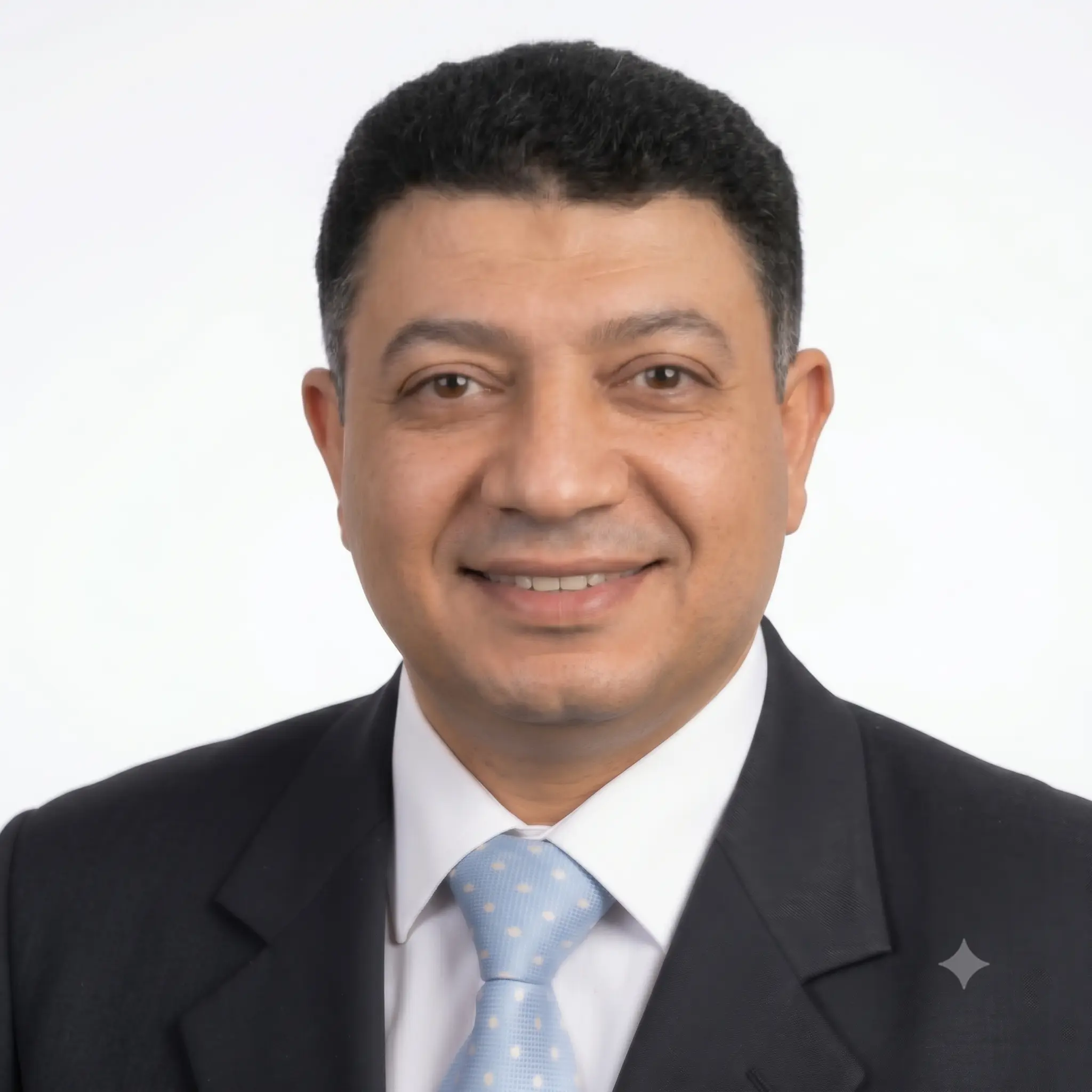
Ustadh Ahmed Mahmoud Abdulaziz is an experienced teacher of Arabic and the Holy Quran for native and non-native speakers. He holds a verified Ijazah in Hafs ‘an Asim and is certified in the foundational Tajweed texts Al-Jazariyyah and Tuhfat Al-Atfal. Drawing on his extensive background in traditional Quranic recitation and international pedagogy, he writes scholar-verified, accessible articles to help students worldwide master Tajweed rules and Arabic linguistics safely and accurately.