Start Your Study Journey Today
Book a FREE trial class with a certified Quran teacher. No payment, no commitment.
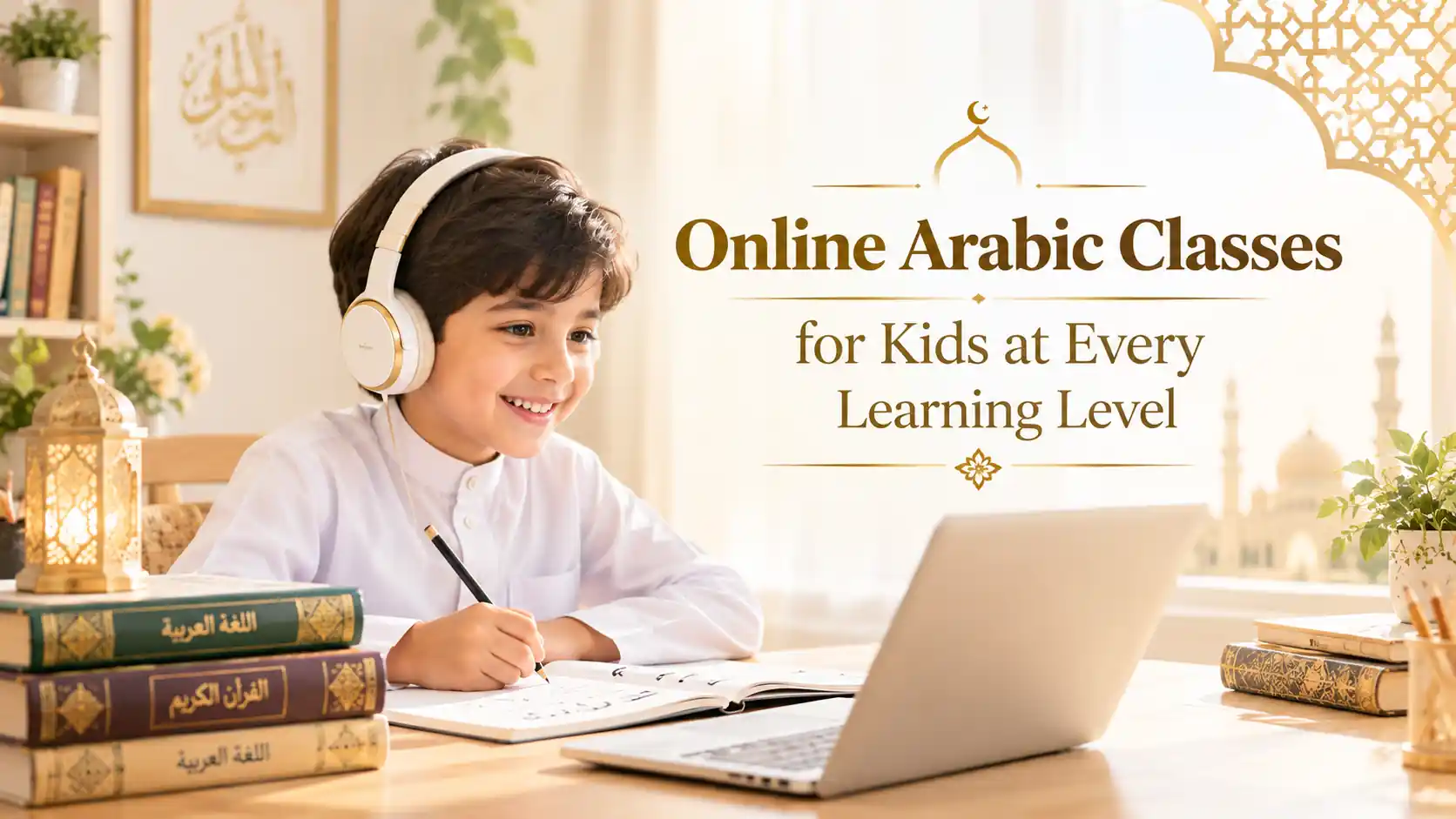
Online Arabic classes for kids give your child structured live lessons from home, but the right course depends on their age, goals and level. This guide explains how to choose a course, tutor and format, and what it costs. Each section starts with a short answer, so you can compare options quickly. You will find age-by-age guidance, ways to support practice at home and answers to common parent questions. First, here is how to match a course to your child.
Online Arabic Classes for Kids: Which Course Is Right for Your Child?
Choose online Arabic classes for kids by matching the course to your child’s age, current level and learning goal.
Some children need reading, some need speaking practice, and some need Quranic Arabic. The course should match those needs, keep lessons interesting and show regular progress. A short level check at the start helps the teacher place your child correctly. So what will your child actually learn?
What Will Your Child Learn in Online Arabic Classes?
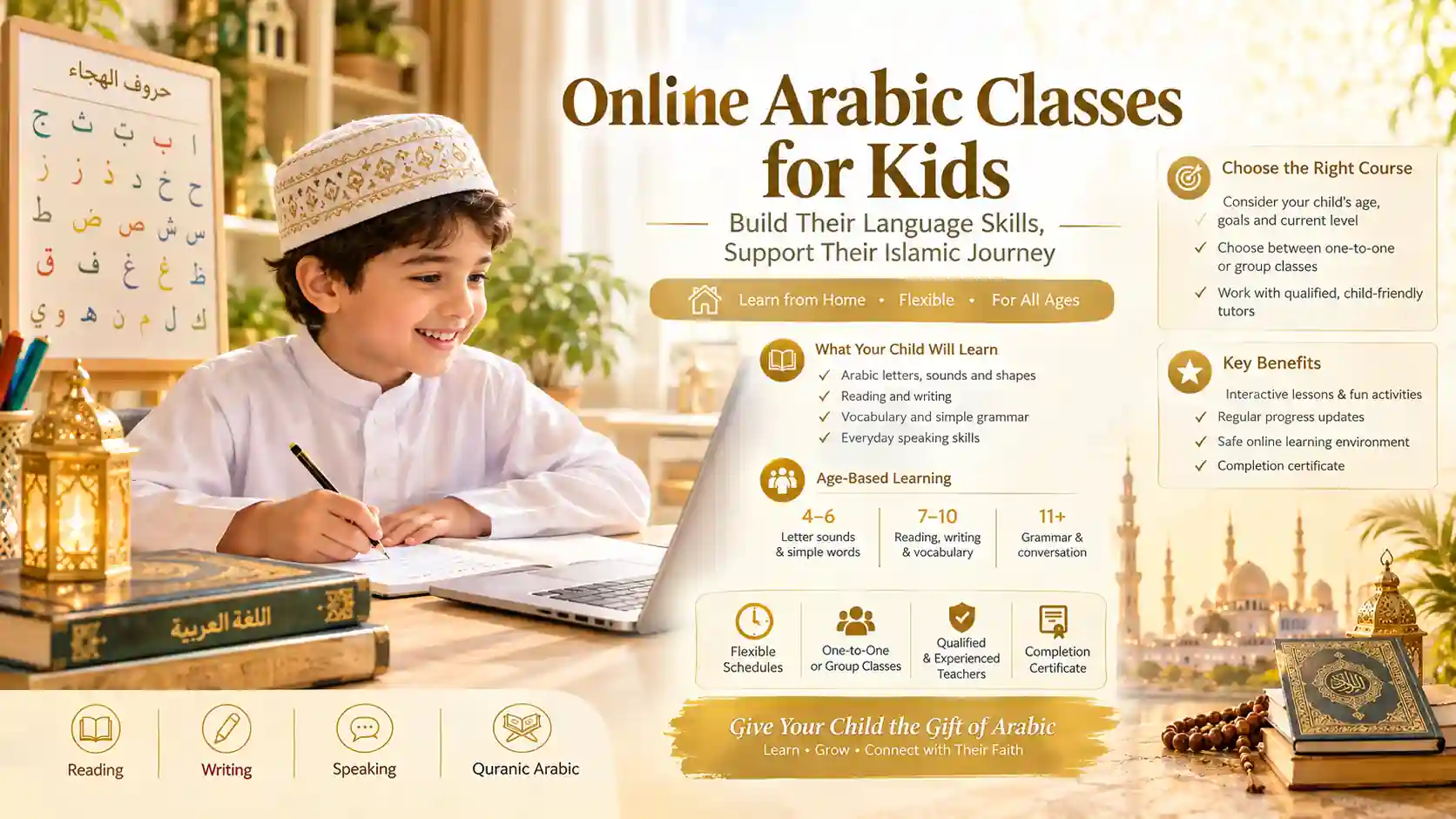
Children learn Arabic letters, sounds, vocabulary, reading, writing and simple speaking, with each skill built step by step. A typical Arabic language course covers:
- Pronouncing Arabic letters, with their shapes and sounds
- Reading short, simple words and sentences
- Simple everyday conversation in Arabic
- Writing, spelling and basic grammar
Lessons use pictures and short activities to keep children engaged. So which skill should your child start with?
Arabic Reading or Spoken Arabic: Where Should Your Child Start?
Reading is a common starting point for many children, since learning letters and sounds supports later speaking and spelling. Younger children can add spoken phrases at the same time, because listening, speaking and play work well together at that age.
Mubarak Academy offers a free level assessment, which shows where each skill needs the most work. Good online Arabic lessons then combine both abilities, so your child reads a word and uses it in a sentence. Long vowels are a useful early reading topic, and this guide to Arabic words with long vowels shows how they work. Another choice is which type of Arabic to study: Quranic or Modern Standard.
What Is the Difference Between Quranic and Modern Standard Arabic?
Quranic Arabic is the classical Arabic of the Quran, while Modern Standard Arabic is today’s formal Arabic for books, news and schools.
| Feature | Classical Arabic (Quranic) | Modern Standard Arabic |
|---|---|---|
| Main purpose | Reading and understanding the Quran | Reading, writing and formal speaking |
| Vocabulary | Classical words and structures | Contemporary words |
| Best for | Children focused on recitation | Children focused on everyday communication |
Mubarak Academy’s Arabic course teaches both tracks, Classical Fusha and Modern Standard Arabic, rather than a regional dialect. For Quranic goals, see the best way to learn Quranic Arabic for beginners. Quran study, such as Quran memorisation, can be added later. Age also shapes how lessons are taught, as the next section shows.
Which Online Arabic Classes Suit Each Age Group?
Ages 4 to 6 start with letters and play, 7 to 10 with reading and writing, and 11 and above with grammar and conversation.
| Age | Focus | Lesson style |
|---|---|---|
| 4 to 6 | Letter sounds and simple words | Playful lessons with Arabic learning games |
| 7 to 10 | Reading, writing, vocabulary | Structured lessons with regular practice |
| 11 and above | Grammar and conversation | Discussion and writing tasks |
Children in non-Arabic-speaking households can start without any Arabic, because lessons for non-native learners begin with the alphabet. Families can also read about the academy’s new Arabic course for English-speaking students. After age, the next choice is the lesson format.
One-to-One or Group Arabic Classes: Which Is Better for Children?
One-to-one lessons give your child full attention and a personal pace, while group classes add peer motivation.
| Feature | One-to-one online tutoring | Group classes |
|---|---|---|
| Attention | Fully on your child | Shared with classmates |
| Pace | Set around your child | Set by the group |
| Best for | Beginners and shy children | Children who enjoy learning with peers |
Mubarak Academy teaches its Arabic course as live, private 1-on-1 lessons. If you consider a group class elsewhere, ask how many children share each session. Children who want extra speaking practice can also try an Arabic conversation class for everyday speaking. Whichever format you pick, the tutor makes the biggest difference.
How to Choose the Right Online Arabic Tutor for Your Child
Choose a tutor by checking their qualifications, their experience with children and how your child responds in a trial lesson. Follow these 6 steps:
- Check that the tutor is qualified and has experience working with children.
- Ask how they teach Arabic letter pronunciation.
- Book a trial lesson and watch how your child reacts.
- Make sure lessons run in a safe online environment, joined through a private link rather than open chat rooms.
- Ask whether tutors have undergone background or safeguarding checks.
- Ask how progress is reported to parents.
Mubarak Academy lists Al-Azhar-trained and Ijazah-certified teachers, and the same questions work for any provider you compare. A good tutor also keeps lessons lively, so let’s look at how children stay motivated.
How Do Online Arabic Lessons Keep Children Interested?
Interactive lessons with games, pictures and praise tend to hold children’s interest better than long lectures. Common tools include:
- Matching and flashcard games for new vocabulary
- Reading practice based on short stories
- Quick quizzes with immediate praise
Teachers also adjust the pace to your child’s mood and attention span, and short breaks between activities help younger children stay focused. Steady interest leads to steady progress, so how long does it take?
How Long Does It Take for Kids to Learn Arabic Online?
At Mubarak Academy, the beginner level typically takes 3 to 4 months, and more weekly lessons plus daily practice speed up progress.
At that level, students learn to read vowelled Arabic and build simple sentences. Your child’s progress depends on:
- Number of lessons per week (Mubarak Academy plans offer 1, 2 or 3)
- Your child’s age and starting level
- Daily practice between lessons
What happens at home is directly in parents’ hands. You can browse the Mubarak Academy courses to see how Arabic can lead into Quran study.
How Can Parents Help Children Practise Arabic at Home?
Parents help most by setting a short daily routine and showing that Arabic is part of family life. To support practice at home, try these steps:
- Schedule a 10-minute practice time each day
- Read the letters and words from the lesson together
- Label household objects in Arabic
- Tell short stories or sing songs in Arabic
- Ask your child to teach you one new word
Practice works best when lessons are also scheduled at the right time of day. Parents who want to learn alongside their child can follow Arabic in English step by step.
What Is the Best Time for Online Arabic Classes for Kids?
The best time is when your child is alert and calm, such as after a short break after school or at weekends.
A tired child learns less, so avoid late evenings. Keep the lesson at the same time each week to build a routine. Mubarak Academy’s FAQ lists lesson lengths of 30, 40 and 60 minutes, so allow a little time before and after each lesson. Next, consider your budget.
How Much Do Online Arabic Classes for Kids Cost?
At Mubarak Academy, online Arabic classes for kids start at $24 per month for 4 lessons. Prices are in US dollars per month.
| Plan | Lessons per week | Lessons per month | Price per month |
|---|---|---|---|
| Plan A | 1 | 4 | $24 |
| Plan B | 2 | 8 | $48 |
| Plan C | 3 | 12 | $72 |
Every plan includes a free trial lesson, 24/7 support and a completion certificate. See the full plans and pricing for details. Once you have chosen a plan, a few basics get your child ready.
What Do Children Need to Start Learning Arabic Online?
Your child needs a laptop, tablet or computer with a stable internet connection, the Zoom app, headphones and a quiet space.
A quiet space helps your child hear the sounds clearly, and paper and a pencil are useful for practising letters. Mubarak Academy’s team sends the Zoom link before class, so there is nothing else to install. With the setup ready, the last step is choosing the right programme.
Which Steps Should You Follow Before You Enrol Your Child?
Before you enrol your child, decide the goal, match the course to their level, pick a format, compare plans and take the free trial. Use these steps:
- Decide the goal: reading, speaking or Quran study.
- Match the course to your child’s age and level.
- Pick one-to-one or group lessons.
- Compare weekly lessons against your budget.
- Take the free trial before committing.
Mubarak Academy offers a free trial class with a level assessment, so your child can meet the teacher before you pay.
Learn Arabic with Mubarak Academy
Mubarak Academy helps children build their Arabic skills through structured online lessons tailored to their age, current level and learning goals. With qualified teachers, interactive activities and individual learning support, children can develop their reading, writing, pronunciation and speaking at a pace that suits them. Progress is recorded in the student portal, and you can choose a learning plan that fits your family’s schedule.
Ready to start online Arabic classes for kids? Book a free trial lesson at Mubarak Academy, meet your child’s teacher and choose the plan that fits your family.
Frequently Asked Questions About Online Arabic Classes for Kids
Will my child receive a certificate?
Yes, every Mubarak Academy plan includes a completion certificate, awarded when your child finishes the agreed portion of the programme. The certificate gives your child a record of completed study in Arabic. Ask the support team which portion applies to your child’s plan before you start.
Can my child learn with a male or female teacher?
Yes, Mubarak Academy has both male and female teachers, and you can share your preference during the free assessment. The academy then matches your child with a suitable teacher based on that preference and available class times, so your child feels comfortable from the first lesson.
How will I know my child is improving?
Mubarak Academy records attendance, grades, homework and teacher notes in the student portal to track each student’s progress. Teachers also adjust lessons after the level assessment, and the support team can connect you with the teacher if you have questions or concerns.
Can my child study Quran recitation alongside Arabic?
Yes, children can study Quran recitation alongside Arabic at Mubarak Academy, which also offers Tajweed classes and Quran memorisation. Families can combine the two according to the child’s level, goals and schedule, and add Quran study when the child is ready.
What happens if my child misses a lesson?
You can request a make-up class if you tell Mubarak Academy at least 3 hours before the lesson. Make-up classes must take place within the same monthly package and are limited to 3 per package. Without 3 hours’ notice, no make-up class is offered.
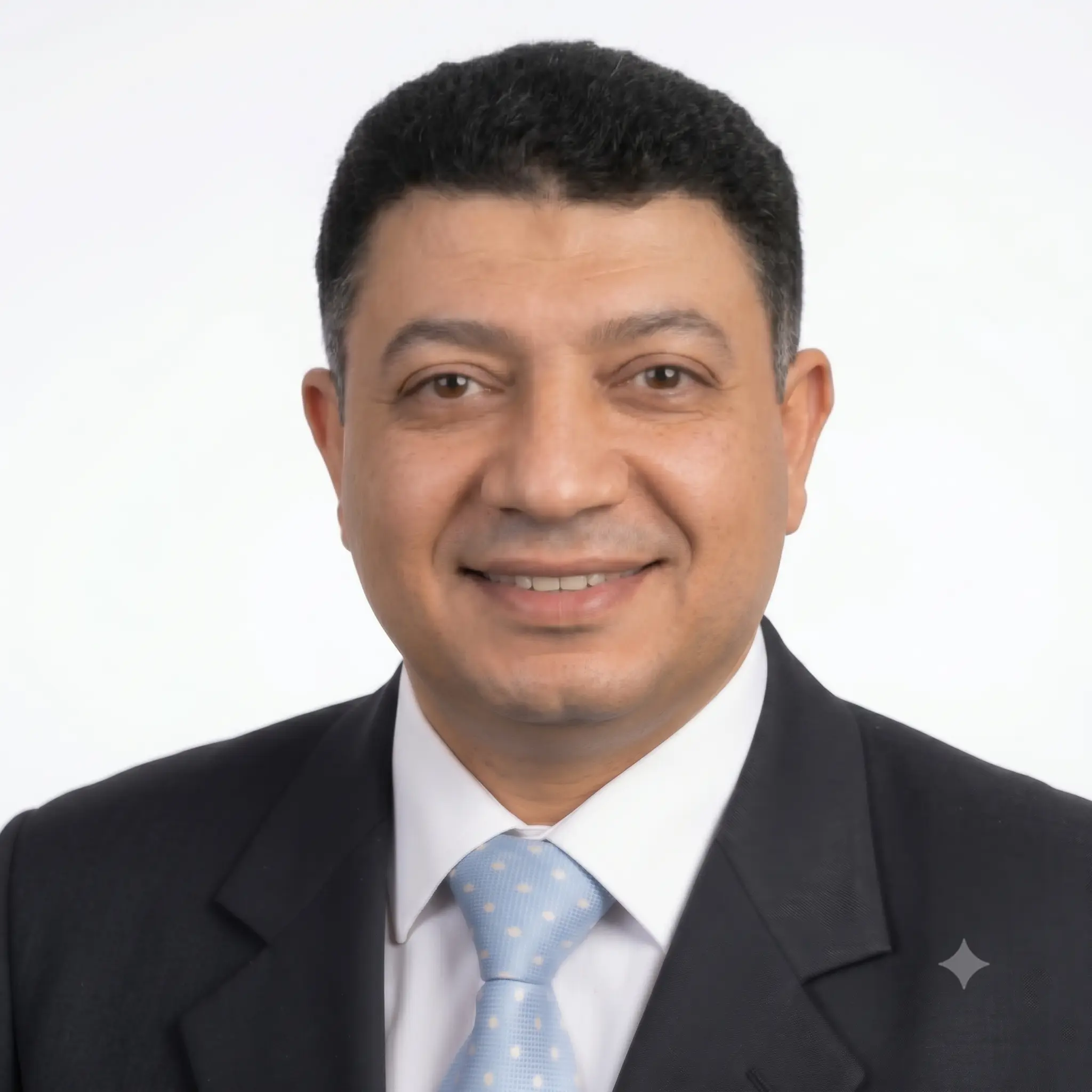
Ustadh Ahmed Mahmoud Abdulaziz is an experienced teacher of Arabic and the Holy Quran for native and non-native speakers. He holds a verified Ijazah in Hafs ‘an Asim and is certified in the foundational Tajweed texts Al-Jazariyyah and Tuhfat Al-Atfal. Drawing on his extensive background in traditional Quranic recitation and international pedagogy, he writes scholar-verified, accessible articles to help students worldwide master Tajweed rules and Arabic linguistics safely and accurately.