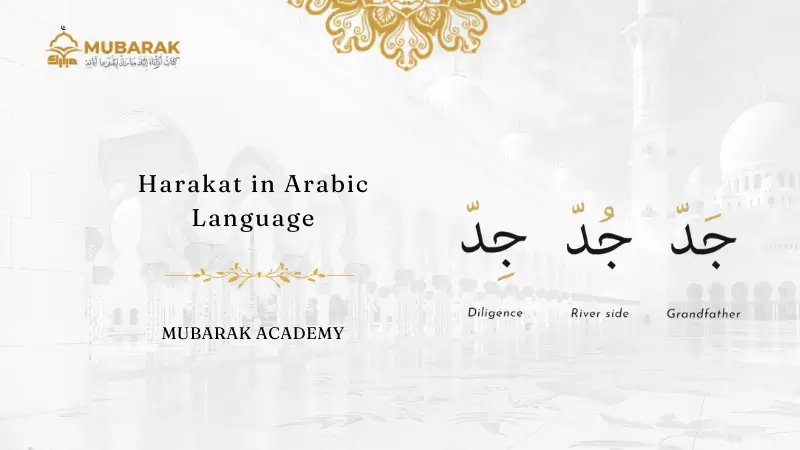
Harakat in Arabic language are one of the most important basics for anyone who wants to read Arabic correctly. These small marks may look simple, but they completely change how letters sound and how words are understood. For beginners, learning harakat is the first real step toward clear reading, correct pronunciation, and better confidence with Arabic words. Whether you are studying the Qur’an, learning Modern Standard Arabic, or practicing daily reading, understanding harakat in Arabic language makes the whole process much easier.
Harakat in the Arabic language are the essential short vowel diacritic marks written above or below letters to dictate correct pronunciation. Translating literally to “movements” (حَرَكَات) because they physically require you to move your lips and jaw, these symbols act as phonetic guides that tell the reader exactly how to articulate and vocalize each consonant.
What Are Harakat in Arabic Language?
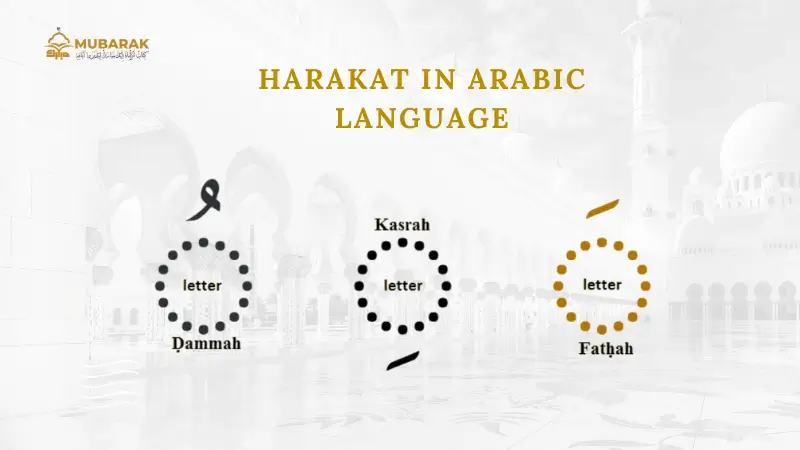
Harakat in Arabic language are small vowel marks written above or below Arabic letters to show the correct pronunciation of a word. Since many Arabic words are written without short vowels in everyday text (such as in newspapers, books, and websites), these marks help readers—especially learners—understand how each word is pronounced without having to guess from context.
In simple terms, harakat tell you whether a letter should be pronounced with a short “a”, “i”, or “u” sound. That is why they are especially important for beginners. A learner may know the shapes of the Arabic letters, but without harakat, reading words correctly can still be difficult. They act as the “phonetic foundation” of the language, preventing common mispronunciations and ensuring that texts like the Holy Qur’an are recited with absolute precision.
Without these marks, many Arabic words would look identical on paper. For example, a three-letter root word can have multiple entirely different meanings and grammatical roles depending on which Harakat are applied. Therefore, mastering these diacritics is the ultimate key to unlocking reading fluency and building a strong linguistic background from day one.
explore arabic course online
Tashkeel vs. Harakat: What Is the Difference?
Many beginners get confused between the terms Harakat and Tashkeel. While they are often used interchangeably in casual study, there is a subtle academic difference that every serious learner should know:
- Harakat (الحركات): Specifically refers to the three primary short vowels: Fatha (for the “a” sound), Kasra (for the “i” sound), and Damma (for the “u” sound). These are the active movements of the mouth.
- Tashkeel (التشكيل): A broader term that encompasses the entire system of Arabic diacritics. This includes the three primary Harakat, plus other non-vowel marks like the Sukun (the mark of silence), the Shadda (consonant doubling), and the Tanween (the double-vowel “n” sound).
Learn Quranic Arabic Language Course From Absolute Beginner to Advanced
Importance of Harakat in Arabic Reading & Pronunciation:
Harakat are important because they make Arabic easier to read and pronounce correctly. They guide the reader, reduce mistakes, and help beginners understand words more clearly.
- Show the correct pronunciation of Arabic words
- Help beginners read with more confidence
- Clarify short vowel sounds such as a, i, and u
- Reduce reading mistakes, especially in similar-looking words
- Improve Arabic pronunciation from the early stages of learning
- Support a better understanding of word meanings
- Make reading the Qur’an easier and more accurate
- Help learners connect letters with their correct sounds
- Build stronger reading fluency over time
- Make Arabic learning clearer in textbooks, lessons, and dictionaries
In short, Harakat makes Arabic more accessible to learners by turning written letters into clear, understandable sounds.
Explore: Best Place to Learn Arabic Online
Types of Harakat in Arabic Language with Examples:
| Symbol | Name (Arabic) | Phonetic Sound Guide | Arabic Example | Transliteration & Meaning |
|---|---|---|---|---|
| ـَ | Fatha (فَتْحَة) | Short “a” (like “u” in cut) | كَتَبَ | ka-ta-ba (He wrote) |
| ـِ | Kasra (كَسْرَة) | Short “i” (like “i” in pin) | شَرِبَ | sha-ri-ba (He drank) |
| ـُ | Damma (ضَمَّة) | Short “u” (like “oo” in foot) | كُتُبٌ | ku-tub (Books) |
| ـْ | Sukun (سُكُون) | No vowel sound (Silent stop) | مِنْ | min (From) |
| ـّ | Shadda (شَدَّة) | Doubled consonant sound | مُدَرِّس | mu-dar-ris (Teacher) |
| ـً | Tanween Fath (تَنْوِين فَتْح) | Double “a” ending in “n” | كِتَابًا | ki-tā-ban (Accusative case) |
| ـٍ | Tanween Kasr (تَنْوِين كَسْر) | Double “i” ending in “n” | كِتَابٍ | ki-tā-bin (Genitive case) |
| ـٌ | Tanween Damm (تَنْوِين ضَمّ) | Double “u” ending in “n” | كِتَابٌ | ki-tā-bun (Nominative case) |
To understand the types of harakat in Arabic language, it is important to know that these marks are not just optional pronunciation guides; they are the foundational framework of Arabic phonology and grammar. These marks guide your tongue, represent short vowel sounds, dictate grammatical cases (I’rab), and can completely transform a word’s meaning. For anyone beginning to read Arabic, mastering these symbols is an essential, non-negotiable step.
Below is an in-depth, linguistically accurate guide to the 8 core types of Harakat and Tashkeel, complete with physiological pronunciation tips, common mistakes to avoid, and practical examples.
1. The Three Short Vowels (الحركات القصيرة)
These are the primary “movements” (Harakat) that give Arabic consonant letters their basic vocalic sounds. In Arabic phonetics, they are exactly half the length of their corresponding long vowels (Alif, Waw, Ya). Mastering the precise duration of these short vowels is key to preventing major pronunciation and grammatical errors.
A. Fatha ( ـَ ) — The Open Vowel
Fatha is represented by a small diagonal stroke written above a letter. Physically, when you pronounce a letter with a Fatha, you open your mouth vertically with a neutral jaw position.
- The Sound: It produces a short, clean “a” sound, similar to the “u” in the English word “cut” or the “a” in “run”.
- Common Mistake: Many Western learners stretch the Fatha too long, turning it into the long vowel Alif (ا). For example, pronouncing بَ as “baa” instead of a quick “ba”. Keep it brief—it should take only one beat of time.
- Linguistic Role: In Arabic grammar (I’rab), the Fatha is the primary sign of the accusative case (Mansoub), often appearing at the end of direct objects.
Examples:
- بَ (ba) – Pronounced quickly like the beginning of “bun”.
- كَتَبَ (ka-ta-ba) – Meaning “He wrote” (three consecutive, quick Fatha sounds).
- شَجَرَة (sha-ja-rah) – Meaning “A tree”.
B. Kasra ( ـِ ) — The Lowered Vowel
Kasra is a small diagonal stroke written below a letter. To pronounce it correctly, you slightly lower your jaw and pull the corners of your mouth back, mimicking a gentle smile.
- The Sound: It produces a short, crisp “i” or “e” sound, very similar to the “i” in the English word “pin” or the “e” in “bet”.
- Common Mistake: Be careful not to stretch the Kasra into a long “ee” sound (Ya – ي). Pronouncing بِ as “bee” instead of “bi” is a very common beginner error.
- Linguistic Role: In grammar, the Kasra is the primary sign of the genitive case (Majroor), which typically appears after prepositions (like Fi, Min, Ela).
Examples:
- بِ (bi) – Pronounced quickly like the beginning of “bit”.
- شَرِبَ (sha-ri-ba) – Meaning “He drank” (notice the middle letter “Ra” is lowered).
- عِلْم (‘ilm) – Meaning “Knowledge”.
C. Damma ( ـُ ) — The Rounded Vowel
Damma is a small comma-shaped mark placed above a letter. To pronounce it, you must firmly round and purse your lips forward into an “O” shape.
- The Sound: It produces a short, rounded “u” or “o” sound, similar to the “oo” in the English word “foot” or the “u” in “put”.
- Common Mistake: Avoid over-rounding or stretching it into a long “oo” sound (Waw – و). The sound must be released quickly.
- Linguistic Role: In grammar, the Damma is the primary sign of the nominative case (Marfoo’), representing the default state of nouns, subjects, and predicates.
Examples:
- بُ (bu) – Pronounced quickly like the beginning of “bull”.
- كُتُبٌ (ku-tub) – Meaning “Books” (plural of Kitab).
- أُخْت (ukht) – Meaning “Sister”.
Throat Letters in Arabic Complete Guide for Beginners
2. Sukun ( ـْ ): The Silent / Resting Mark
Sukun is a small circular mark placed above a letter. Unlike the three Harakat, the Sukun is static; it represents the **complete absence of a vowel sound** on that specific consonant.
- How to Pronounce: When you hit a letter with a Sukun, your voice rests flatly on that letter’s natural exit point (Makhraj) in your mouth or throat without moving into an “a”, “i”, or “u” sound. It acts as a syllable connector.
- Importance for Beginners: Sukun is essential because it shows you exactly where a syllable ends. In Arabic, a word can never begin with a Sukun; it must always be preceded by a vowel-bearing letter to kickstart the pronunciation.
Examples:
- مِنْ (min) – The “Noon” has a Sukun, so your tongue stops flatly at the roof of your mouth on the “n” sound. Meaning “From”.
- بَيْت (bayt) – The “Ya” has a Sukun, which blends with the Fatha of the “Ba” to create the smooth “ay” sound. Meaning “House”.
- يَكْتُبُ (yak-tu-bu) – The “Kaf” has a Sukun, creating a crisp stop before transition. Meaning “He writes”.
New Arabic Course for English Speaking Students Guide
3. Shadda ( ـّ ): The Double Consonant Mark
Shadda is a distinct W-shaped symbol written above a letter. It indicates **gemination**, which is the doubling or heavy emphasis of a consonant sound.
- The Mechanics: A letter with a Shadda is actually **two letters merged into one**. The first letter is silent (carrying a hidden Sukun) and the second letter carries a vowel (Fatha, Kasra, or Damma). When reading, you must hold the consonant sound in your mouth for an extra beat before releasing it with the vowel.
- How it combines with Harakat:
- If combined with Fatha or Damma, the vowel mark is written *above* the Shadda (ـَّ / ـُّ).
- If combined with Kasra, the Kasra can be written *below* the letter, or optionally *directly beneath* the Shadda mark (ـِّ) but still above the letter.
Examples:
- مُدَرِّس (mu-dar-ris) – The “Ra” is doubled. You pause briefly on the first “r” (dar) and then pronounce the second with a Kasra (ris). Meaning “Teacher”.
- إِنَّ (in-na) – The “Noon” is held with nasal emphasis (Ghunnah) before releasing into the Fatha. Meaning “Indeed”.
- قَطَّعَ (qat-ta-‘a) – The “Ta” is heavily emphasized. Meaning “To cut into pieces” (distinct from Qata’a – to cut).
Learn Arabic in English Step by Step for Complete Beginners
4. Tanween (التنوين): The Grammatical “N” Sound Marks
Tanween (nunation) is the doubling of the short vowel marks at the very end of Arabic nouns. It indicates that the noun is **indefinite** (meaning “a” or “an” in English, like “a book” vs “the book”). When you see a Tanween, you pronounce a clear but unwritten **”n”** sound (Noon Sakinah) at the end of the word.
A. Tanween Fath / Fathatan ( ـً )
This consists of two Fathas written above the last letter of a word. In most cases, Tanween Fath requires an **extra supporting Alif (ا)** at the end of the word (which is written but completely silent), unless the word ends with a Taa Marbutah (ة) or a Hamzah (ء).
- The Sound: It adds an “an” sound to the end of the word, sounding like the “un” in the English word “fun” or “an” in “man”.
Example:
- كِتَابًا (ki-ta-ban) – Notice the silent supporting Alif at the end. Meaning “A book” (accusative case).
- شَجَرَةً (sha-ja-ra-tan) – Ends with Taa Marbutah, so no supporting Alif is needed.
Best Way to Learn Quranic Arabic for Beginners Step by Step
B. Tanween Kasr / Kasratan ( ـٍ )
Two Kasra lines written directly beneath the final letter of a word. No supporting letters are ever needed for Tanween Kasr.
- The Sound: It adds an “in” sound to the end of the word, sounding exactly like the English word “in” or “inn”.
Example:
- كِتَابٍ (ki-ta-bin) – Meaning “A book” (genitive case).
- بَيْتٍ (bay-tin) – Meaning “A house”.
C. Tanween Damm / Dammatan ( ـٌ )
Two Dammas written above the final letter of a word. Depending on the Arabic font, it may look like two small commas side-by-side, or a single Damma with a tiny loop/tail curved around it.
- The Sound: It adds an “un” sound to the end of the word, sounding similar to the “un” in “bullion” or the “on” in “button”.
Example:
- كِتَابٌ (ki-ta-bun) – This is the default nominative form. Meaning “A book”.
- وَلَدٌ (wa-la-dun) – Meaning “A boy”.
At Mubarak Academy, we make learning the Arabic harakat language easier with clear lessons, simple practice, and step-by-step guidance for beginners.
How to Practice Harakat for Better Arabic Pronunciation?
The best way to master Harakat is through regular reading and listening practice. Beginners should start by reading simple Arabic words that include basic Harakat such as Fatha, Kasra, and Damma. Practicing short words every day and repeating sounds aloud (like بَ، بِ، بُ) helps learners train their ears and tongues to pronounce Arabic letters correctly.
At Mubarak Academy, we help students practice Harakat through simple exercises, guided reading, and support from experienced Arabic teachers. Our lessons are designed to help beginners improve their pronunciation step by step and gain confidence while reading Arabic.
Ready to improve your Arabic pronunciation? Join Our Arabic Language Course
Conclusion:
Harakat in Arabic language are essential for correct reading, clear pronunciation, and better understanding of Arabic words. They may be small marks, but they have a big role in learning. Once you understand them and practice them regularly, Arabic becomes much easier to read and speak.
FAQs About Harakat in Arabic Language
How do Arabic harakat change the meaning of words?
Harakat fundamentally alter word meanings by shifting grammatical structures, tenses, or semantic definitions. Because Arabic relies on a root-and-pattern system, changing a single short vowel can transform an active verb into a passive one, convert a subject into an object, or completely change the core definition of otherwise identical consonants.
What are Arabic harakat?
Arabic harakat (diacritics or vowel marks) are highly specialized phonetic symbols written directly above or below Arabic letters. They act as short vowels and pronunciation guides, instructing the reader on how to vocalize consonants smoothly, merge sounds, or implement brief, deliberate pauses in speech.
How many harakat are there in Arabic?
Arabic features three primary short vowel marks: Fatha (a), Kasra (i), and Damma (u). Additionally, the system includes other vital orthographic markers: Sukun (representing a silent consonant), Shadda (indicating a doubled consonant), and Tanween (doubled vowel marks at the ends of nouns producing an “n” sound).
Why are Arabic harakat important?
Harakat are critical because they ensure precise pronunciation, eliminate linguistic ambiguity, and prevent reading errors, particularly for non-native speakers and Quranic reciters. Without these phonetic guides, reading classical Arabic text accurately requires an exceptionally advanced, near-native understanding of complex grammatical contexts and vocabulary.
What are Arabic harakat names?
The primary vowel marks are named Fatha (diagonal line above), Kasra (diagonal line below), and Damma (small loop above). The auxiliary marks are called Sukun (small circle), Shadda (w-shaped symbol), and Tanween (which includes Double Fatha, Double Kasra, and Double Damma to mark indefiniteness).
Can I learn Arabic harakat online?
Yes, numerous digital resources make learning harakat highly accessible. You can utilize interactive language learning applications, dedicated online academy courses, and specialized video tutorials. These digital platforms offer audio pronunciations and reading exercises that help you master short vowels and phonetic blending in a highly structured manner.
Can I type Arabic with harakat?
Yes, you can easily type Arabic with full diacritics. Modern mobile and desktop keyboards feature built-in shortcuts—usually accessed by long-pressing specific letters or using the shift key with standard Arabic keyboard layouts—allowing you to insert Fatha, Kasra, Damma, and other phonetic marks precisely over your text.
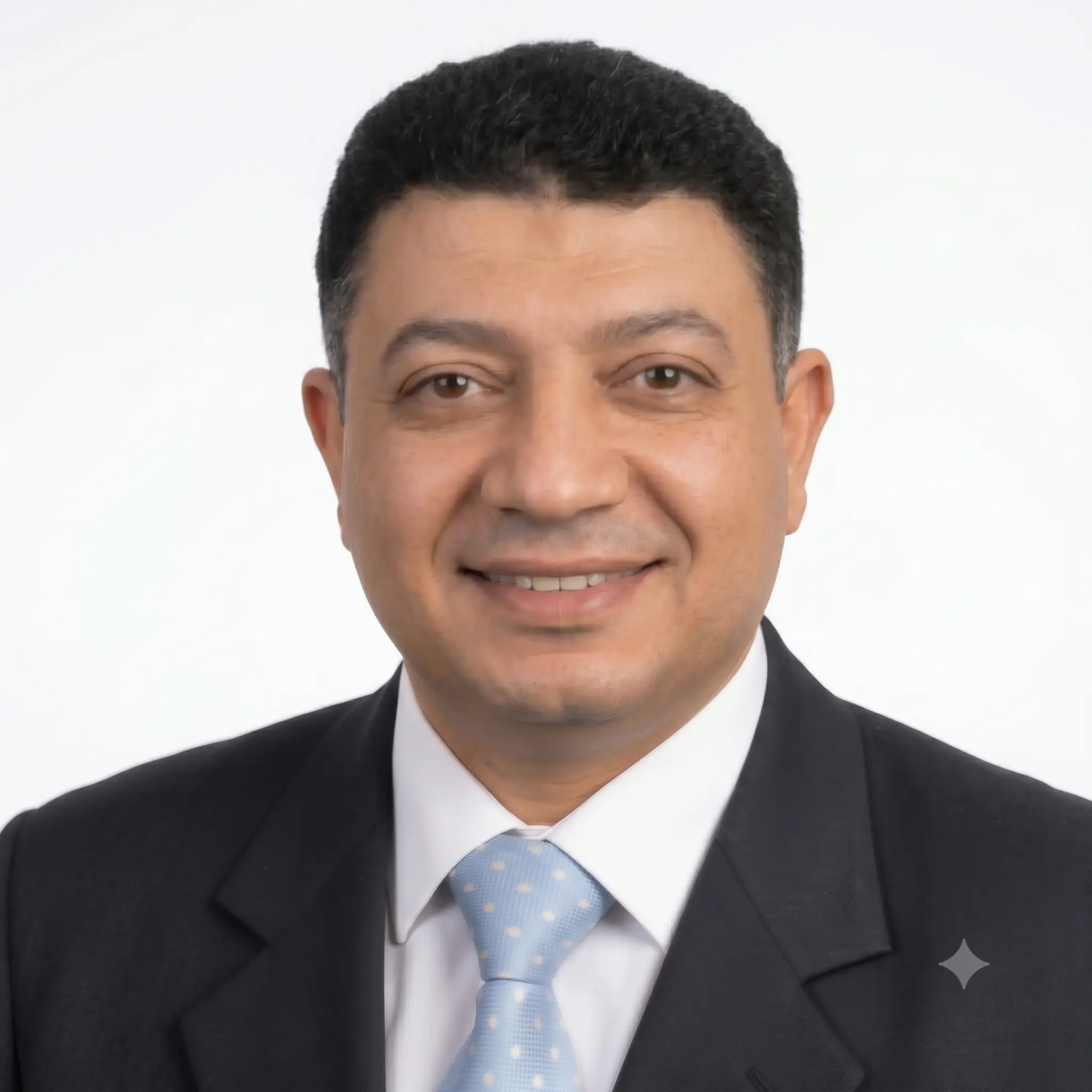
Ustadh Ahmed Mahmoud Abdulaziz is an experienced teacher of Arabic and the Holy Quran for native and non-native speakers. He holds a verified Ijazah in Hafs ‘an Asim and is certified in the foundational Tajweed texts Al-Jazariyyah and Tuhfat Al-Atfal. Drawing on his extensive background in traditional Quranic recitation and international pedagogy, he writes scholar-verified, accessible articles to help students worldwide master Tajweed rules and Arabic linguistics safely and accurately.