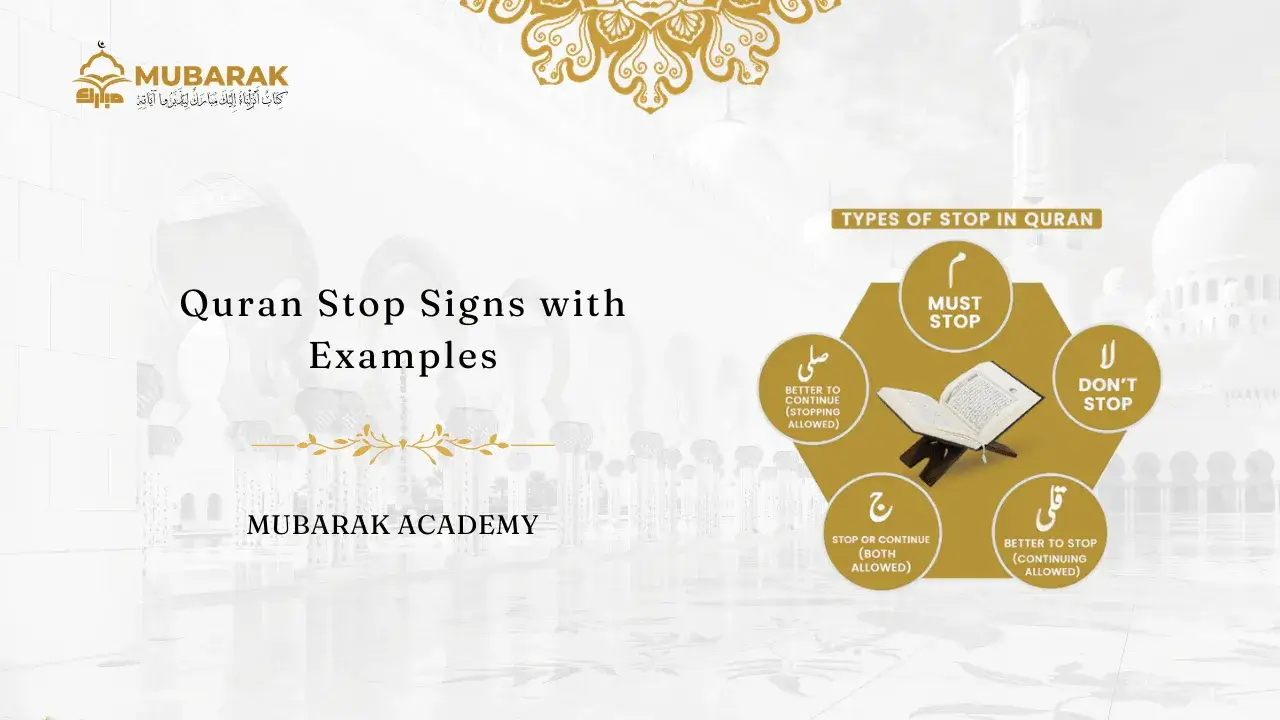
Quran Stop Signs (Waqf): Symbols, Rules, and Examples
Quran stop signs, known in Tajweed as Waqf (الوقف), are symbols placed in the Mushaf to guide reciters on where to pause, stop, or continue during recitation. Scholars added these markers to protect the meaning of the Quranic text. There are ten primary Waqf symbols, ranging from the mandatory stop (م — Waqf Lāzim) to […]
Ream More
Online Tajweed Course For Sisters
With the endless responsibilities of women, from house chores to caring for their kids and their requirements, they don’t have time for themselves to recite or memorize the Quran somewhere, unlike men, who are lucky to have classes in the mosque or go to academies for the Quran. However, online Tajweed course for sisters offer […]
Ream More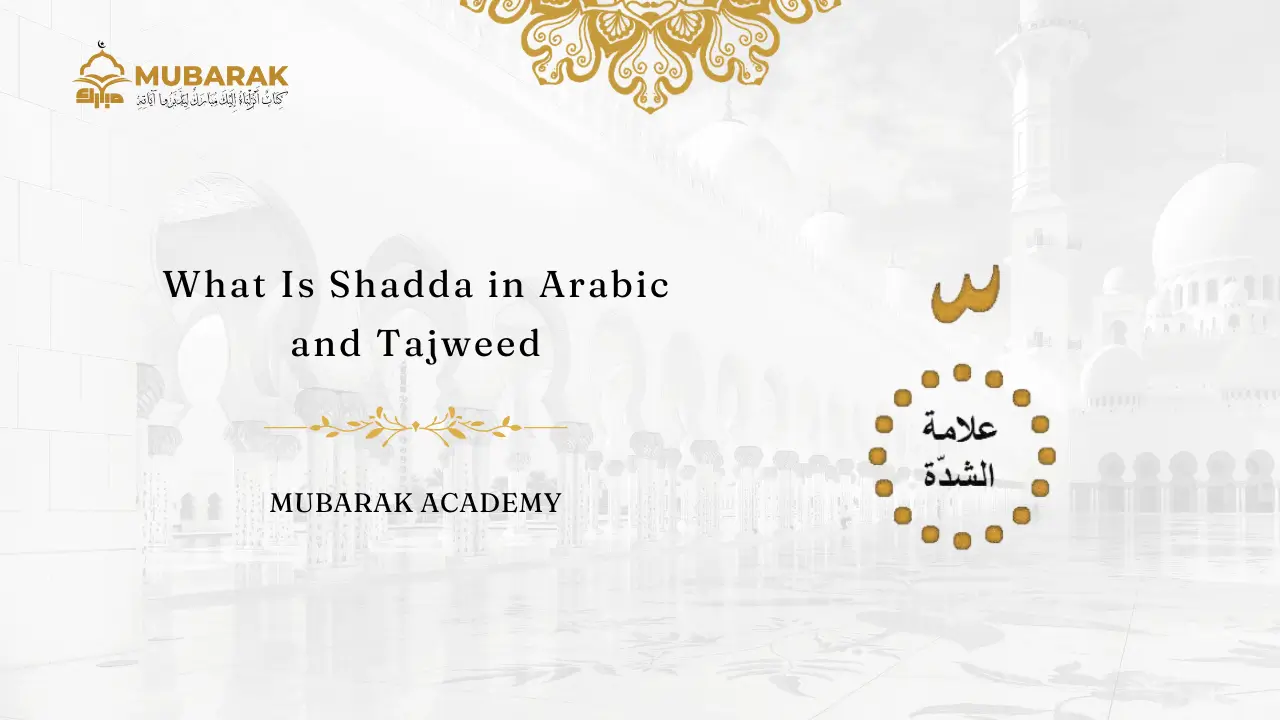
What Is Shadda in Arabic And in Tajweed? The Complete Guide to Pronouncing It Correctly
Shadda (الشَّدَّة) is a small diacritical mark written above an Arabic letter that doubles its sound — turning one letter into two in pronunciation. In Tajweed, ignoring it is not a minor slip; it can alter the meaning of a Quranic word entirely. At Mubarak Academy, our teachers correct this mistake more than almost any […]
Ream More
The 8 Importance of Tajweed in Quran: Rules, Benefits, and Why Every Muslim Needs It
The Prophet Muhammad (peace be upon him) received the Quran through Angel Jibreel (peace be upon him) in a precise, defined oral form — and he transmitted it to his Companions in exactly the same way. That chain of precise oral transmission, verified across generations, is what Tajweed protects. Every rule in Tajweed traces back […]
Ream More
How to Recite the Quran Properly with Mubarak Academy
If you’ve ever wanted to improve your Qur’an recitation but felt unsure about where to begin, you’re definitely not alone, as many people have felt the same. Reciting the Qur’an properly isn’t just about reading the words, as it involves learning the Arabic letters, knowing exactly where each sound comes from, applying Tajweed the right […]
Ream More
Discover How Long Does It Take to Learn Tajweed
Today, with the rise of online learning, mastering Tajweed has become easier and more accessible than ever. In this blog, we’ll explore the benefits of learning Tajweed online, who our courses are for, the Tajweed rules we teach, how long does it take to learn Tajweed, and how our Tajweed ul Quran Online Academy can […]
Ream More
How To Learn Quran with Tajweed at Home
Learning the Qur’an with Tajweed is one of the most beautiful journeys a Muslim can take. However, busy schedules, long commutes, and limited access to qualified teachers lead many learners to study from home without fully considering the challenges of learning alone. But don’t worry, this step-by-step guide will show you how to learn Quran […]
Ream More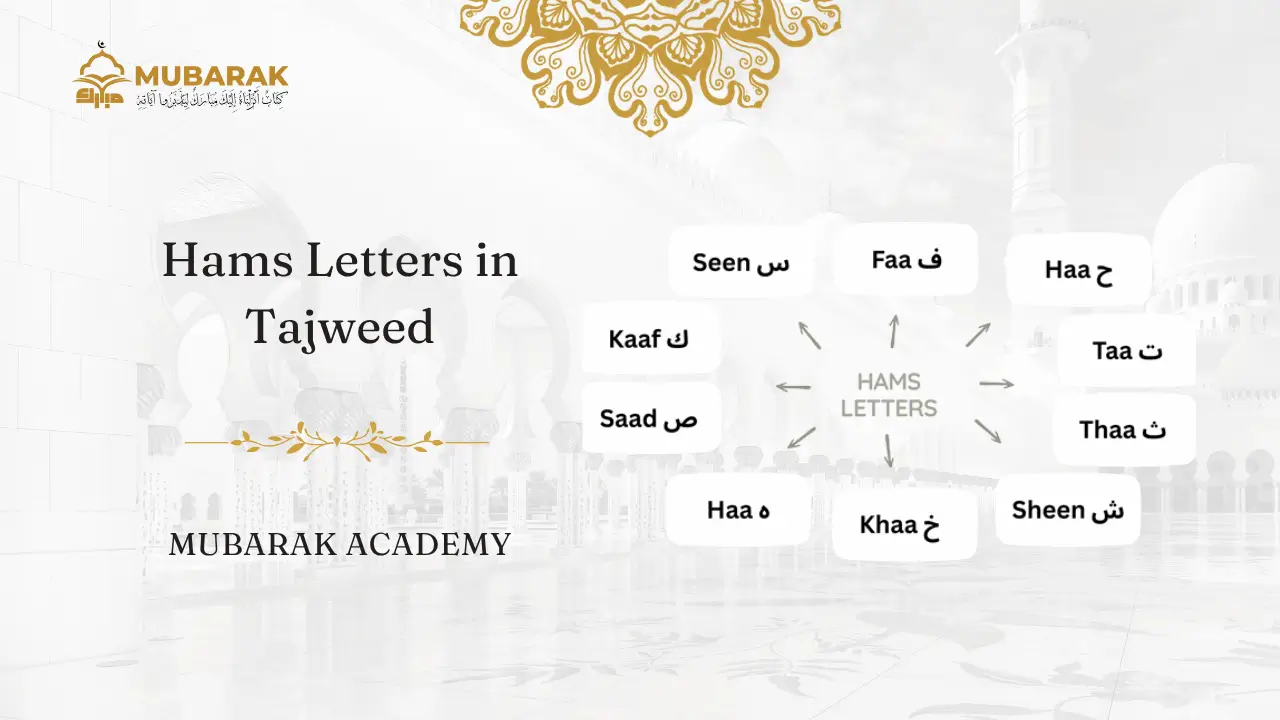
Your Guide to the 10 Hams Letters in Tajweed with Examples
Hams is a crucial aspect of Tajweed rules that impacts the articulation of Arabic letters to enhance the pronunciation of the Quranic text during recitation. Mastering it helps reciters pronounce the Qur’an clearly and beautifully. In this article, we’ll explore the meaning of Hams in Tajweed, list the Hams letters in Tajweed with Quranic examples, […]
Ream More
Discover Major and Minor Mistakes in Tajweed to Avoid Them
Perfecting Quranic recitation needs a good grasp of Tajweed rules, plus knowing the major and minor mistakes in Tajweed (known as Lahn), which prevent you from falling into serious mistakes that can change the meaning of Allah’s words. By learning these types of mistakes, you can recite the Qur’an accurately, reflect proper reverence, and preserve […]
Ream More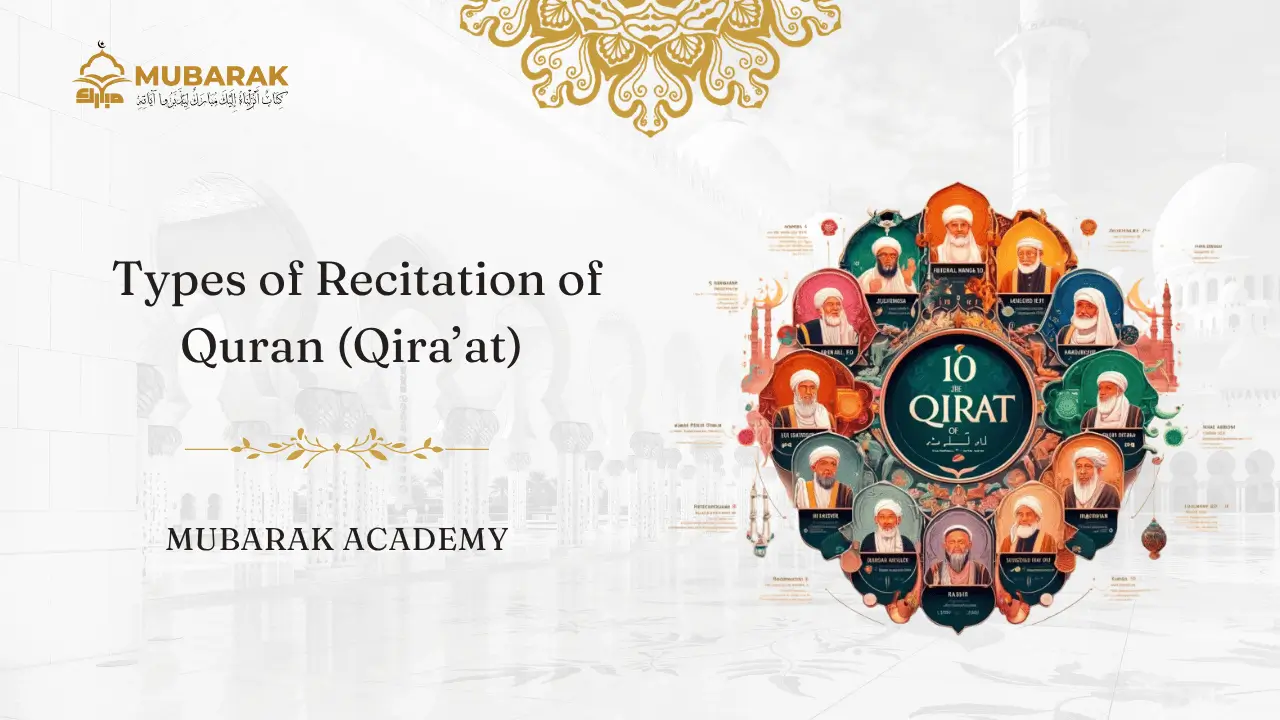
7 Different Types of Recitation of the Quran and Their Transmitters
The Quran is recited in more than one authentic way, and these Different Types of Recitation of Quran are known as the qira’at. There are seven canonical qira’at, each named after a leading imam who mastered it and preserved through named transmitters whose chains reach back to the Prophet Muhammad ﷺ. These variations affect pronunciation, […]
Ream More