
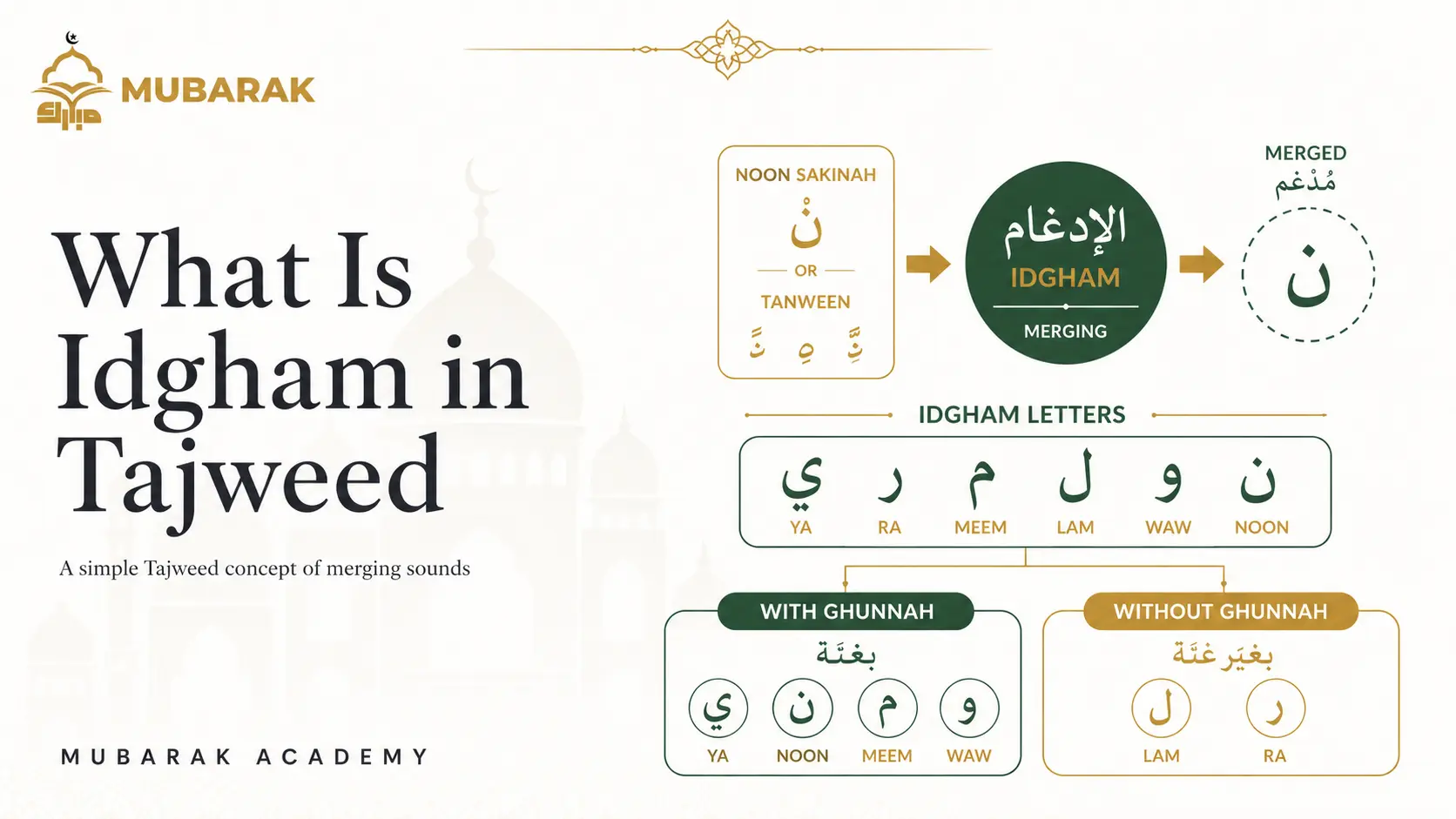
Idgham in Tajweed: Types, Rules, Letters, and Examples from the Quran
Idgham (الإدغام) is one of the four rules of Noon Sakinah and Tanween. It applies when a Noon Sakinah (نْ) or Tanween (ـًـٍـٌ) is followed by any of the six Idgham letters, merging the Noon into the following letter so only one blended sound is produced. Idgham divides into two types: one with Ghunna and […]
Ream More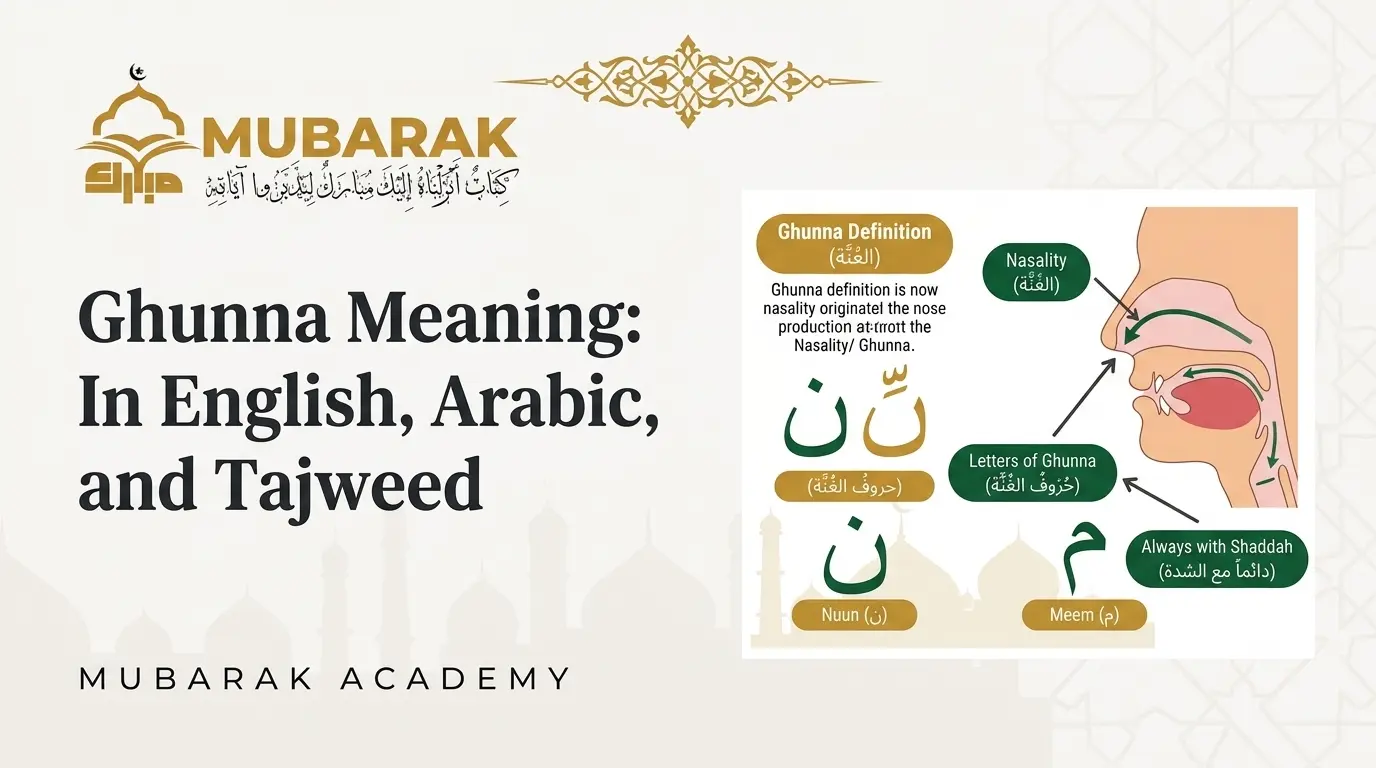
Ghunna in Tajweed: Meaning, Rules, Levels, and Quranic Examples
Ghunna in Tajweed(غُنَّة) is the nasal resonance, a soft humming sound, produced from the nasal passage (al-Khayshoom) when reciting Noon (ن) or Meem (م) in specific Tajweed positions. It belongs exclusively to these two letters and is produced independently of the tongue, lips, and throat, which is what makes it structurally unique among the properties […]
Ream More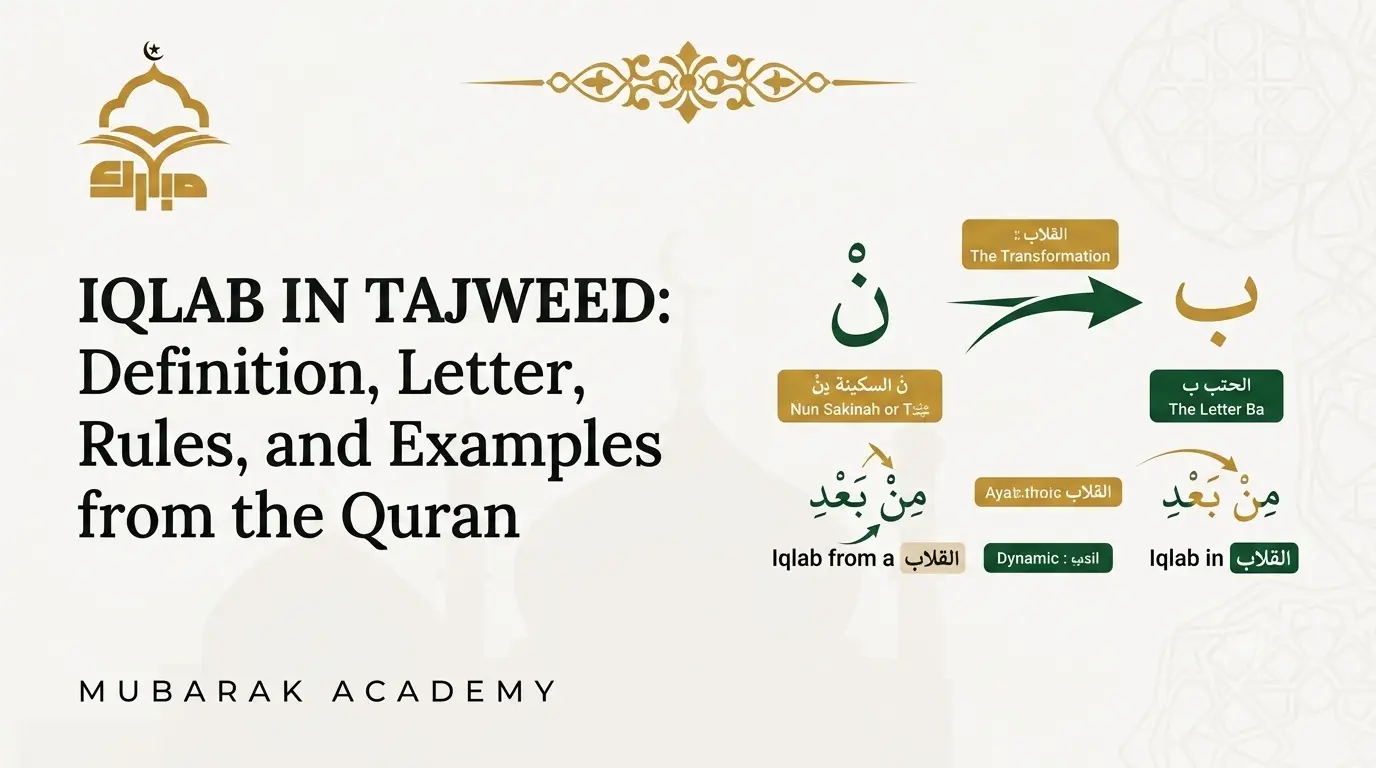
Iqlab in Tajweed: Definition, Letter, Rules, and Examples from the Quran
Iqlab (الإقلاب) is one of the four rules of Noon Sakinah and Tanween. It applies when a Noon Sakinah (نْ) or Tanween (ـًـٍـٌ) is followed by the letter Ba (ب), converting the Noon into a Meem-like sound with a full Ghunnah of two counts. Unlike the other three rules, the Noon is not hidden or […]
Ream More
What Is Tafseer and Its Importance?
The Qur’an is a guide for every Muslim, but understanding it isn’t always as simple as reading the words. Some verses are clear and easy to grasp, while others carry deeper meanings that need a bit more explanation. And that’s where Tafsir comes in. In this guide, you’ll discover what is tafseer and its importance, […]
Ream More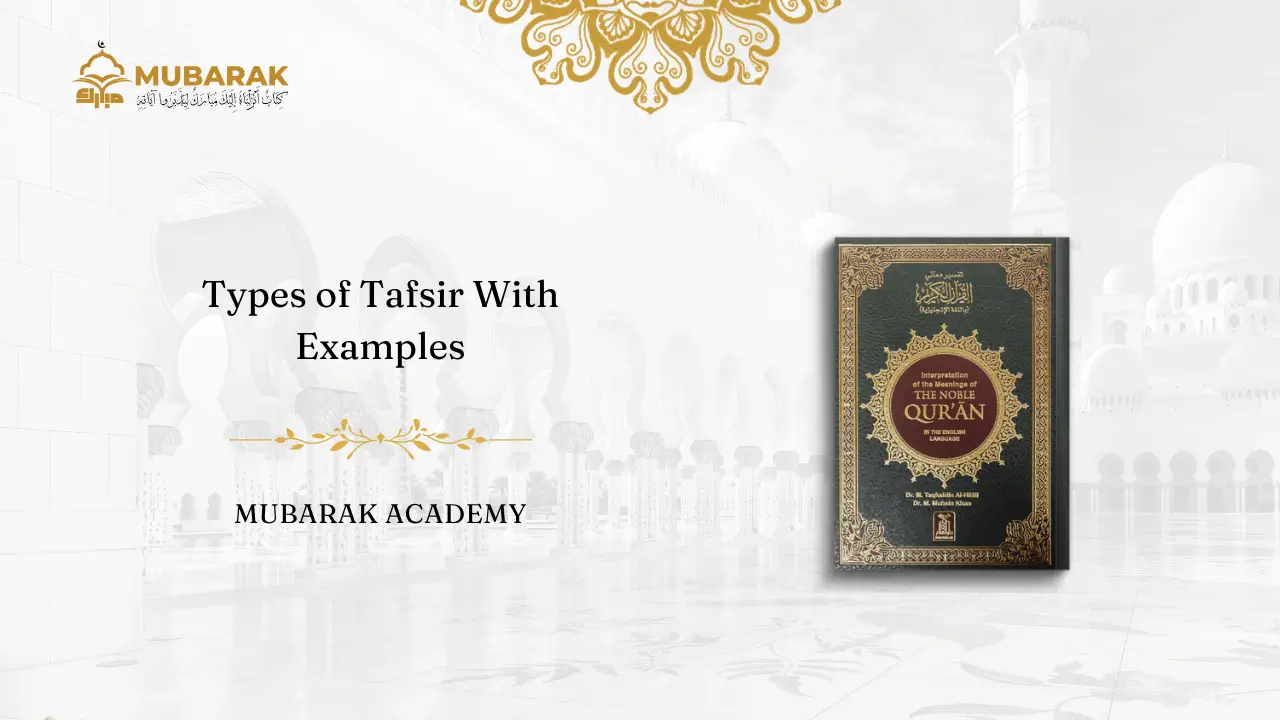
Types of Tafsir With Examples
Have you ever read a verse from the Qur’an and felt like there was a deeper meaning behind it? The Qur’an is not just a book to be read; it’s a book to be understood, reflected upon, and lived by. That’s where Tafsir comes in. It helps uncover the meanings, context, and wisdom behind the […]
Ream More
Learn with a Female Quran Teacher Online
Learning the Qur’an shouldn’t feel stressful or heavy; it should feel meaningful and uplifting. That’s why many families today prefer working with a female Quran teacher online, where the atmosphere is calm, supportive, and easy to follow. With flexible timings and lessons tailored to each student, learning becomes much more natural and comfortable. Step by […]
Ream More
Hamzatul Wasl and Hamzatul Qat: Rules, Differences, and Examples in Tajweed
Every student of the Quran encounters a moment of confusion: why does the hamza sound disappear in some words but remain firm in others? The answer lies in one of the most foundational distinctions in Tajweed — the difference between Hamzatul Wasl (همزة الوصل) and Hamzatul Qat’ (همزة القطع). Mastering this distinction is not optional […]
Ream More
Tafkheem and Tarqeeq in Tajweed
Proper pronunciation is one of the most important aspects of reciting the Quran. Tajweed rules help Muslims recite the Quran correctly, preserving the beauty and meaning of the words. Among the essential Tajweed rules are Tafkheem and Tarqeeq, which control whether certain letters are pronounced with a heavy or light sound. Understanding these rules helps […]
Ream More
Quran Recitation for Stress
If you’re searching for Quran recitation for stress, you’re not alone. Stress and anxiety can lead to overthinking, sadness, and anger, and many Muslims find that Qur’an recitation softens the heart by renewing Allah’s remembrance and restoring tranquility (Qur’an 13:28). This guide shares the best surahs for stress and anxiety and a simple routine to […]
Ream More
Best Surah to Recite Before Sleeping According to the Sunnah
If you are searching for the best surah to recite before sleeping, you are already taking a beautiful step toward strengthening your night routine. The Prophet ﷺ taught us specific verses and chapters that bring protection from Shaytan, peace of heart, and immense reward. Just a few minutes of recitation before bed can completely change […]
Ream More