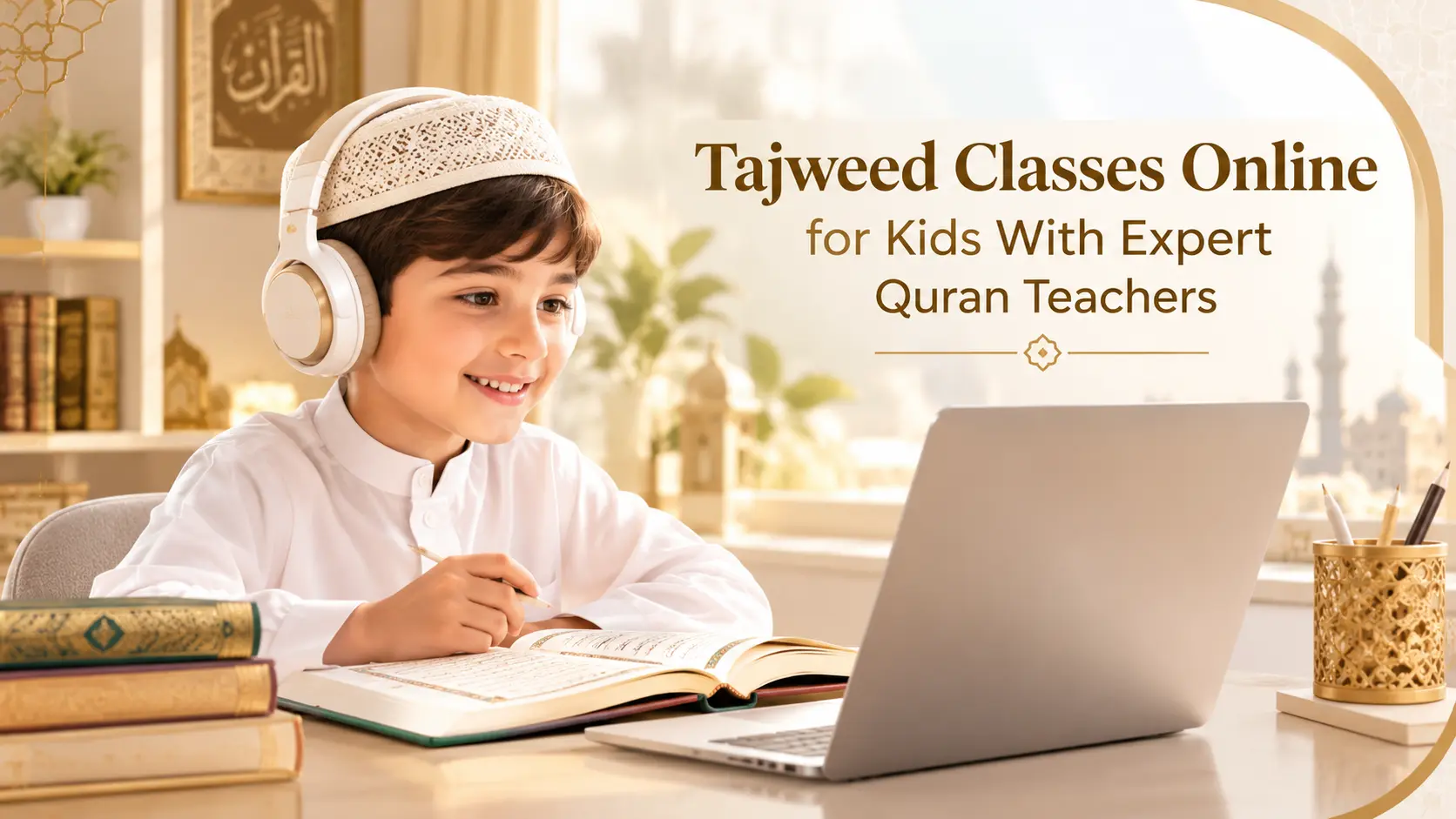
tajweed classes online for kids help children learn how to recite the Quran properly from the first day, through an online course. Young learners develop their pronunciation, confidence and love of the Quran in the comfort of their own homes with the right tutor. This guide walks you through the importance of early learning for your family, what children learn, how you know if a teacher is safe, and how you can anticipate schedules, fees, and advance.
Why Should Children Learn Tajweed at an Early Age?
Children develop proper pronunciation in early learning, and they don’t make pronunciation errors that will be more difficult to correct later. These habits are formed from an early age and children learn to be confident in reading the Quran online, too. Now the question is what’s the best teaching approach for young learners.
Practical Tajweed Recitation vs. Memorizing Rules: Which Method Works Best for Kids?
Practical recitation works best in tajweed classes online for kids: children listen, repeat, and get corrected live instead of memorizing rule names.
| Method | What the Child Does | Result |
|---|---|---|
| Practical recitation | Repeats verses after the teacher | Correct habits |
| Memorizing rules | Recalls rule names and definitions | Knowledge without fluency |
Tajweed rules for beginners are introduced only when the verse being read uses them. That raises another choice: private or group lessons.
How to Get Ijazah in Quran and Earn Your Sanad
Tajweed Classes Online for Kids: Private 1-on-1 Lessons vs. Small Group Classes?
Private one-on-one lessons suit most children because the teacher hears and corrects every mistake.
| Feature | 1 on 1 online tajweed tutor for kids | Small Group Classes |
|---|---|---|
| Correction | Every mistake | Shared among students |
| Pace | Set by your child | Set by the group |
| Best for | Beginners and shy learners | Confident readers who enjoy peers |
One-to-one Quran tutoring also lets the teacher adapt each lesson to your child’s mood and energy. Whichever format you pick, you should know what your child will study.
What Will Children Learn in an Online Tajweed Course? A Step-by-Step Curriculum
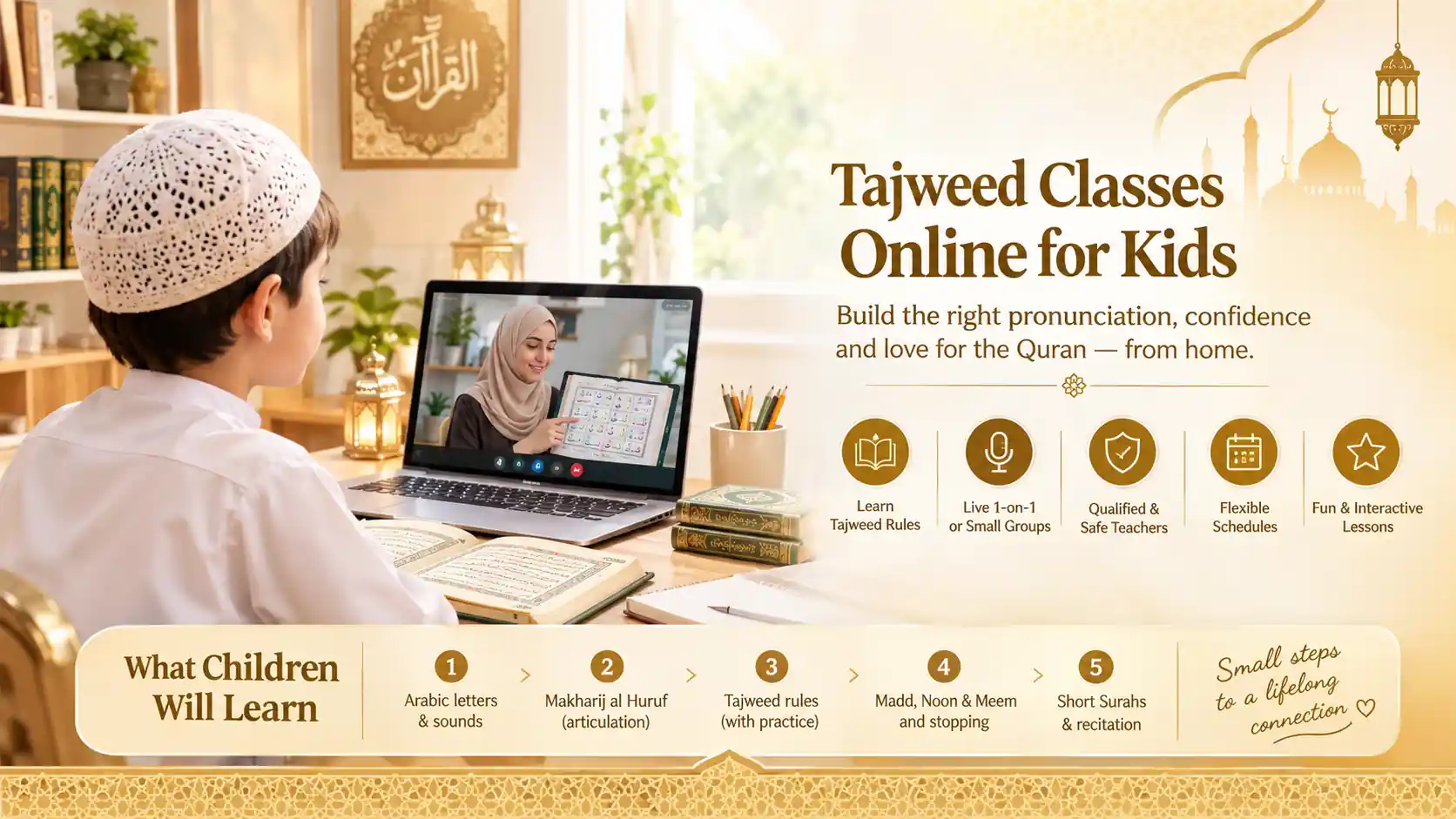
Classes for children online are structured in a precise manner: first letter sounds, followed by articulation, rules and then recitation.
- Arabic letters and sounds: The basic rules of reading are first.
- Makharij al Huruf :Children are taught the position of each letter and how it is sounded.
- Letter characteristics:The quality of each sound is practised.
- It’s Noon and Meem: These are used in the actual verse.
- Madd : Children identify the correct pronunciation of long vowels.
- Stopping and starting: They get the hang of where to stop.
Short surahs. Children learn to read Quran with proper pronunciation.
Easy Way to Learn to Read Quran Step by Step
How Do Online Tajweed Classes Make Learning Fun and Interactive for Kids?
Online tajweed classes for kids are kept short, peaceful and use visual method with praise for every improvement.
- Mushaf: colors indicate each rule of Tajweed.
- Audio practice: children repeat recitations between classes.
- Worksheets: PDFs to print for each lesson to reinforce and review.
- Goal setting: Small goals, high motivation.
- Feedback recorded: children listen to themselves.
Fun is important but safety and qualifications are more important.
How to Choose a Qualified and Safe Online Tajweed Teacher for Your Child?
Before enrolling in tajweed classes online for kids, check credentials, watch a trial class, and stay nearby for the first lessons.
- Check teacher’s Ijazah. Inquire about their experience and qualifications.
- Book a free trial. Observe the teacher’s behaviour towards your child.
- Verify live, 1:1 lessons on a familiar platform like Zoom.
- Select the appropriate gender. A female tajweed teacher for kids online is perfect for many girls.
- Request a tutor to teach tajweed online 1:1 with experience in teaching children.
- Ask for milestones every month.
There is also a lot of confusion about the necessity of learning Arabic prior to beginning.
How to Surah Al Mulk Memorize Step by Step
Can Non-Arabic-Speaking Children Learn Tajweed Online Effectively?
Yes. When the teacher begins the lesson with letter sounds and explains in English, children who don’t speak Arabic are able to do tajweed classes online for kids. Mubarak Academy teachers experience teaching the non-native speakers, so the pronunciation is taught patiently. Then many parents will ask – where is the Noorani Qaida?
What Is the Difference Between Noorani Qaida and Tajweed Classes for Kids?
Noorani Qaida teaches children to read Arabic letters and words; Tajweed teaches how to recite them correctly.
| Course | Focus | Starting Point |
|---|---|---|
| Noorani Qaida for kids online | Letters, vowels, and word reading | Complete beginners |
| Tajweed classes | Articulation and recitation rules | Children who can read simple words |
When Is a Child Ready for Tajweed Classes Online for Kids?
Once your child reads short Arabic words without sounding out every letter. Our Online Quran classes for kids include Noorani Qaida for children who are not there yet. Once readiness is clear, setup is simple.
What Do Children Need to Start Online Tajweed Lessons at Home?
The only thing required for Tajweed classes online for children is a laptop or tablet, a Mushaf, a quiet corner and the Zoom app.
- Run a test of the camera and microphone prior to class.
- Have a notebook to record errors.
- Use earphones if there is background noise.
Then, think of scheduling your time relative to the time zone.
Online Tajweed Class Schedules for Kids in the USA, UK, Canada, and Australia:
Families in the USA, UK, Canada, and Australia can book tajweed classes online for their kids after school or on weekends as classes are scheduled according to the time zone. The support team is available round the clock to help with rescheduling and technical problems. Once the plan is decided, cost comes into play.
10 Short Surahs to Learn Easily for Quran Memorization
How Much Do Online Tajweed Classes for Kids Cost?
Tajweed classes online for kids at Mubarak Academy use monthly packages based on weekly sessions, and the first trial class is free.
| Factor | Effect on Cost |
|---|---|
| Sessions per week | More sessions raise the monthly price |
| Lesson format | One-on-one costs more than group |
| Course level | Depends on the chosen package |
See current rates on the pricing page. Lessons work best when parents support practice, so here is how.
How Can Parents Help Children Practice Tajweed at Home?
Tajweed classes online for kids work best when a parent supports short daily practice instead of long, irregular sessions.
- Allow for 10 minutes to practice.
- Listen to the teacher’s audio together and replay it.
- Emphasize effort, not just accuracy.
- Have your child teach you one rule every week.
Even consistency determines the length of the journey.
How Long Does It Take for Children to Learn Tajweed Online?
Tajweed classes online for kids usually take several months of steady practice to reach basic Tajweed, depending on four factors.
| Factor | Faster | Slower |
|---|---|---|
| Starting level | Reads simple words | Knows few letters |
| Weekly sessions | More lessons | Fewer lessons |
| Home practice | Daily | Irregular |
| Age and focus | Longer attention span | Shorter attention span |
Why Choose Mubarak Academy for Online Tajweed Classes for Kids?
Mubarak Academy’s founder, Ustadh Ahmed Mahmoud Abdulaziz, holds an Ijazah in Hafs ‘an Asim, is certified in Tuhfat Al-Atfal, and personally reviews every teacher. Teachers hold Al-Azhar-accredited degrees or equivalent qualifications, with at least five years of teaching experience and over 80,000 teaching hours across the academy. Kids’ classes are live, one-on-one, and cover Noorani Qaida, Tajweed, and Hifz for ages 4 to 16. You can learn Quran recitation for children with tajweed online at home with our Tajweed classes online.
Learn Tajweed with Qualified Quran Teachers at Mubarak Academy:
Mubarak Academy provides live, one-on-one Quran lessons for children aged 4 to 16, helping young learners develop accurate pronunciation and apply Tajweed rules through guided practice. The academy’s founder, Ustadh Ahmed Mahmoud Abdulaziz, holds an Ijazah in Hafs ‘an Asim and is certified in Tuhfat Al-Atfal. He personally reviews teachers joining the academy. With more than 80,000 teaching hours across the academy, children can receive instruction tailored to their reading level, age, and learning pace. Parents can also explore Noorani Qaida, Quran memorization, and Tajweed lessons to find the right starting point for their child.
Ready to start? Book your child’s free trial class and meet a teacher today.
FAQs About Tajweed Classes Online for Kids:
At What Age Can Children Start Learning Tajweed Online?
Children can start learning Tajweed when they are able to understand the Arabic letters and can start to read simple words. Some academies provide the lessons of the Quran from the age of 4, activities are age-appropriate, repetition and short lessons are used, so that the pronunciation can be developed gradually.
Can Children Who Do Not Speak Arabic Learn Tajweed Online?
Absolutely, non-Arabic speaking children can learn Tajweed online with teachers who provide lessons in English. They are taught Arabic sound and points of articulation and basic reading ability, and taught to use the Tajweed rules by guided recitation and practice.
How Long Does It Take for a Child to Learn Tajweed?
Learning time is based on the child’s age, level, frequency of lessons and practice at home. Children can learn basic Tajweed in a few months with regular lessons, but practicing and applying the rules confidently and correctly needs to be continually revised.
What Do Children Need for Online Tajweed Classes?
Children should have a laptop or tablet, a stable internet connection, a working microphone and camera and a Mushaf. A quiet space for learning to focus and headphones and a notebook to help them focus during lessons and to support them in their regular practice.
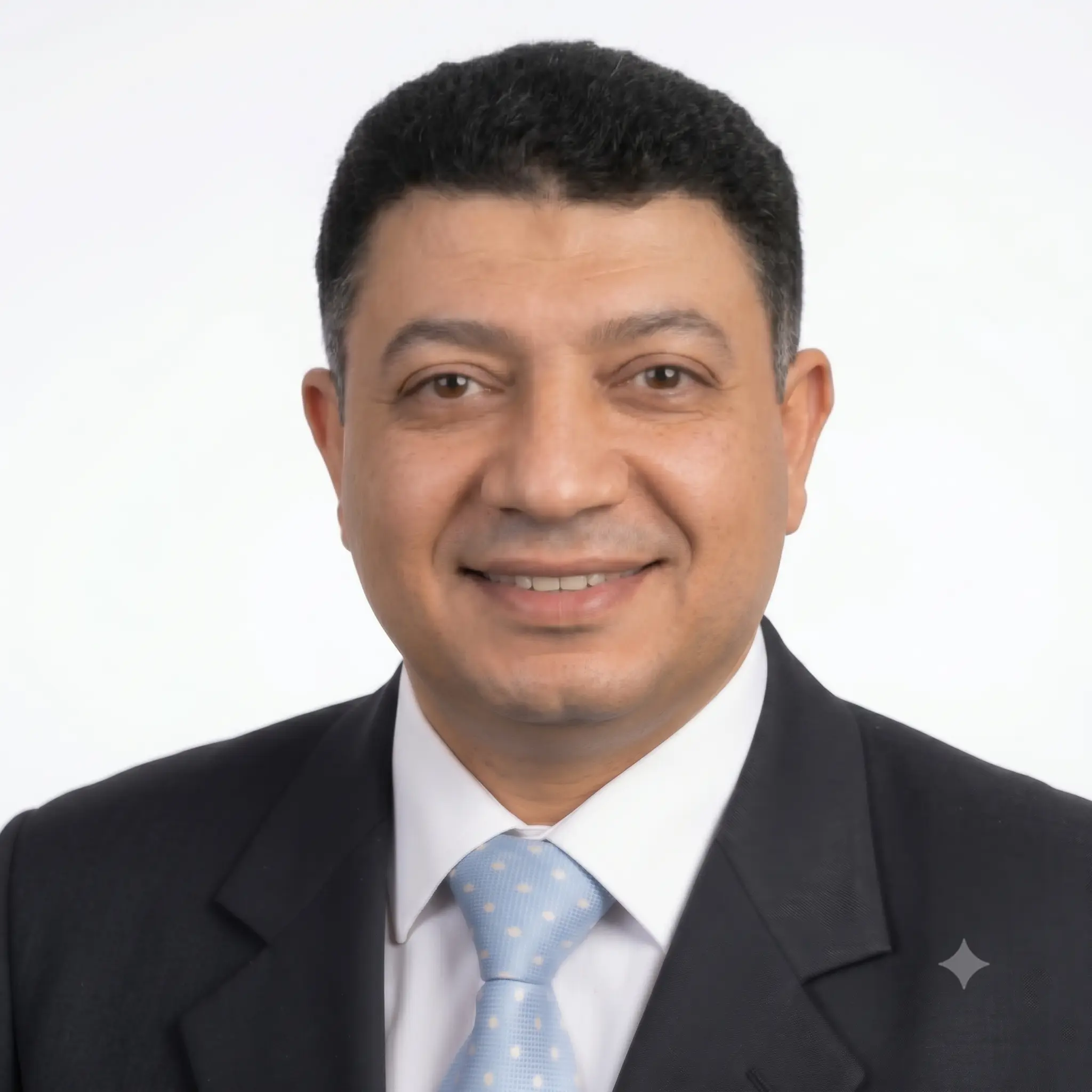
Ustadh Ahmed Mahmoud Abdulaziz is an experienced teacher of Arabic and the Holy Quran for native and non-native speakers. He holds a verified Ijazah in Hafs ‘an Asim and is certified in the foundational Tajweed texts Al-Jazariyyah and Tuhfat Al-Atfal. Drawing on his extensive background in traditional Quranic recitation and international pedagogy, he writes scholar-verified, accessible articles to help students worldwide master Tajweed rules and Arabic linguistics safely and accurately.