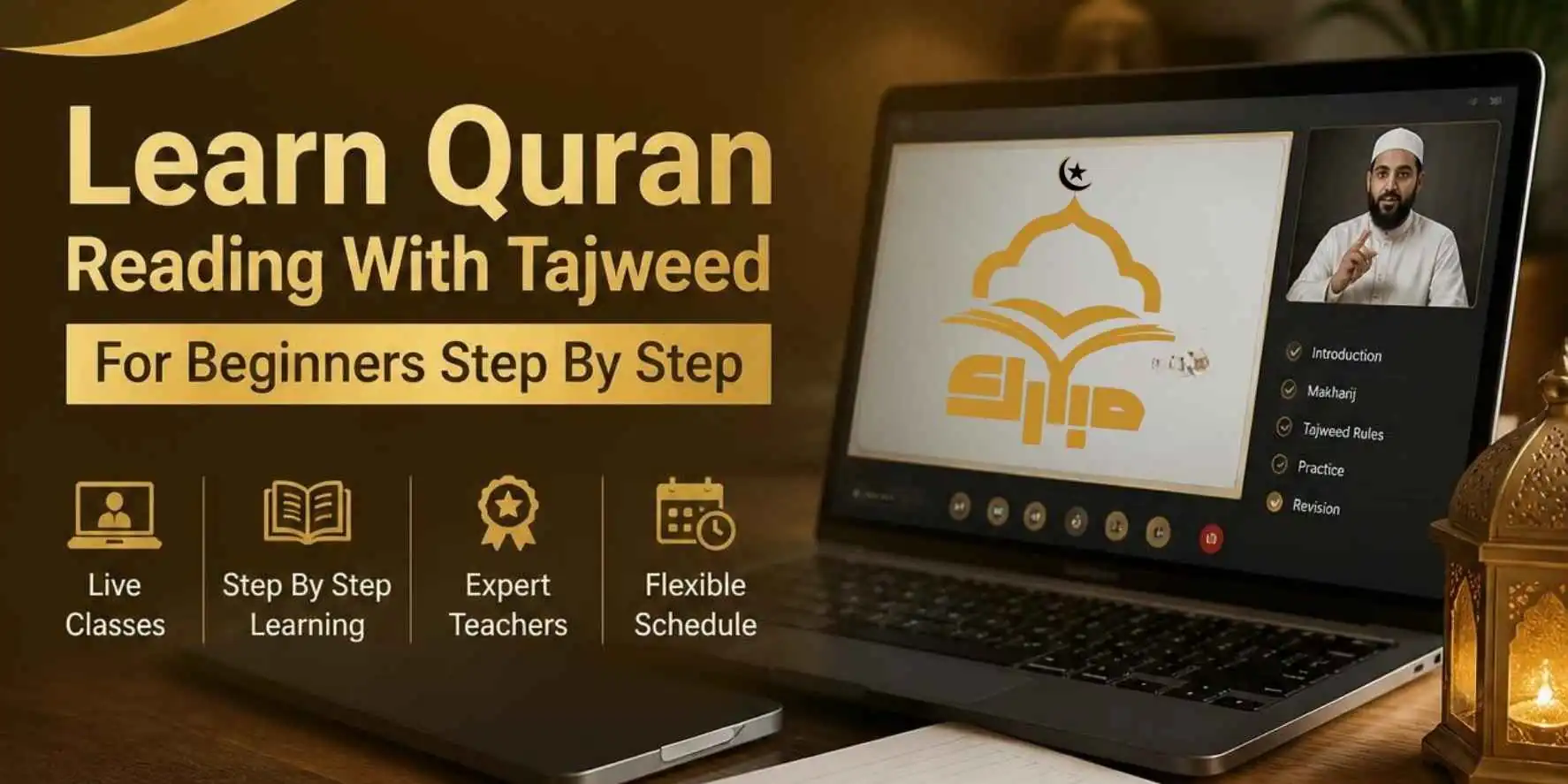
Learn Quran reading with tajweed for beginners in the correct way, and you will not have to waste months making mistakes, which are difficult to correct later. This guide takes the reader through what foundations to lay first, which Tajweed rules to learn early, how to practice daily, the common mistakes made by beginners, and how to select a class that corrects you while you are still in it.
Why Should Beginners Start Learning Tajweed Early?
The beginning is to be done early, and beginners should learn Tajweed early, as it is difficult to forget the errors that one makes at the beginning, and the errors in words can change their meanings. From the very first day, the right articulation creates the muscle memory, which makes it easier to learn quran reading with tajweed for beginners throughout life.
What Reading Foundations Do You Need Before Tajweed Rules?
The rules of Tajweed are not applicable until the Arabic letters are known well, as Tajweed is refining pronunciation, not decoding. These are the fundamentals of Quran reading that are taught first in any good beginner Quran reading course, typically a short class of Noorani Qaida:
- Isolated, initial, medial, and final forms of 28 Arabic letters.
- Positional change of shapes – joining letters into words.
- Harakat (short vowels) — Fatha, Kasrah, Dammah.
- The letter that does not produce a vowel sound.
- Tanween (double vowels).
- Shaddah: Double the sound of a letter.
- Madd letters (ا, و, ي), the elongated long vowels.
Basic Rules of Tajweed for Beginners and Correct Quran Recitation
What Are the First Tajweed Rules Every Beginner Should Learn?
Learn Quran reading with tajweed for beginners is built on the following basic rules, which are the rules that every beginner should learn first: Makharij al-Huruf, the rules of Noon Sakinah and Tanween, the rules of Ghunnah, Mad, Qalqalah, and heavy/light letters.
| Rule | Covers | Why First |
|---|---|---|
| Makharij al-Huruf | Where each letter is produced | Wrong articulation affects meaning. |
| Noon Sakinah & Tanween | Izhar, Idgham, Iqlab, and Ikhfa | Appears constantly throughout the Quran. |
| Ghunnah | Holding the nasal sound for 2 counts | Often skipped by beginners. |
| Madd (Natural) | Elongating ا, و, ي for 2 counts | Timing mistakes can change pronunciation. |
| Qalqalah | Bounce on ق ط ب ج د with sukoon | Easy to miss without regular practice. |
| Tafkheem & Tarqeeq | Heavy vs. light letter pronunciation | Affects the clarity and tone of every verse. |
Revelation Recording and Memorisation of the Holy Quran
How Do You Practice Quran Reading Step by Step?
You read and listen and take notes, and you are corrected step by step. Learn Quran reading with tajweed for beginners in this cycle without committing the same mistakes:
- Begin with the surahs you read in prayer (Al-Fatiha, short Juz Amma).
- Read slowly, rule by rule, for the first makharij.
- Pay attention to a competent reciter and repeat.
- Record yourself and listen to the reciter to learn to recite quran.
- Be corrected by a teacher session after session.
- When the current surahs are consistent, then move to new surahs.
Explore more about Tafkheem and Tarqeeq in Tajweed
What Mistakes Do Beginners Make — and How Do You Fix Them?
The common errors made by beginners to learn quran with tajweed are due to having faulty makharij, speaking too quickly, and not taking advantage of the teacher’s feedback, all of which can be corrected with practice. There are direct fixes for each of the mistakes below:
| Mistake | Why It Happens | Fix |
|---|---|---|
| Confusing similar letters (ق/ك, ص/س, ظ/ض) | These sounds may not exist in the learner’s native language. | Practice using a Makharij chart and receive live teacher correction. |
| Skipping Ghunnah | The nasal sound feels unfamiliar. | Hold the nasal sound for two counts. |
| Inconsistent Madd timing | Elongation has not become automatic. | Count the elongation while practicing. |
| Reciting too fast | Rushing to finish the recitation. | Slow down and focus on accuracy. |
| Memorizing before correcting mistakes | Incorrect pronunciation becomes a habit. | Correct pronunciation first, then memorize. |
| Incorrect Waqf placement | Stop signs and pause rules have not yet been learned. | Learn Waqf symbols and practice proper pauses. |
| Relying only on YouTube or apps | No real-time correction is available. | Study with a qualified teacher who provides regular live feedback. |
Explore more about Comprehensive Quran Hifz Classes for Ladies
How Do You Choose the Right Online Quran Class?
Selecting the appropriate class could be the key to the success of your learn quran reading with tajweed for beginners. Look at the instructor’s qualifications, try a trial lesson, and ensure that the class is taught at a beginner level:
- A verified qualification, obtained from an Al-Azhar degree or with a documented Sanad.
- A true beginner-level track with the alphabet and Noorani Qaida and not advanced rules.
- One-on-one live correction, NOT pre-recorded lessons.
- Native Arabic speakers as teachers to get the correct pronunciation.
- A trial class prior to the signing of a course.
- Flexibility in time, which is crucial for a Quran class for adults.
- Teacher gender options: Many prefer a female Quran teacher.
Explore more about Idgham in Tajweed: Types, Rules, Letters, and Examples from the Quran
What Makes a Live Quran Class Better Than Self-Study Apps?
Unlike self-study apps, a live Quran class gives the teacher the chance to correct errors as they are made, preventing the learner from forming bad habits, something that can’t be done by a beginner working on his own.
Explore more about Online Islamic Homeschooling
What Tools Help You Learn Faster Between Classes?
Using a color-coded Mushaf, a recording app, and a mirror helps to strengthen what your teacher teaches but does not take the place of the live correction.
- Use the colored Tajweed Mushaf to visually identify Madd, Ghunnah, and Qalqalah.
- Recorded App to Record yourself and compare against a recorded reciter.
- Mirror to Check your mouth shape to make sure you are articulating correctly.
- Audio from certified Qaris trains your ear before you can reproduce it.
- Quick, easy-to-read rule sheets instead of a full book.
Explore more about Quran Stop Signs (Waqf): Symbols, Rules, and Examples
What Does a Simple Daily Plan for Beginners Look Like?
A simple daily plan requires only 15-20 focussed minutes repeated regularly, as consistency is key and not intensity in learning Quran reading with Tajweed for beginners.
| Time | Focus |
|---|---|
| 5 min | Warm-up: recite 1–2 familiar short surahs |
| 5–7 min | Apply one rule (Ghunnah or Madd) in new lines |
| 3–5 min | Record yourself and play it back |
| 2–3 min | Review your teacher’s last corrections |

How Do You Know You Are Making Progress?
You are making progress when you make fewer mistakes and your teacher corrects fewer mistakes. These are typical signs of progress that a novice in quran recitation will see:
- Less hesitation on new verses.
- Auto-applying Ghunnah, Madd, and Qalqalah.
- Your teacher transfers you to longer surahs.
- Feeling comfortable reciting in front of others.
- Real-time error correction.
Explore more about quran memorization online
When Are You Ready to Move Beyond Beginner Level?
You can move beyond the beginner level once you apply Tajweed rules in the text not memorized but rather in unfamiliar text.
- Correct makharij for all 28 letters.
- Automatic application of Noon Sakinah, Tanween, and Madd.
- Correct Waqf and Ibtida without the need for reminders.
- Teacher recommends intermediate Tajweed and/or Qira’t studies.
- Preparation to combine Tajweed with a Hifz track.
Explore more about Online Tajweed Course For Sisters
Where Can You Learn Quran Reading with Tajweed for Beginners?
learn quran reading with tajweed for beginners can be done in a mosque, with a private online Quran tutor, or in a live online academy, which is the quickest as they can correct you in real time and arrange times for you. Depending on your learning style, it may be best to attend live online Quran reading classes, which offer a consistent level of guidance, feedback, and practice with qualified teachers from around the world.
Explore more about Iqlab in Tajweed: Definition, Letter, Rules, and Examples from the Quran
Learn Quran Reading with Tajweed for Beginners at Mubarak Academy
Mubarak Academy offers beginner’s Quran reading lessons with Tajweed from the Quran in live, one-on-one sessions, teaching makharij, noon and meem rules, madd, and waqf. The teachers are accredited by Al-Azhar with degrees and verified Ijazah chains and have at least 5 years of experience, such as Sheikh Abdulrahnoonarb, who has a master’s in Quranic Sciences and an Ijazah in the Ten Qiraat.
The academy has educated 1,000+ students in 20+ countries and offered more than 80,000 teaching hours, offering both male and female Quran teachers, flexible schedules, and a free trial class before you sign up for any package.
Students are given individual attention, frequent monitoring, and live pronunciation correction to help novice students gain confidence and learn to read the Quran accurately from the first lesson.
Explore more about Ghunna in Tajweed: Meaning, Rules, Levels, and Quranic Examples
Ready to Start Reading the Quran with Confidence?
Learning Quran reading with Tajweed for beginners takes the right foundations and consistent practice, not perfection on day one. Book a free trial class with Mubarak Academy and start your first live Tajweed lesson this week. With expert guidance and structured lessons, you’ll build confidence, improve your pronunciation step by step, and establish lifelong quran recitation for beginners skills at a comfortable pace.
Frequently Asked Questions
How long does it typically take to learn Quran reading with Tajweed for beginners?
It will take most beginners a couple of months to establish a solid basis in Arabic letters and pronunciation, after which they can start taking weekly classes to learn and practice the basic tajweed rules with confidence. Regular practice (no matter how brief) generally results in better progress than sporadic study.
Can adults with no Arabic background start learning tajweed for beginners?
Yes. Tajweed is not limited to a particular age. No prior knowledge of Arabic is required, and it is possible to start at the beginning and make good progress, especially with a qualified teacher who can provide step-by-step teaching and correction of pronunciation regularly.
Is a one-on-one class or a group class better for a beginner?
Beginners typically need one-on-one lessons, as it allows them to receive feedback and customized lessons on the spot. It is also beneficial for students to attend group classes for extra practice after they have a solid foundation in Quran reading.
Do I need to already read Arabic before starting Tajweed lessons?
No. Most of the beginners first start learning the Arabic alphabet with a Noorani Qaida course before progressing to Tajweed. A progressive beginners’ course teaches letter recognition, correct pronunciation, and basic reading skills first, then introduces the Tajweed rules for accurate reading of the Quran gradually.
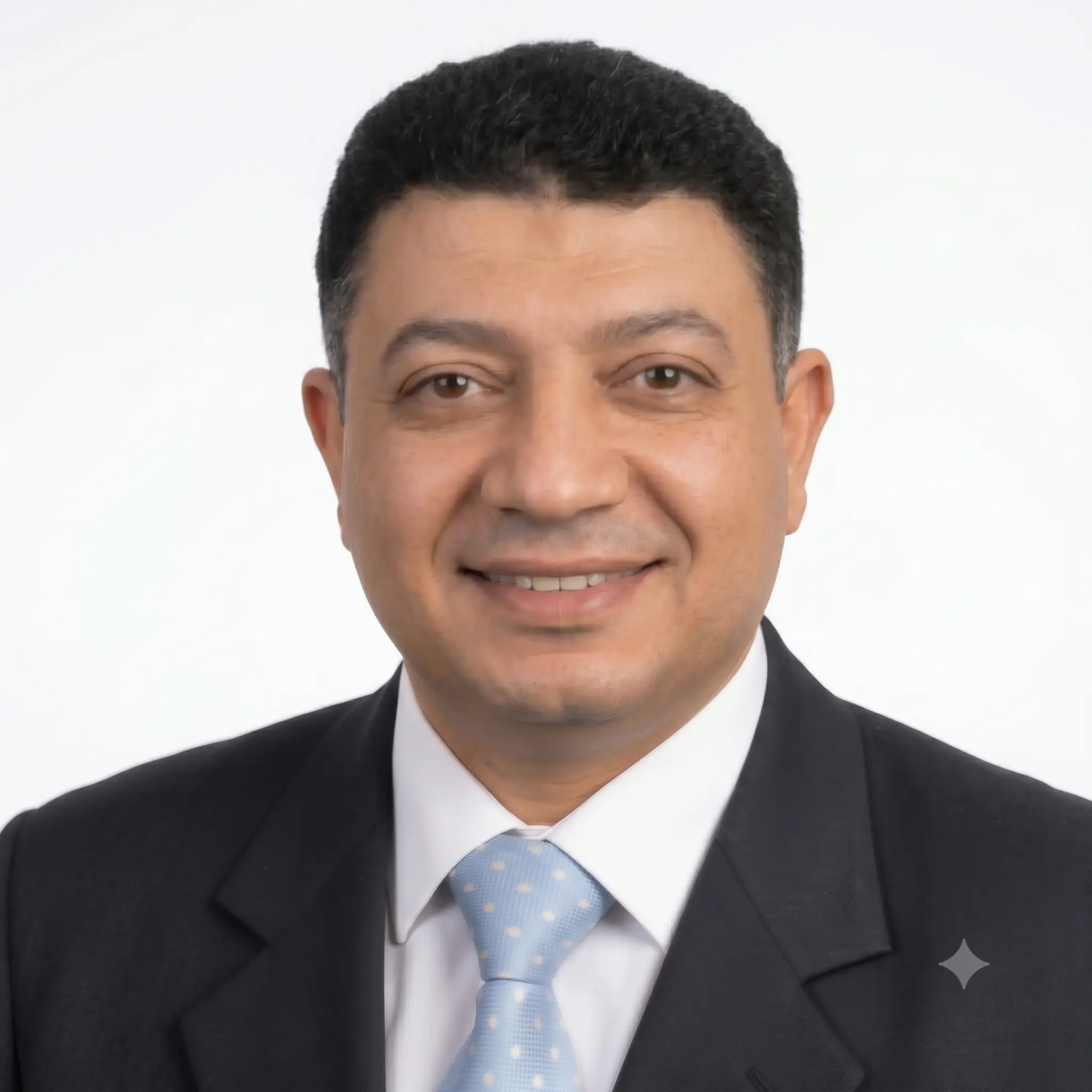
Ustadh Ahmed Mahmoud Abdulaziz is an experienced teacher of Arabic and the Holy Quran for native and non-native speakers. He holds a verified Ijazah in Hafs ‘an Asim and is certified in the foundational Tajweed texts Al-Jazariyyah and Tuhfat Al-Atfal. Drawing on his extensive background in traditional Quranic recitation and international pedagogy, he writes scholar-verified, accessible articles to help students worldwide master Tajweed rules and Arabic linguistics safely and accurately.