The quickest way to go from textbook Arabic to actual spoken Arabic is to participate in an Arabic conversation class. Session one is dedicated to speaking, with correction provided in real time, rather than to memorizing grammar; you practice speaking throughout the session. If you are looking to learn conversational Arabic online to travel to the Middle East, learn for family, faith, or work purposes, this guide explains what conversations you can have, what dialect to choose, and how much they cost.
What Is an Arabic Conversation Class?
An arabic conversation class is a class that focuses on conversation rather than grammar; you start talking in Arabic from minute one. It is not a book that you read, but it is based on authentic dialogue greetings, routines, and role play that you will use. The teacher listens, corrects your pronunciation, and encourages you to answer without translating in your mind.
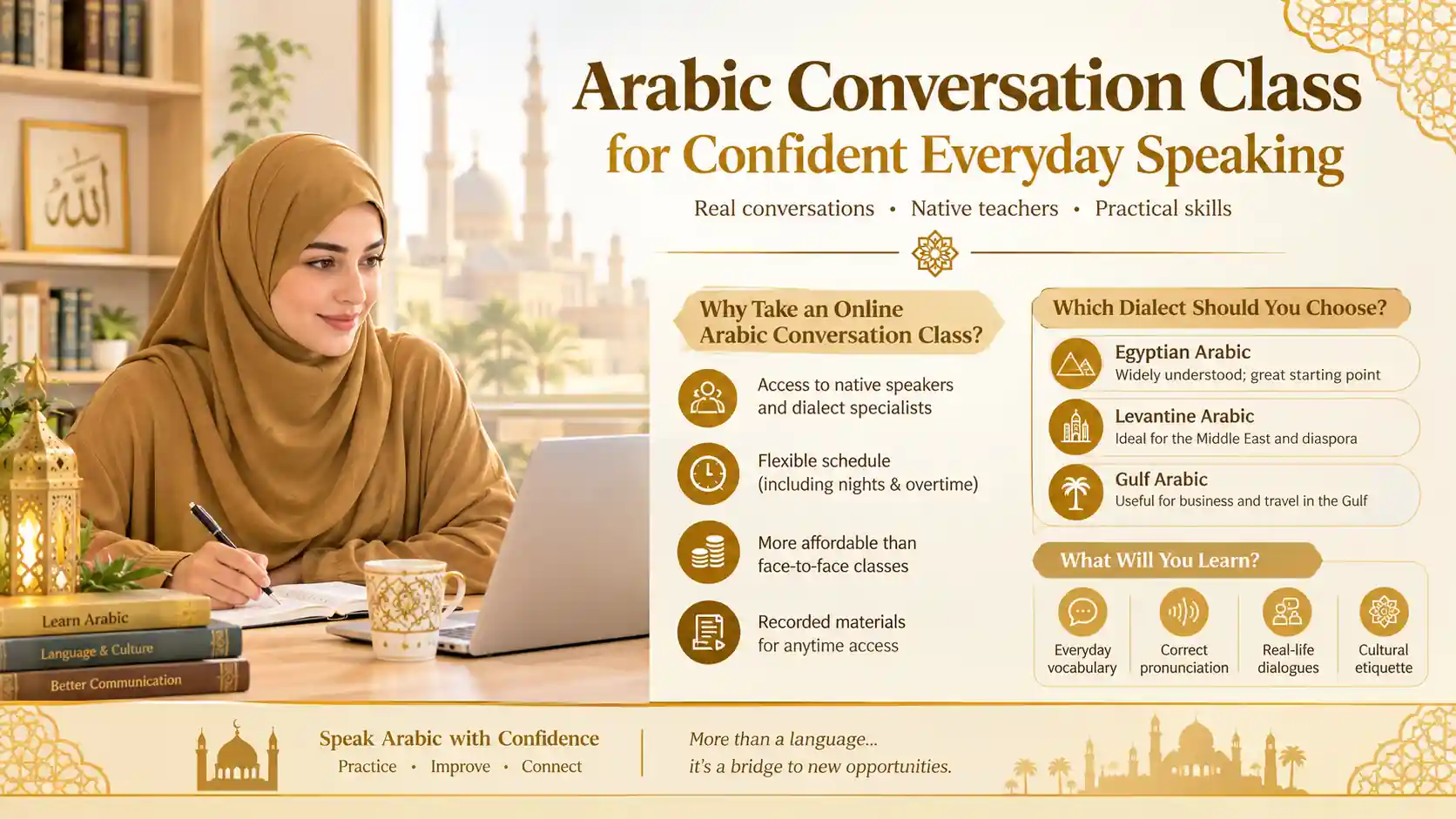
Why Take an Arabic Conversation Class Online?
When you take an online arabic conversation class, you don’t have to spend a lot of time commuting to and from school, you get access to native-speaking teachers from around the world, and you can practice when it’s convenient for you.
- Access to native speakers and dialect specialists, not just those nearby
- Familiarity with flexible working hours, including overtime and night shifts!Understanding of flexible working hours, such as overtime, night shifts, etc.
- This is often less expensive than a face-to-face Arabic class taught by an Arabic instructor.
- Materials recorded that can be accessed at any time
Master Tongue Letters in Arabic for Perfect Quran Recitation
Modern Standard Arabic vs Spoken Arabic: Which Should You Learn?
If you want to learn a spoken dialect, use one for everyday speech; if you want to read, write or use it for religious purposes, use Modern Standard Arabic (MSA).
| Modern Standard Arabic (MSA) | Spoken Dialect | |
|---|---|---|
| Used for | News, books, religious texts, formal speeches | Daily conversation, family, friends |
| Best for | Reading/writing goals, Quranic study | Travel, real-time conversation |
| Taught in a conversation class? | Yes, as a base | Yes, as the main focus |
Which Arabic Dialect Is Best for Conversation Classes?
The most suitable dialect is the one that you will use Arabic in.
- Egyptian Arabic widely understood thanks to film and media; a common starting point
- Levantine Arabic is an ideal language for the region of the Middle East, including the diaspora, which comes with its own distinct characteristics.
- Gulf Arabic, useful for business and travel in the Gulf Region.
- There is no one “best” dialect to choose, it depends on whom you’re talking to.
Lips Letters in Arabic and Their Articulation Points in Tajweed
What Do You Learn in an Arabic Conversation Class?
In an ARABIC conversation class, you learn practical speaking skills greetings, everyday vocabulary, question and answer patterns, listening listening through guided dialogue NOT through lectures.
Every conversation class focuses on the following skills:
- Correct letter sounds and pronunciation.
- Phrases used for everyday purposes (time of day, shopping, etc.)
- Natural Native Speed Listening Comprehension
- Sentence construction not relying excessively on grammatical rules
- Understand the meaning of expressions and etiquette in their cultural context
Ikhfa Rules of Tajweed Explained with Letters Examples and Tips
How to Choose the Best Arabic Conversation Tutor?
Selecting the right tutor is a matter of a few checks:
- Check that they are a native or certified speaker of your target dialect
- Please request a complimentary lesson before signing up!
- Check for actual student reviews or testimonials
- Don’t discourage them by correcting them.
- Verify that they teach grammar succinctly, rather than lecture.
Perfect Your Islamic Recitation of Holy Quran With Tajweed
One-on-One vs Group Arabic Conversation Classes:
One-on-one classes give you more speaking time and a lesson built around your goals; group classes cost less and add real conversation partners.
| One-on-One | Group | |
|---|---|---|
| Speaking time | Highest | Shared |
| Cost per hour | Higher | Lower |
| Best for | Fast, specific progress | Budget learners, peer practice |
How to Prepare for Your First Arabic Conversation Class?
- As a prospective student, make a list of 5-10 sentences to read before the interview.
- Test the camera, mic and setup prior to the event.
- On Note 2-3, write topics that you would like to practice.
- Have a dictionary handy for new words.
- After all, practice and mistakes are part of learning Arabic.
New Arabic Course for English Speaking Students Guide
How to Practice Arabic Conversation Outside Class?
- Try language exchange apps such as Tandem or HelloTalk with native speakers.
- Record and then say the short native sounds
- Label at household objects in Arabic to develop passive vocabulary.
- Carry out a voice-note diary (even two sentences a day!)
- Get tutor’s corrections within 24 hours
Explore Mubarak Academy courses
How to Speak Arabic Fluently With Regular Conversation Practice?
Fluency is not created by intensity, it is created by frequency short regular sessions beat long sessions occasionally.
- Do two short sessions instead of one long session per week.
- Talk aloud everyday, even if you’re alone, as it creates muscle memory
- Record words that you use, not recognize
- Refresh previous topics to ensure they are remembered and not repeated
How Much Do Online Arabic Conversation Classes Cost?
The marketplaces for independent tutors in Online Arabic Language for adults typically charge between $2 an hour, the broad average being around $11 an hour contingent on the Arabic tutor’s experience and dialect. Structured academies may charge a monthly fee rather than per lesson. For example, Mubarak Academy’s plans run:
| Plan | Classes/week | Classes/month | Price |
|---|---|---|---|
| Starter | 1 | 4 | $24/month |
| Standard | 2 | 8 | $48/month |
| Intensive | 3 | 12 | $72/month |
All three include a free trial class before you commit.
How Long Does It Take to Become Conversational in Arabic?
After 3-6 months, the most consistent learners attain basic conversational fluency, and they will have comfortable everyday fluency within a year.
- Dialect vs. MSA: dialects are faster to speak, slower to read/write
- Noticeable improvement in progress with frequency 2-3 sessions per week
- The time is shortened with outside practice daily exposure.
- Background knowledge of another Semitic or foreign language is helpful
Learn Arabic in English Step by Step for Complete Beginners
How to Build Confidence When Speaking Arabic?
- Try to embrace the idea that errors are an integral part of an arabic conversation class, rather than a failure.
- Continue the same scenario until it is automatic.
- Record weekly and compare, not daily!
- Praise small achievements ordering food, saying hello to a neighbour, following a joke etc.
How to Track Your Progress in Arabic Speaking?
- Continue to have a list of words that you use now without having to be reminded of them
- Re-record self-introduction every month and compare.
- Schedule informal monthly assessments with the tutor
- Notice the amount you can learn without translating in your mind
Best Way to Learn Quranic Arabic for Beginners Step by Step
Start Speaking Arabic With Real Conversation Practice
At Mubarak Academy, conversation classes are taught by licensed teachers who have guided over 1,000 students across 20+ countries through 80,000+ hours of live instruction. Every plan opens with a free trial class and a level check, so your first arabic speaking course lesson matches where you actually are. Support runs 24/7, with regular progress reviews.
Progress in Arabic comes from talking, not just studying the right conversation class turns that into a guided habit instead of guesswork. Book a free trial class with Mubarak Academy and get matched with a licensed tutor who fits your dialect and schedule.
FAQ
Can complete beginners join an Arabic conversation class?
Yes, complete beginners can join an Arabic conversation. A good program starts with simple greetings, familiar phrases, and guided questions before introducing longer conversations. Teachers adjust the pace, pronunciation practice, and vocabulary to help beginners speak comfortably without feeling overwhelmed.
Do I need the Arabic alphabet before I start speaking?
No, you do not need to know the Arabic alphabet before starting. Conversation-focused classes can introduce useful spoken phrases, pronunciation, and listening first. Reading and writing skills can develop gradually alongside speaking, allowing beginners to communicate before mastering Arabic spelling and letters.
Can I switch dialects after starting?
Yes, you can usually switch dialects after starting an Arabic conversation. Your needs may change because of travel, work, family, or relocation. However, changing dialects can temporarily slow progress, so discuss your goals with your tutor before making the switch.
Are these classes suitable for children?
Yes, Arabic conversation can be suitable for children when lessons are designed around their age, interests, and attention span. Qualified tutors can use games, stories, pictures, repetition, and simple dialogues to make arabic speaking practice for beginners engaging while gradually building vocabulary, pronunciation, and confidence.
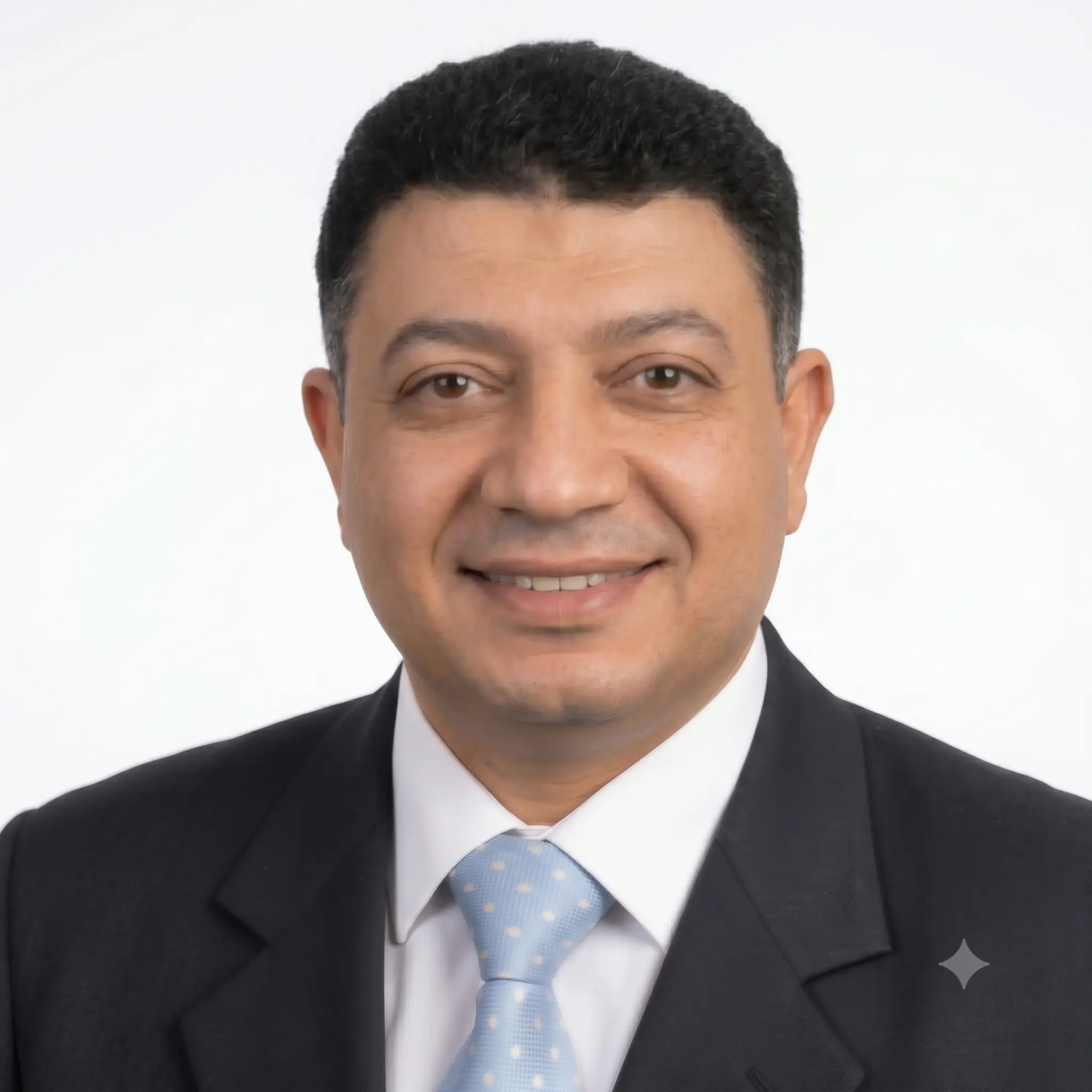
Ustadh Ahmed Mahmoud Abdulaziz is an experienced teacher of Arabic and the Holy Quran for native and non-native speakers. He holds a verified Ijazah in Hafs ‘an Asim and is certified in the foundational Tajweed texts Al-Jazariyyah and Tuhfat Al-Atfal. Drawing on his extensive background in traditional Quranic recitation and international pedagogy, he writes scholar-verified, accessible articles to help students worldwide master Tajweed rules and Arabic linguistics safely and accurately.