
Rules of Raa in Tajweed Explained for Correct Recitation
In every word of the Quran, whether heavy (Tafkheem) or light (Tarqeeq), rules of raa in tajweed determine the sound of this letter, and if it is pronounced wrong, the sound of the word changes, and sometimes the meaning too. Everything you need to know about Raa: its two sounds, sukoon cases, rare exceptions, and […]
Ream More
Basic Rules of Tajweed for Beginners and Correct Quran Recitation
The basic rules of Tajweed exist for one purpose only to safeguard the exact pronunciation of the Quran as it was revealed. These are the basic rules of Tajweed, which provide a common basis for every reader, whether you are beginning your journey into Quranic recitation or have been studying for years. Makharij, Sifaat, Noon […]
Ream More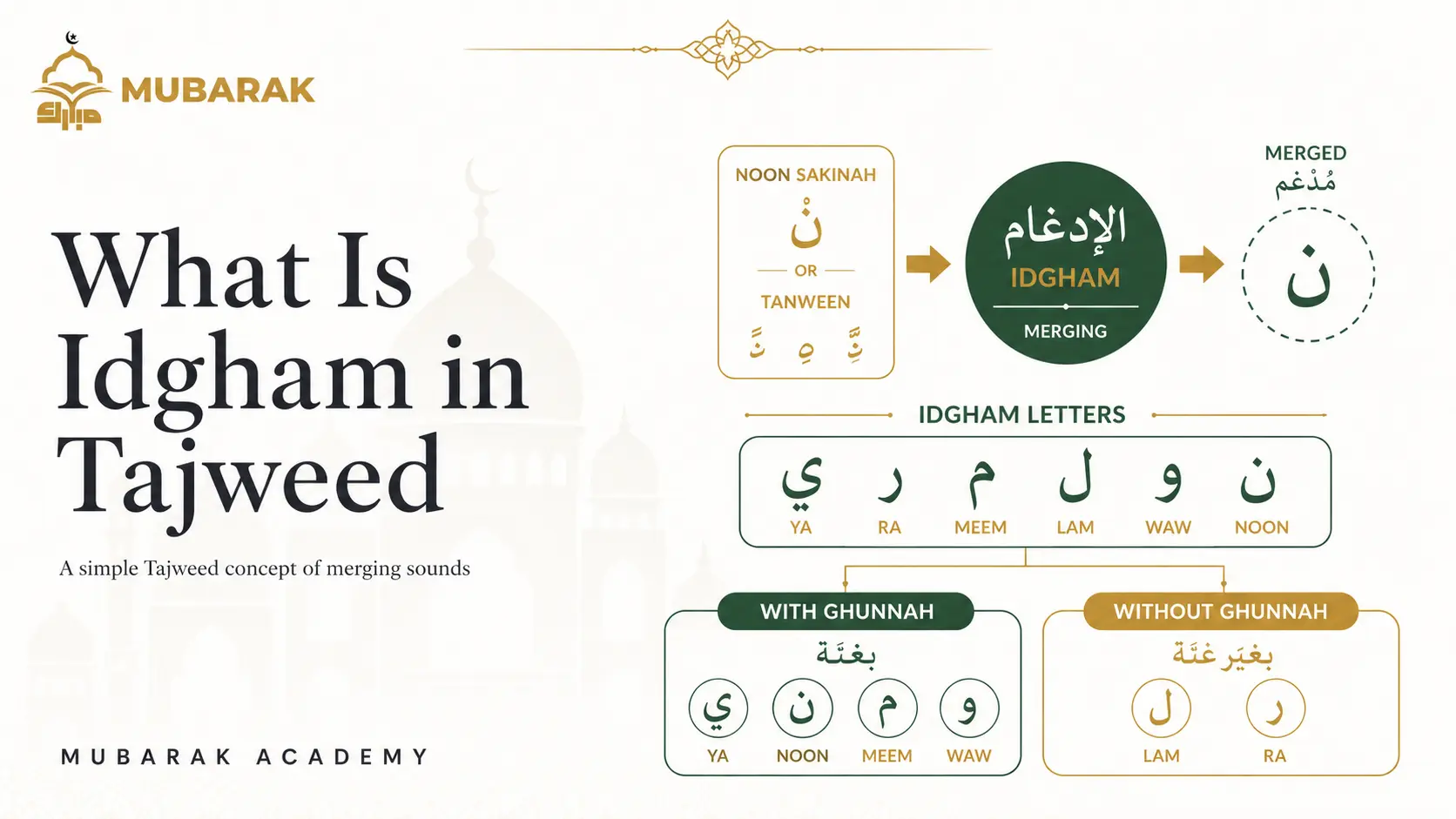
Idgham in Tajweed: Types, Rules, Letters, and Examples from the Quran
Idgham (الإدغام) is one of the four rules of Noon Sakinah and Tanween. It applies when a Noon Sakinah (نْ) or Tanween (ـًـٍـٌ) is followed by any of the six Idgham letters, merging the Noon into the following letter so only one blended sound is produced. Idgham divides into two types: one with Ghunna and […]
Ream More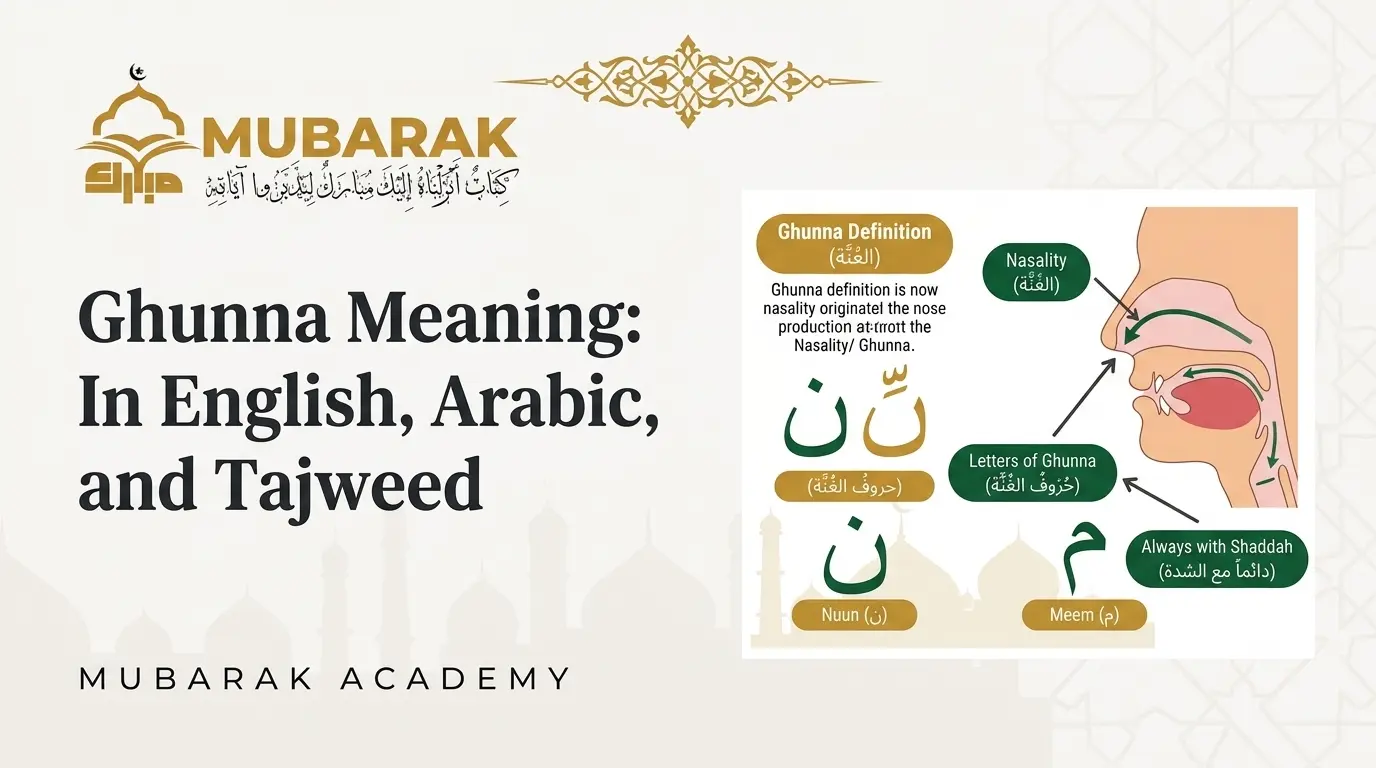
Ghunna in Tajweed: Meaning, Rules, Levels, and Quranic Examples
Ghunna in Tajweed(غُنَّة) is the nasal resonance, a soft humming sound, produced from the nasal passage (al-Khayshoom) when reciting Noon (ن) or Meem (م) in specific Tajweed positions. It belongs exclusively to these two letters and is produced independently of the tongue, lips, and throat, which is what makes it structurally unique among the properties […]
Ream More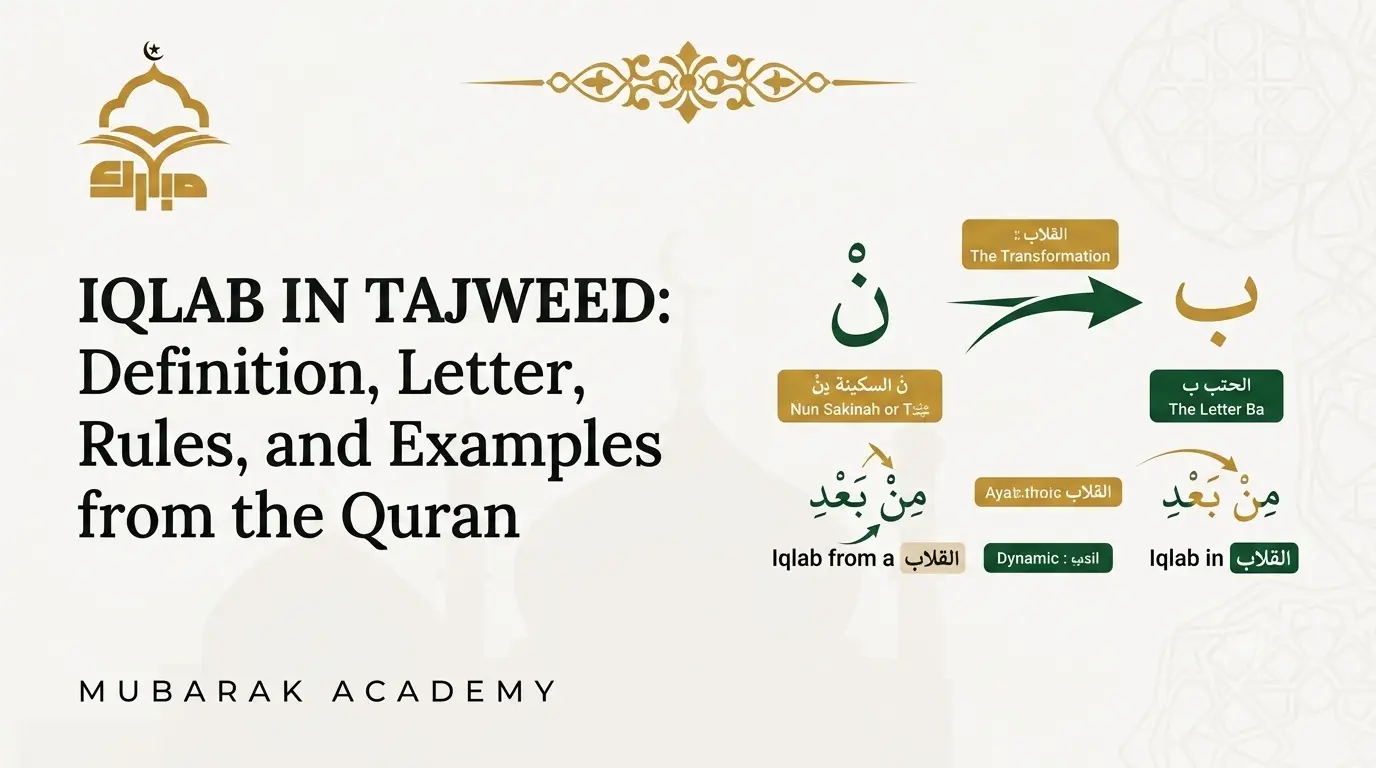
Iqlab in Tajweed: Definition, Letter, Rules, and Examples from the Quran
Iqlab (الإقلاب) is one of the four rules of Noon Sakinah and Tanween. It applies when a Noon Sakinah (نْ) or Tanween (ـًـٍـٌ) is followed by the letter Ba (ب), converting the Noon into a Meem-like sound with a full Ghunnah of two counts. Unlike the other three rules, the Noon is not hidden or […]
Ream More
Tafkheem and Tarqeeq in Tajweed
Proper pronunciation is one of the most important aspects of reciting the Quran. Tajweed rules help Muslims recite the Quran correctly, preserving the beauty and meaning of the words. Among the essential Tajweed rules are Tafkheem and Tarqeeq, which control whether certain letters are pronounced with a heavy or light sound. Understanding these rules helps […]
Ream More
Online Tajweed Course For Sisters
With the endless responsibilities of women, from house chores to caring for their kids and their requirements, they don’t have time for themselves to recite or memorize the Quran somewhere, unlike men, who are lucky to have classes in the mosque or go to academies for the Quran. However, online Tajweed course for sisters offer […]
Ream More
Importance of Tajweed in Quran: 8 Benefits, Key Rules, and Why Every Muslim Needs It
The Prophet Muhammad (peace be upon him) received the Quran through Angel Jibreel (peace be upon him) in a precise, defined oral form, and he transmitted it to his Companions in exactly the same way. That chain of precise oral transmission, verified across generations, is what Tajweed protects, and it is where the importance of […]
Ream More
Discover How Long Does It Take to Learn Tajweed
Today, with the rise of online learning, mastering Tajweed has become easier and more accessible than ever. In this blog, we’ll explore the benefits of learning Tajweed online, who our courses are for, the Tajweed rules we teach, how long does it take to learn Tajweed, and how our Tajweed ul Quran Online Academy can […]
Ream More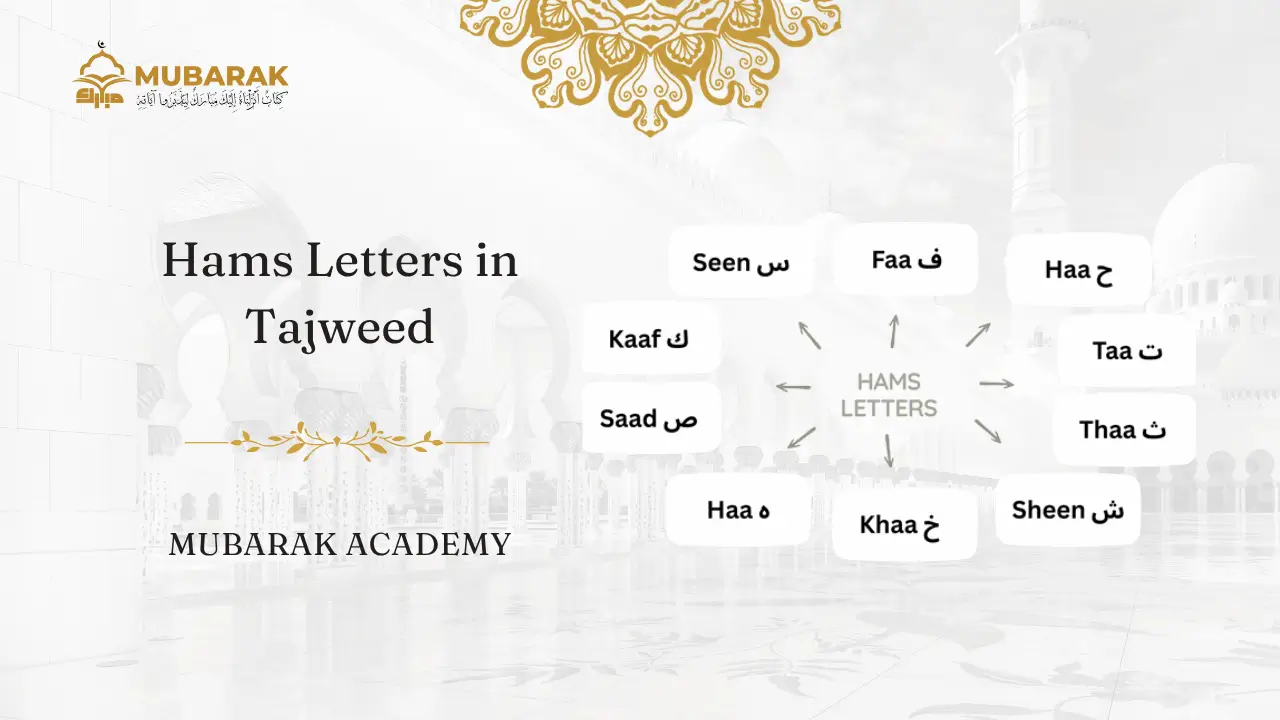
Your Guide to the 10 Hams Letters in Tajweed with Examples
Hams is a crucial aspect of Tajweed rules that impacts the articulation of Arabic letters to enhance the pronunciation of the Quranic text during recitation. Mastering it helps reciters pronounce the Qur’an clearly and beautifully. In this article, we’ll explore the meaning of Hams in Tajweed, list the Hams letters in Tajweed with Quranic examples, […]
Ream MoreRecent Post

Master Tongue Letters in Arabic for Perfect Quran Recitation
September 10, 2026
Lips Letters in Arabic and Their Articulation Points in Tajweed
September 9, 2026